


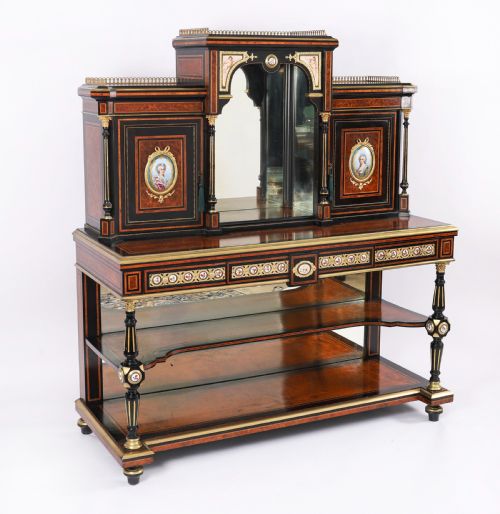


Porcelain Plaque Writing Desk
A porcelain plaque writing desk combines fine cabinet-making with painted ceramics, offering a distinct surface for correspondence.
Porcelain Plaque Writing Desk
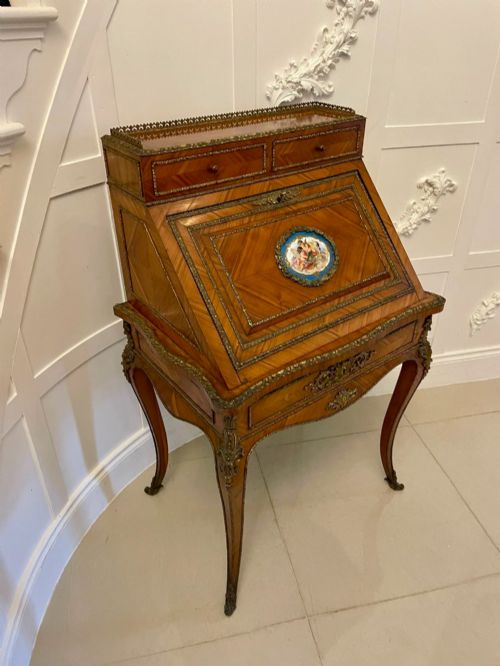
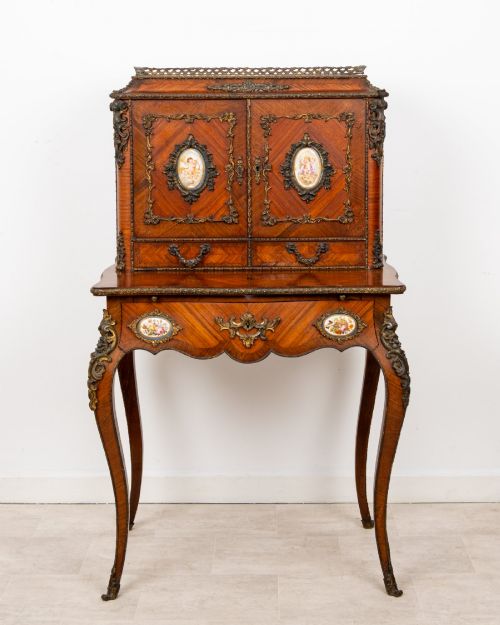
When you search for a porcelain plaque writing desk, you find elegant items designed for correspondence and light paperwork, most frequently seen as the French bonheur du jour style. These pieces originate predominantly from the nineteenth century, including Victorian interpretations of Louis styles.
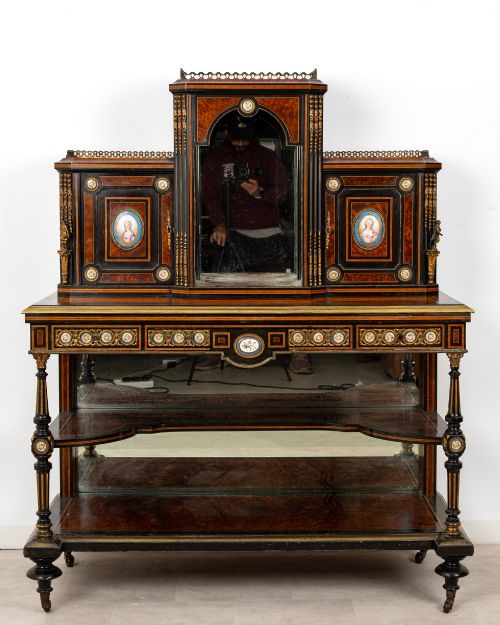
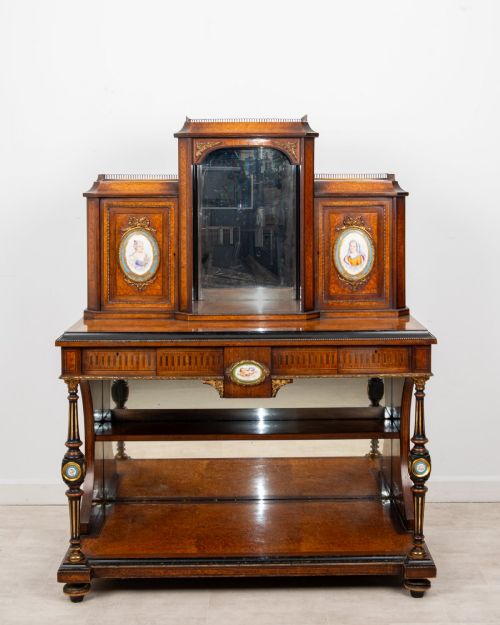
The primary forms on this page include compact desks, writing tables, and cabinets with raised superstructures. Amboyna, kingwood, and rosewood form the main bodies, accented by glazed ceramic inserts.
Originating largely from French workshops, these items serve as decorative centrepieces as well as functional writing surfaces.
Materials and Construction
Cabinet-makers built these desks using exotic timbers such as kingwood, amboyna, and satinwood, frequently laid in intricate marquetry patterns over a sturdy carcase. Ebonised wood and walnut also appear to provide dark contrast.
Ormolu mounts cast in bronze provide structural highlights around drawers and corners, while brass details edge the surfaces. Glazed porcelain plaques are set flush into the timber panels, secured by brass bezels.
Factors of Quality
The standard of a porcelain plaque writing desk depends heavily on the precision of the timber matching and the crispness of the ormolu casting. Finer pieces display hand-painted detail on the ceramic inserts and seamless integration of metal mounts into the wood.
Subtleties in the grain of the amboyna or kingwood and the weight of the bronze mounts distinguish standard nineteenth-century production from exceptional studio output.
Sevres
The Porcelain Plaque Writing Desk Glossary
- Bonheur du jour
- A small ladies writing desk featuring a raised cabinet or tier of drawers on the top surface. This form gained popularity during the eighteenth century and remained a staple of nineteenth-century revival styles.
- Ormolu
- Gilded bronze used for decorative mounts and feet on antique furniture. The finish involves applying a mercury-gilding technique or modern electroplating to cast bronze.
- Kingwood
- A dense Brazilian timber featuring dark violet-brown tones with lighter streaks. Makers utilised it extensively for high-end French marquetry and crossbanding.
Porcelain Plaque Writing Desk: Frequently Asked Questions
What is a bonheur du jour?
A bonheur du jour is a small writing desk equipped with a raised tier of shelves, drawers, or a cabinet on the upper section. These pieces were designed for ladies to write letters and store small personal items.
The form emerged in France and became particularly fashionable during the nineteenth century, frequently incorporating porcelain plaques and ormolu mounts.
How do I date these desks?
Dating relies on examining the timber construction, the style of the ormolu mounts, and the characteristics of the porcelain. Most examples date from the nineteenth century, reflecting revival aesthetics of earlier French reigns.
Secondary woods inside drawers and the ageing of the polish provide further clues to the exact decade of manufacture.
Where were porcelain plaques made?
Many plaques found on these writing desks originate from French porcelain factories, most notably Sevres. These inserts were painted with floral motifs or pastoral scenes before being fired and glazed.
Cabinet-makers imported these painted panels to integrate them directly into the timber furniture panels.
How do I care for exotic veneers?
Exotic veneers like kingwood and amboyna require stable humidity levels and protection from direct sunlight to prevent fading and drying. Gentle dusting with a dry cloth maintains the polished surface without damaging the wood.
Avoid placing these items near direct heat sources which can cause the timber and veneer to shrink or crack.