



Cabriole Leg Writing Slope
A cabriole leg writing slope brings practical surface space and elegant curved supports together, offering a dedicated spot for correspondence.
Cabriole Leg Writing Slope
A cabriole leg writing slope brings together a sloping writing surface and curved supports that lift the desk off the floor. You will see these pieces across several periods, including the Georgian era, the Victorian period, and the Edwardian years.
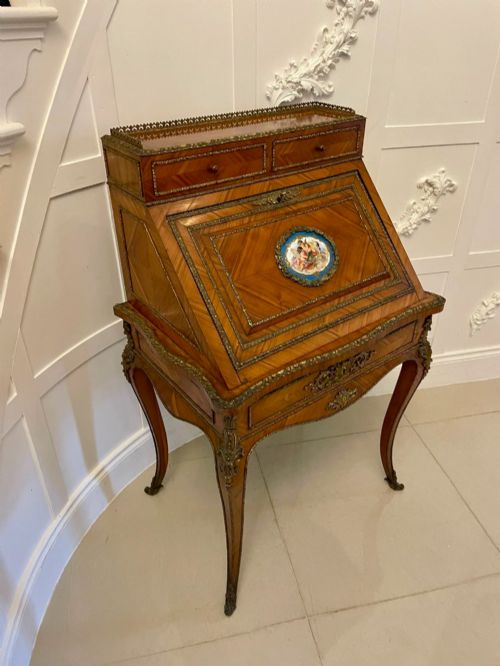
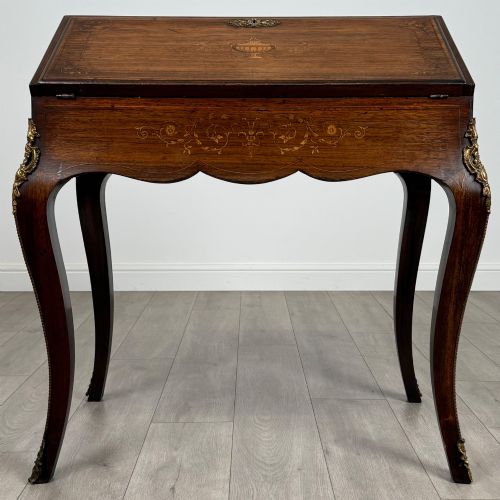
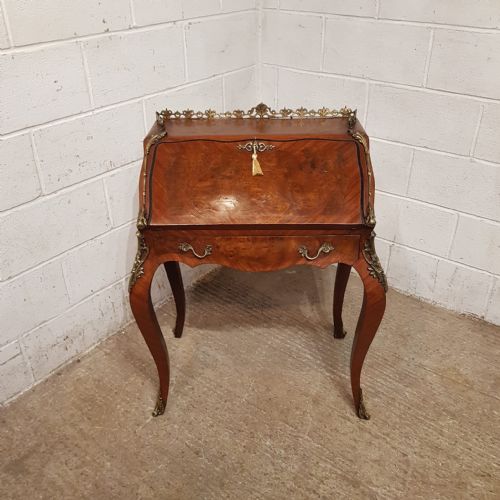
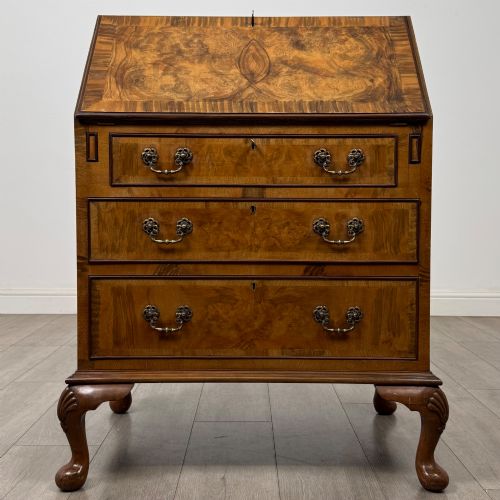
The most common form on this page is the bureau de dame or ladies writing desk, often executed in walnut or mahogany. These compact pieces frequently incorporate a fitted interior with small drawers and pigeonholes beneath the sloping lid.
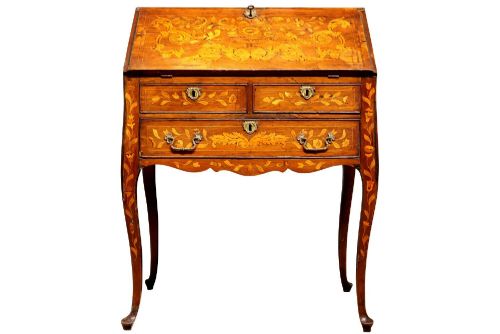
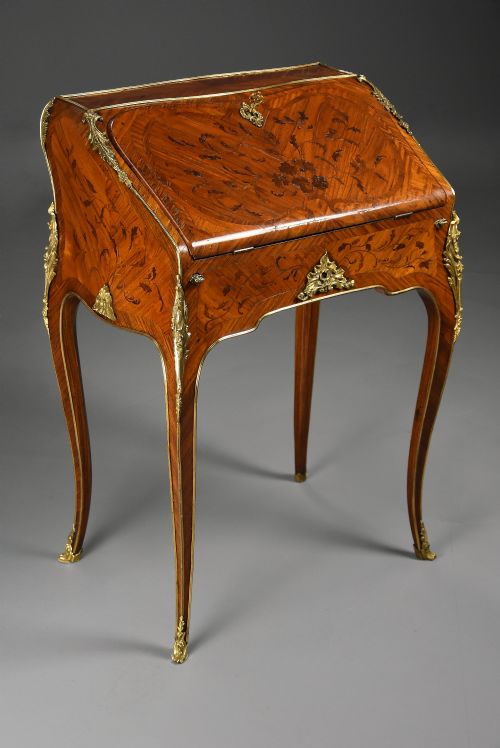
Origin styles vary widely, spanning from traditional British Georgian designs to elaborate French Louis XV revival models with floral marquetry and gilt metal mounts. Pieces range from straightforward mahogany writing bureaus to ornate satinwood-inlaid and ormolu-mounted variations.
Materials and Construction
Cabinet makers utilised a rich palette of timbers, pairing structural woods like mahogany and walnut with decorative veneers such as kingwood, burr walnut, rosewood, and yew wood. These rich veneers create complex grain patterns across the sloping lids and drawer fronts.
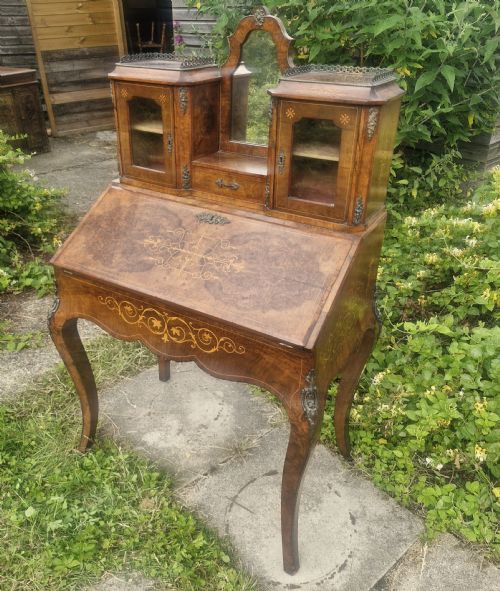
Metalwork plays a key structural and decorative role, featuring brass mounts, ormolu, and gilt metal highlights that accent the corners, handles, and cabriole knees. Glass and floral marquetry occasionally add further detail to the writing surfaces and interior compartments.
French Louis XV revival styles appear alongside British Georgian and Queen Anne furniture forms.
Judging Quality
Quality rests heavily on the crispness of the cabriole leg carving and the precision of the timber veneers. Finer examples display symmetrical grain matching across the fall front and robust internal pigeonholes without loose joints.
The integration of mounts distinguishes finer models, where ormolu or brass elements fit flush against the timber. Superior pieces maintain smooth movement in the writing slope lid and internal drawers, reflecting careful original joinery.
BVRB
The Cabriole Leg Writing Slope Glossary
- Cabriole leg
- A furniture support that curves outward at the knee and tapers inward toward the ankle, ending in a pad or foot. This form draws inspiration from animal legs and appears frequently on 18th-century and revival pieces.
- Bureau de dame
- A lady's writing desk, usually compact in scale and fitted with a sloping fall front. These French-inspired desks often feature delicate veneers and gilt metal mounts.
- Marquetry
- Decorative inlay work using various coloured woods to create pictorial or floral patterns. Master artisans cut thin veneers and fit them together precisely across the surface.
- Ormolu
- Gilded bronze ornamentation applied to furniture mounts, locks, and feet. This technique provides a bright metallic contrast against dark hardwoods like kingwood and walnut.
- Bonheur du jour
- A light daily writing desk with a small superstructure of shelves and drawers on top of the writing surface. This form gained popularity during the 19th century for correspondence.
Cabriole Leg Writing Slope: Frequently Asked Questions
What is a bureau de dame?
A bureau de dame is a ladies writing desk featuring a sloping lid that opens to reveal a fitted interior. These compact pieces were designed for correspondence and private paperwork.
They often include delicate veneer work, brass mounts, and slender cabriole legs suited for smaller private rooms.
How do I spot a revival piece?
Revival pieces emulate earlier eras such as the Louis XV or Queen Anne styles while carrying the manufacturing methods of their actual production period. Look closely at the timber seasoning, interior construction, and secondary woods.
Twentieth-century interpretations often show machine cutting marks and different hardware fixings compared to 18th-century originals.
Where were writing slopes used?
Writing slopes served as portable or stationary desks for correspondence, record-keeping, and reading in private sitting rooms or bedrooms. Their enclosed compartments kept ink, paper, and letters secure.
Wealthy households placed them in drawing rooms or boudoirs where ladies managed social correspondence.
What woods are most common?
Walnut and mahogany appear most frequently across these writing desks, supplemented by decorative veneers like burr walnut, rosewood, and kingwood. These hardwoods provided stability and attractive grain patterns.
Inlayers also used exotic timbers to form floral marquetry scenes on the writing surfaces and fall fronts.