

Gilt Bronze Mounted Bureau
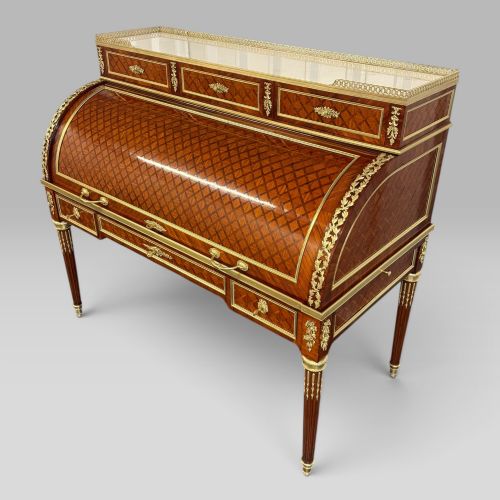
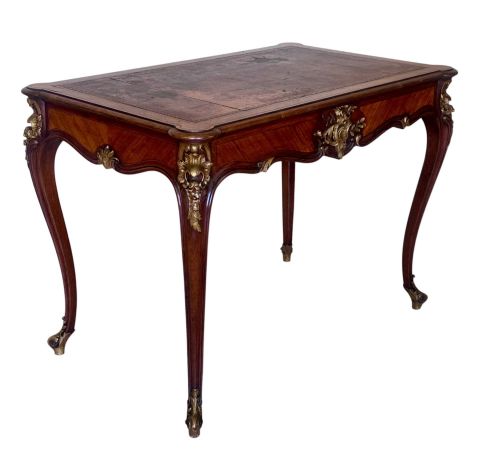
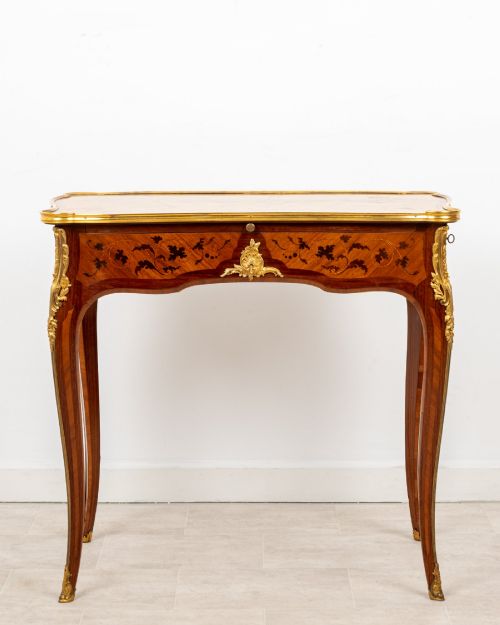
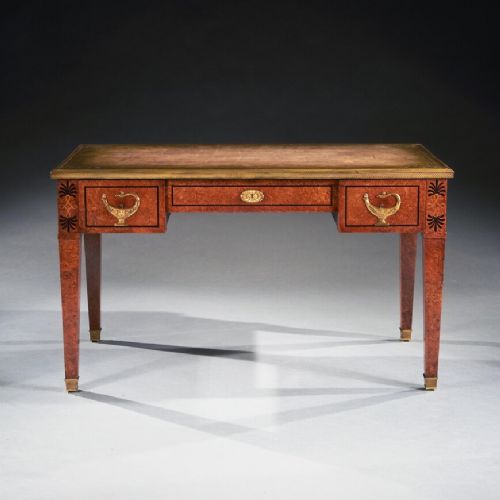
These gilt bronze mounted bureau examples combine rich timber veneers with heavy cast mounts, offering practical writing surfaces shaped by nineteenth-century revival styles.
Gilt Bronze Mounted Bureau
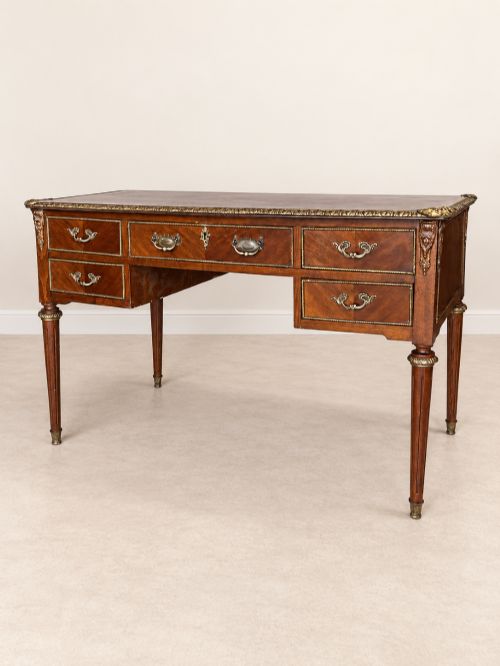
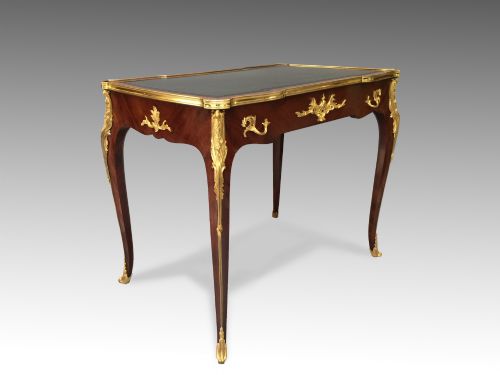
A gilt bronze mounted bureau encompasses writing furniture designed for domestic studies and reception rooms, ranging from flat-topped writing tables to tiered cabinets. When exploring this selection, buyers most frequently encounter nineteenth-century French forms dressed in revival aesthetics.
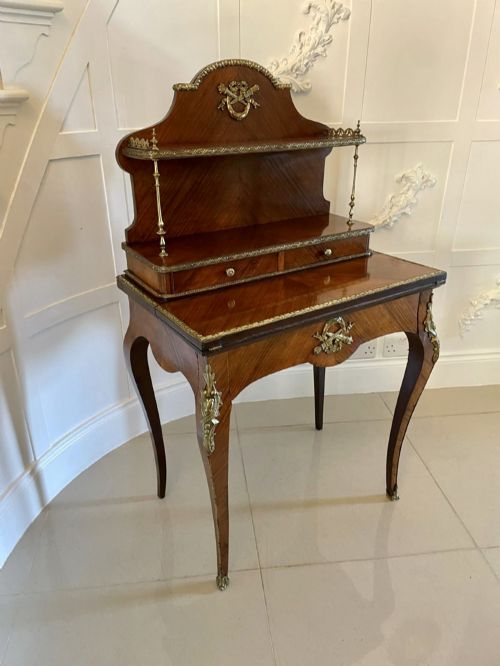
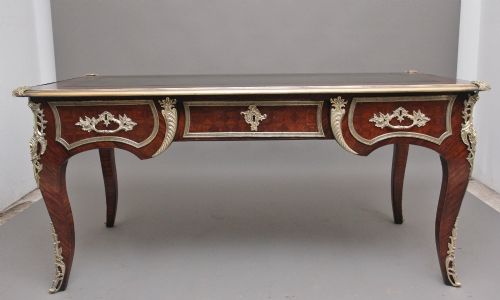
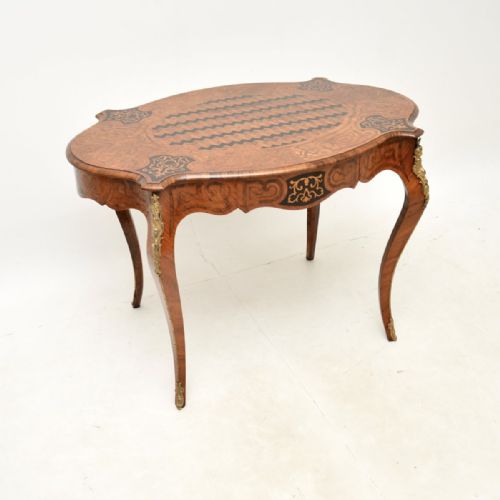
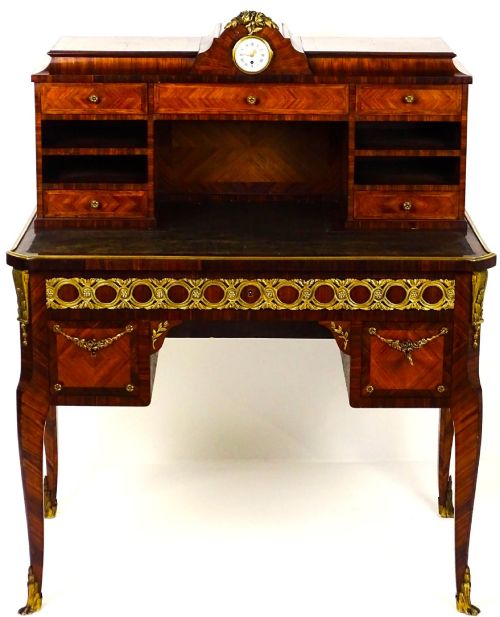
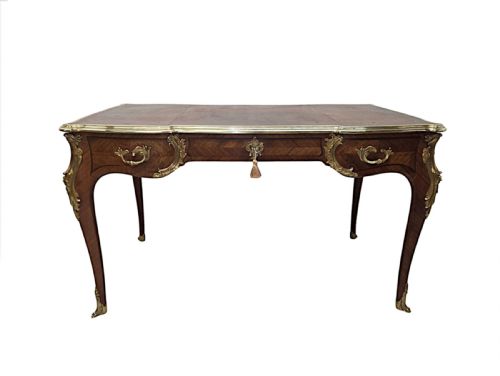
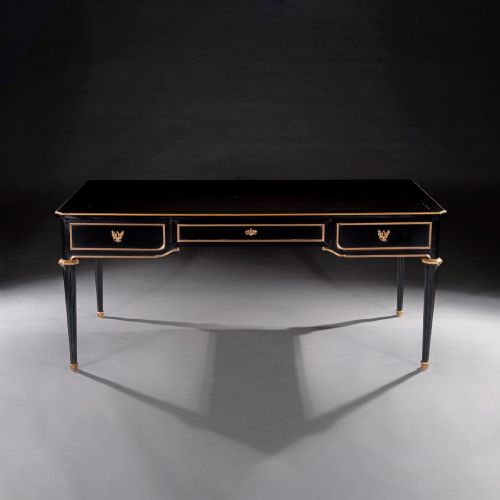
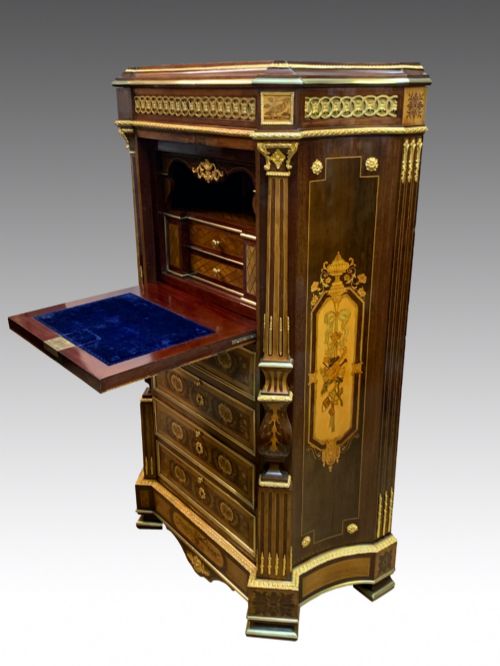
The inventory spans several distinct silhouettes, including bureau plat writing tables, drop-front secrétaires, and compact bonheur du jour desks. These pieces reflect diverse periods from the eighteenth century onwards, though nineteenth-century interpretations dominate the available selection.
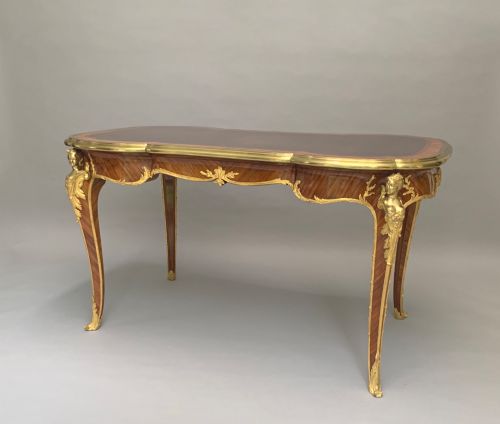
Makers adapted classical proportions to suit contemporary demands, incorporating serpentine outlines, kidney-shaped tops, and integrated superstructure cabinets. Each variation serves a distinct writing function while maintaining a unified decorative vocabulary.
Materials and Construction
Craftsmen built these carcases using dense foundational timbers like mahogany and oak, applying decorative veneers of kingwood, rosewood, tulipwood, and amboyna across the visible surfaces. Parquetry and marquetry patterns demonstrate precise geometric arrangements or floral motifs inlaid directly into the wood.
Ornate mounts cast in gilt bronze or ormolu provide structural accentuation along corners, aprons, and handles, secured with threaded fixings. Leather inserts frequently form the writing surface, bordered by blind-tooled gilt detailing.
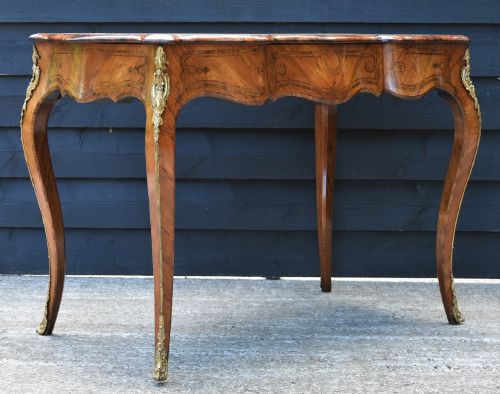
Listings feature numerous nineteenth-century French examples employing kingwood veneers, ormolu mounts, and Louis XV revival styling.
Evaluating the Pieces
Quality rests primarily on the crispness of the bronze chasing and the depth of the wood veneers. Superior pieces exhibit finely articulated cast mounts with sharp relief, paired with carefully matched timber grains that wrap harmoniously around curves.
The structural integrity of the drawer construction and the refinement of the marquetry distinguish workshop tiers. Master makers achieved seamless integration between the bronze mounts and the underlying wood carcase without gaps or uneven overhangs.
François Linke·Edwards and Roberts·Paul Sormani·Maison Krieger·CH. Jeanselme and Co·Durand·Blake·Fournier
The Gilt Bronze Mounted Bureau Glossary
- Ormolu
- Gilded bronze used for decorative mounts and furniture garniture. The technique involves applying a mercury-gilding process to cast bronze.
- Bureau Plat
- A freestanding writing table fitted with drawers across the frieze. These desks typically feature a finished back to allow placement away from walls.
- Kingwood
- A dense, heavily figured Brazilian timber featuring dark violet and brown stripes. It served as a primary veneer wood for high-status cabinetmakers.
- Marquetry
- The art of applying decorative veneer pieces to a carcase to form pictorial or geometric designs. Craftsmen utilised various exotic woods to achieve tonal contrast.
- Bonheur du Jour
- A light lady's writing desk featuring an upper cabinet with small drawers and shelves. This form emerged during the mid-eighteenth century and persisted through revival periods.
Gilt Bronze Mounted Bureau: Frequently Asked Questions
What is a bureau plat used for?
A bureau plat functions as a freestanding writing desk designed to sit centrally within a room rather than against a wall. The wide top surface accommodates correspondence and paperwork while frieze drawers store writing implements.
Historically, these tables served elite households for administrative tasks and letter writing. Their finished backs allowed owners to display them prominently in studies and salons.
How do I identify Louis XV style?
Louis XV style furniture relies heavily on asymmetric curves, naturalistic floral marquetry, and exuberant rococo gilt bronze mounts. Pieces display undulating serpentine lines rather than rigid geometric right angles.
Cabriole legs terminating in scrolled feet frequently support these desks. The overall aesthetic prioritises fluid movement and ornate decorative hardware over austere classical symmetry.
What distinguishes kingwood from rosewood?
Kingwood presents a distinctive striped grain pattern featuring contrasting dark violet and golden-brown tones. It offers a tighter, more linear visual texture compared to other exotic timbers.
Rosewood displays broader, more dramatic dark veining across a warm reddish-brown background. Cabinetmakers selected both for their rich natural colouration and durability as decorative veneers.
Where should I place a bonheur du jour?
A bonheur du jour suits quiet corners or bedroom studies where its compact proportions and upper cabinet storage remain accessible. Because these desks often feature finished backs, they can stand away from walls.
Pair the desk with a low upholstered chair that matches the writing height. Avoid placing the piece in direct sunlight to protect the fragile kingwood or rosewood veneers.