
19th Century Kingwood Bureau
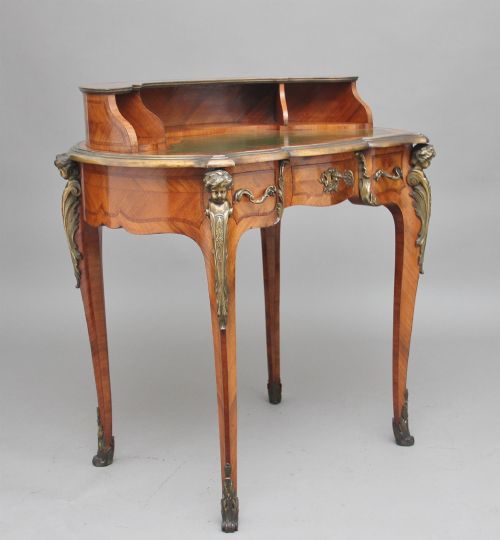
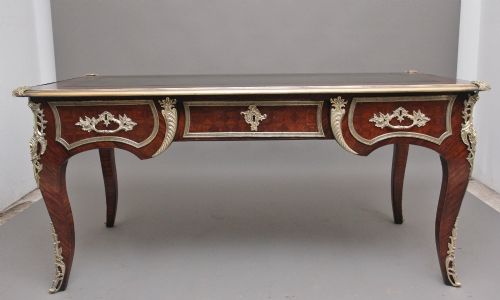
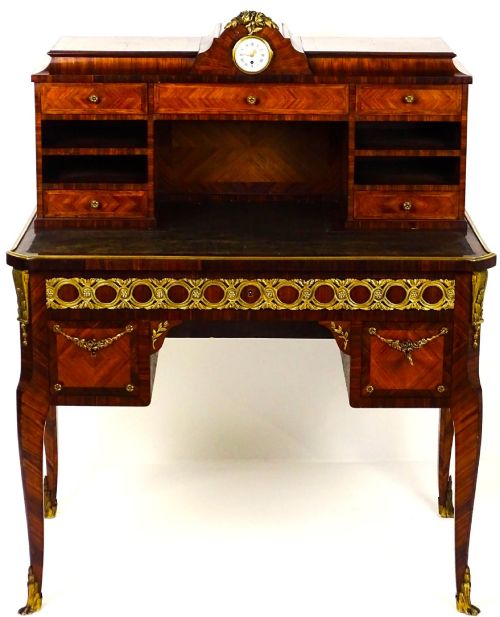
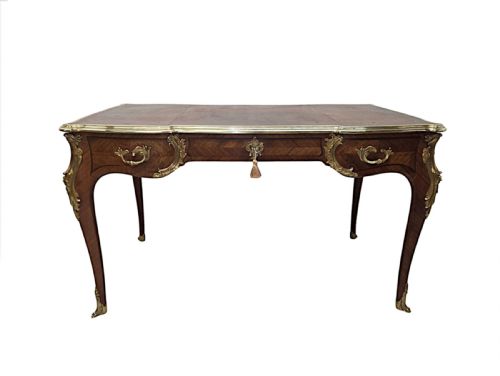
A 19th century kingwood bureau brings French elegance to a study, offering rich veneers and intricate ormolu mounts for daily writing.
19th Century Kingwood Bureau
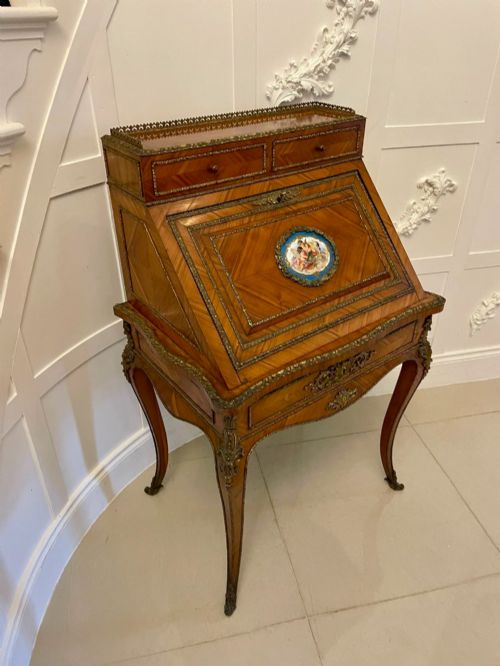
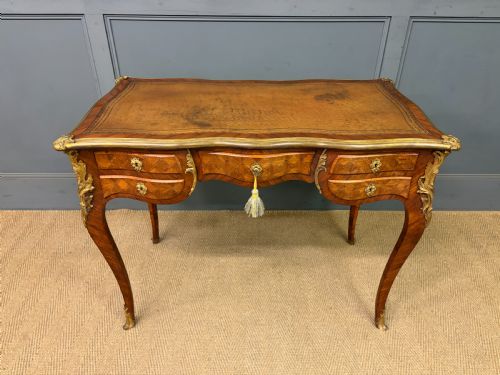
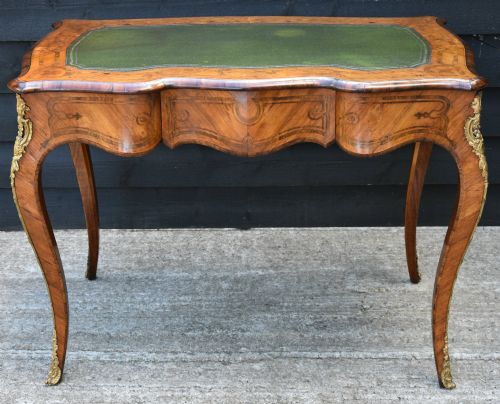
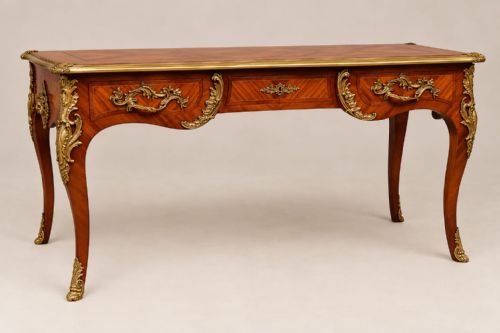
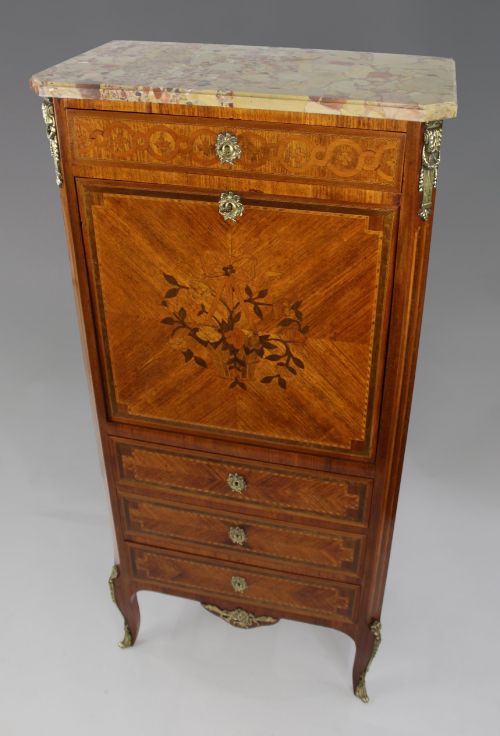
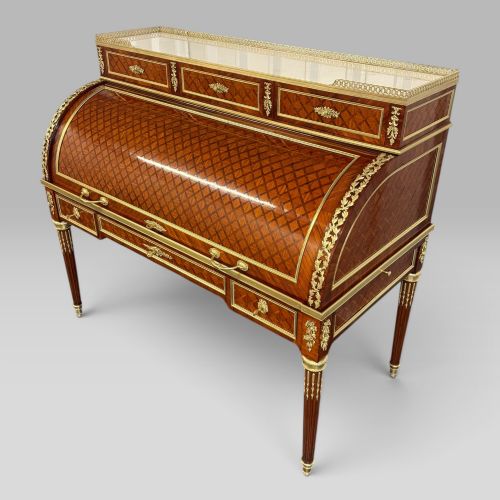
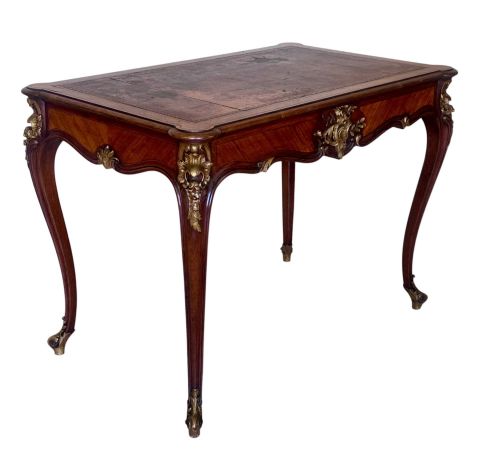
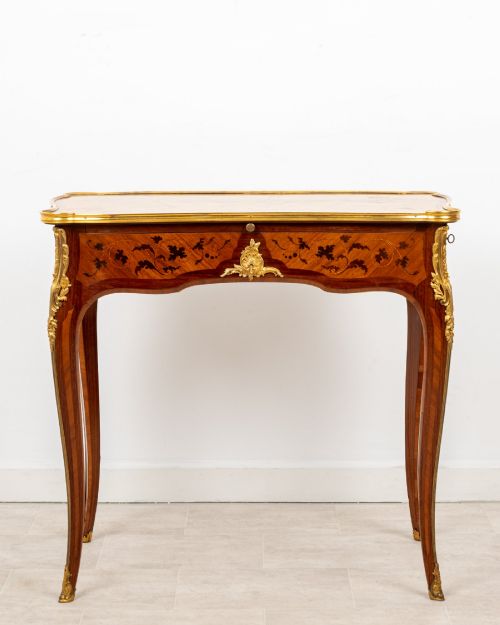
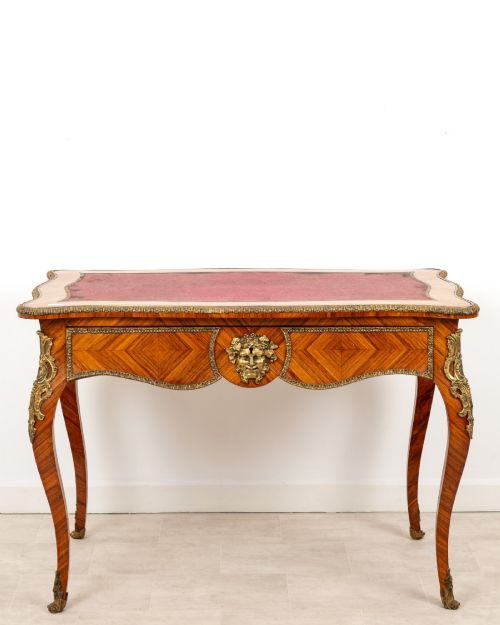
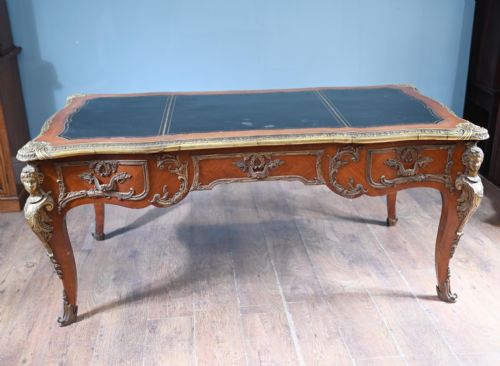
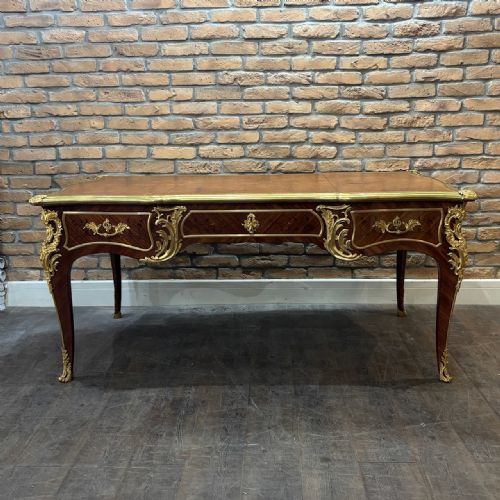
A 19th century kingwood bureau encompasses writing desks, bureau plats, and cylinder desks originating from French cabinetmakers working in revivalist styles. The selection frequently includes bureau plats and writing tables adorned with elaborate marquetry and parquetry patterns.
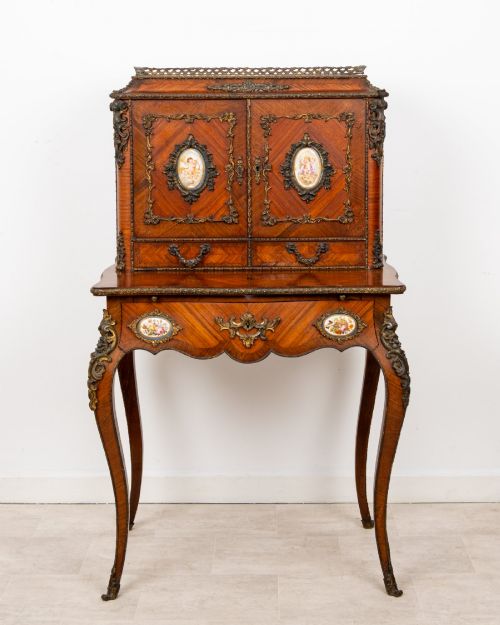
Most examples date from the later Victorian decades around 1880 and 1890, reflecting a strong taste for Louis XV and Louis XVI aesthetics. These forms range from compact ladies' writing cabinets and bonheur du jours to larger partners desks and escritoires.
Makers adapted traditional forms by incorporating practical writing surfaces alongside decorative mounts and fitted compartments. The dominant forms rely on French design vocabularies such as French Rococo and neoclassical revivalism.
How they were made
Cabinetmakers constructed these pieces using dense timbers such as kingwood, rosewood, and walnut as a carcase foundation, applying delicate veneers in geometric parquetry or floral marquetry designs. Artisans arranged contrasting wood grains to create pictorial scenes or complex repeating patterns across the writing surfaces and drawer fronts.
Gilt bronze and ormolu mounts were cast and chased then fixed to corners, aprons, and legs to accentuate the serpentine or straight architectural lines. Leather writing inserts provided a functional workspace, while porcelain plaques and Vernis Martin panels sometimes added further ornamentation.
Some ladies desks conceal tiny hidden spring-loaded compartments behind miniature drawers for storing secret love letters.
What varies in quality
The refinement of the cast ormolu mounts dictates much of the visual success, where crisply chased details and heavy gilding separate superior pieces from simpler productions. Hand-cut marquetry with subtle shading through scorched wood creates depth that distinguishes master workshops from standard cabinetmakers.
The choice of underlying timber and the precision of the veneer matching across secondary surfaces indicate the level of care invested during construction. Integrated mechanisms in cylinder desks and fitted interior drawers demonstrate higher mechanical competency.
Paul Sormani·CH. Jeanselme & Co·Durand·Edwards & Roberts
The 19th Century Kingwood Bureau Glossary
- Kingwood
- A dense Brazilian timber with rich dark brown and violet stripes, frequently utilised for decorative veneers in high-status French furniture. It provides the characteristic dark striated surface seen on these desks.
- Ormolu
- Gilded bronze mounts applied to furniture edges and corners for decorative effect. The metal is cast and finished by hand to create intricate gilt highlights.
- Bureau Plat
- A freestanding writing table with a flat top and one or more drawers in the frieze. It is finished on all sides to sit in the centre of a room.
- Parquetry
- Geometric wood inlay patterns forming repetitive shapes like cubes or chequers. Artisans arrange thin veneer slices to create optical depth on tabletops.
- Bonheur du Jour
- A small light lady's writing desk featuring a raised cabinet section with shelves or small drawers above the main writing surface.
19th Century Kingwood Bureau: Frequently Asked Questions
How do I identify Louis XV style?
Louis XV style furniture relies on asymmetrical curves, serpentine outlines, and floral marquetry motifs. Ormolu mounts follow organic shapes like acanthus leaves and scrolling foliage.
This aesthetic avoids straight lines in favour of flowing contours that create a sense of movement across the desk carcase.
Where was kingwood sourced?
Kingwood originates from South America, primarily Brazil, and was imported into Europe for luxury cabinetmaking. Its distinct dark grain made it a favoured choice for elite French makers.
Cabinetmakers sliced the timber into thin veneers to display the dramatic striping across large writing surfaces.
How should I clean ormolu mounts?
Ormolu mounts require gentle dusting with a soft brush to prevent the accumulation of dirt in the recessed chased details. Chemical polishes must be avoided as they strip the original fire gilding.
Maintaining a stable room humidity prevents the timber carcase from expanding and loosening the pins holding the bronze mounts.