


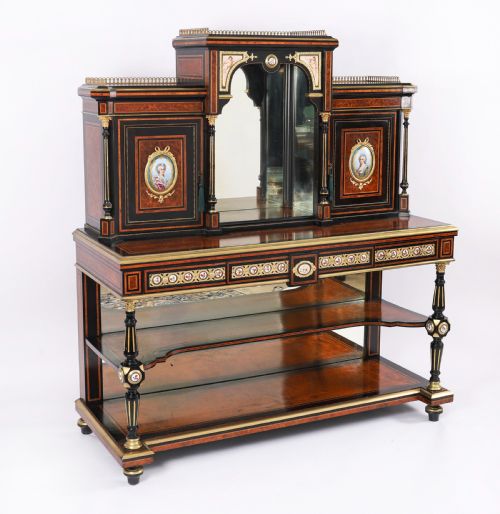


Porcelain Plaque Bureau
A porcelain plaque bureau brings together fine cabinet-making and painted ceramic art to create a striking workspace for correspondence.
Porcelain Plaque Bureau
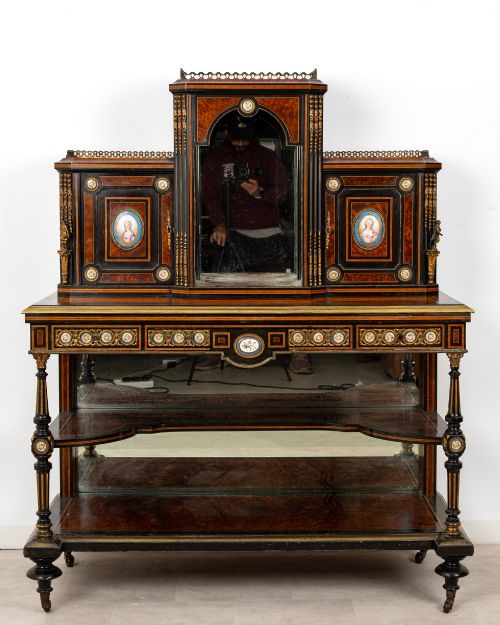
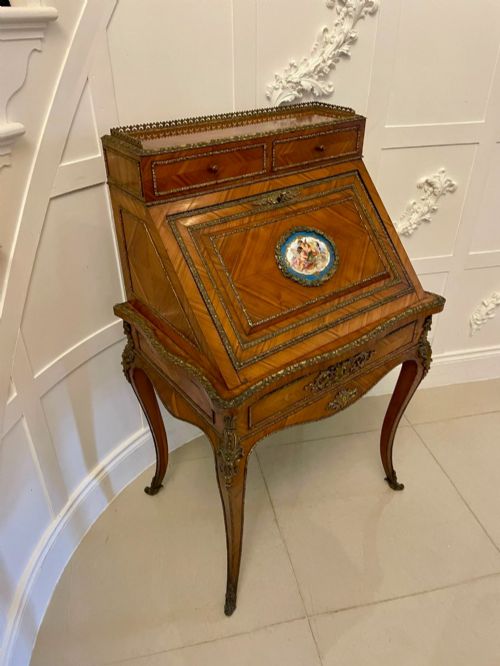
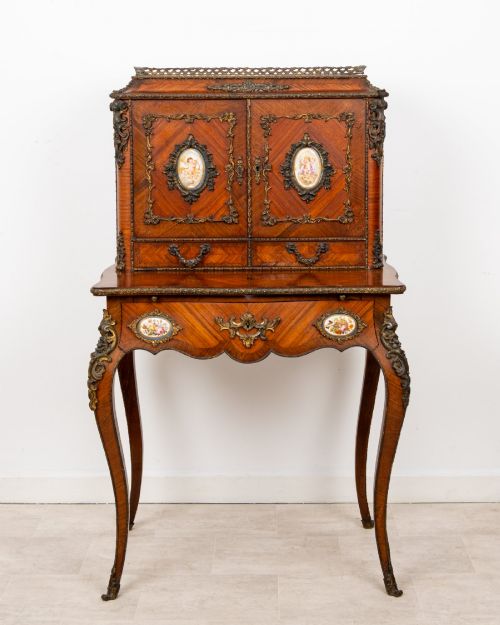
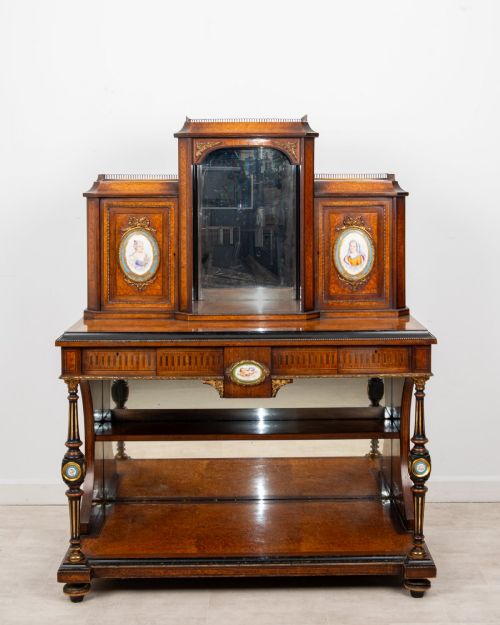
A porcelain plaque bureau typically takes the form of a French bonheur du jour or bureau de dame, combining a small writing surface with an upper cabinet or superstructure designed for stationery and letters. These pieces span the nineteenth century, including Victorian interpretations and specific decades such as eighteen-sixty and eighteen-eighty, reflecting French revival tastes.
The primary forms appearing in these listings are writing desks, writing tables, and compact cabinets tailored for a lady's boudoir. You will frequently encounter kingwood and amboyna veneered structures finished with glazed compartments and fitted writing slopes.
Originating largely from nineteenth-century French workshops, these items demonstrate the period's fascination with Louis XV and Louis XVI revival styles, often incorporating decorative ceramic inserts directly into the wooden carcass.
Distinguishing quality across the range
The refinement of the ormolu casting separates standard pieces from exceptional examples, where chased detailing on the gilt bronze mounts displays sharper relief and deeper definition.
The choice and figuring of the timber veneers dictate visual depth, with closely matched kingwood or amboyna grain patterns creating a more cohesive and sophisticated surface finish across the bureau front.
The hand-painted detail and colour fidelity of the porcelain plaques themselves determine the artistic merit of the piece, with finer brushwork and more complex floral or figurative scenes elevating the overall standard.
Many of these miniature writing desks were built with hidden compartments for love letters, proving that nineteenth-century correspondence required proper security.
The Porcelain Plaque Bureau Glossary
- Bonheur du jour
- A small lady's writing desk featuring a light table base and an attached upper cabinet with shelves or drawers. This form became popular in mid-nineteenth-century French furniture design.
- Ormolu
- Gilt bronze mounts cast and chased to ornament the edges, feet, and key escutcheons of nineteenth-century furniture. The technique involves applying a gold amalgam to a bronze base and firing it.
- Kingwood
- A dense, richly grained Brazilian timber utilised extensively for decorative veneer work in French cabinet-making. It displays dark violet-brown tones with lighter golden streaks.
- Amboyna
- An exotic burr wood prized for its intricate, swirling grain patterns and warm reddish-brown colour. It is frequently employed on the primary display surfaces of nineteenth-century writing desks.
- Cartonnier
- A decorative freestanding or desk-top cabinet fitted with compartments designed to hold papers, letters, and documents. It often matches the timber and mount style of the associated writing table.
Porcelain Plaque Bureau: Frequently Asked Questions
What is a bonheur du jour?
A bonheur du jour is a small, light writing desk with an integrated upper cabinet, designed primarily for a lady's use in a boudoir or drawing room.
The form emerged in France and became widespread during the nineteenth century, serving as both a functional writing surface and a decorative display piece.
Where were porcelain plaques placed?
Porcelain plaques are typically set into the fall-front flap, the doors of the upper superstructure, or along the frieze drawers of the writing desk.
They serve as decorative focal points, framed by ormolu mounts that highlight the painted ceramic panels against the surrounding timber veneer.
How do I care for kingwood?
Kingwood veneer requires protection from direct sunlight and excessive humidity fluctuations to prevent fading and timber movement over time.
Regular dusting with a soft, dry cloth is sufficient, supplemented occasionally by traditional beeswax polish to nourish the wood and maintain its natural lustre.
Are these desks for writing?
These desks provide a compact writing surface, often lined with leather or fabric, suitable for correspondence and letter-writing.
While fully functional as writing tables, their delicate veneers and ormolu mounts mean they are best used with care rather than as heavy daily workstations.