
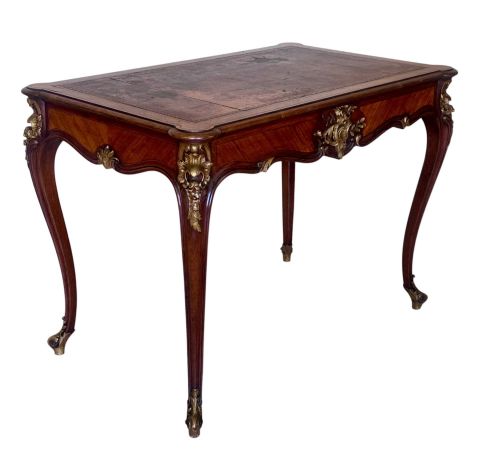
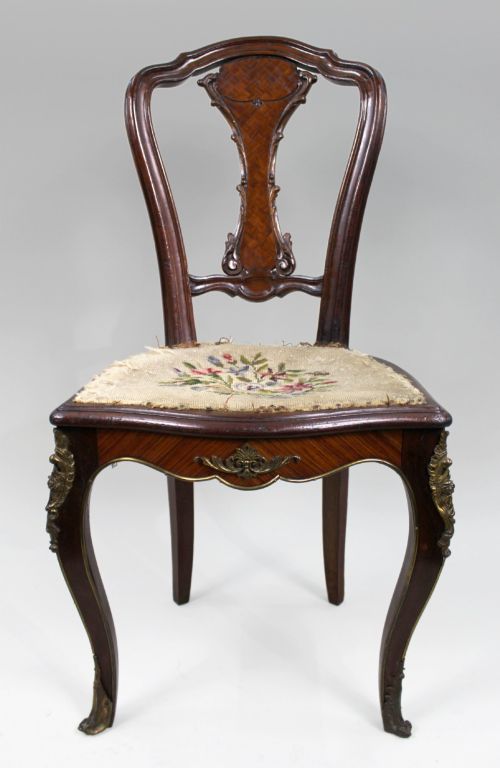
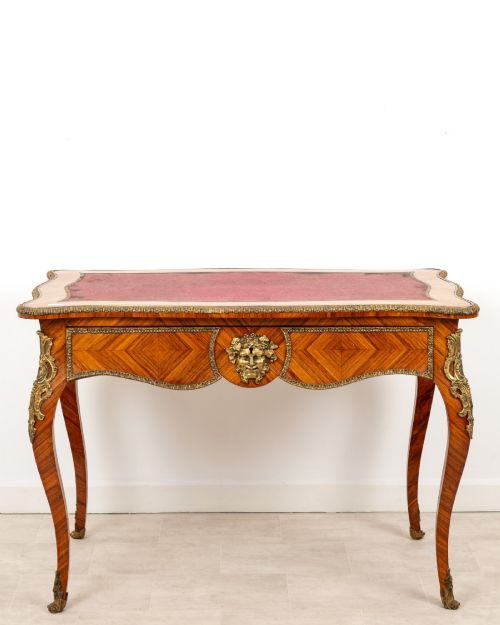
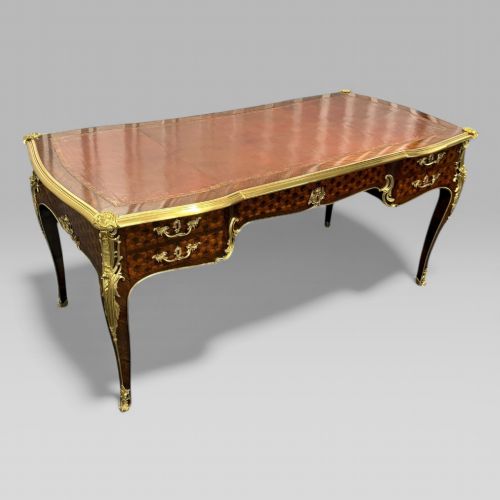
Parquetry Kingwood Desk
When you search for a parquetry kingwood desk, you encounter intricate French writing furniture defined by warm timbers and polished metal mounts.
Parquetry Kingwood Desk
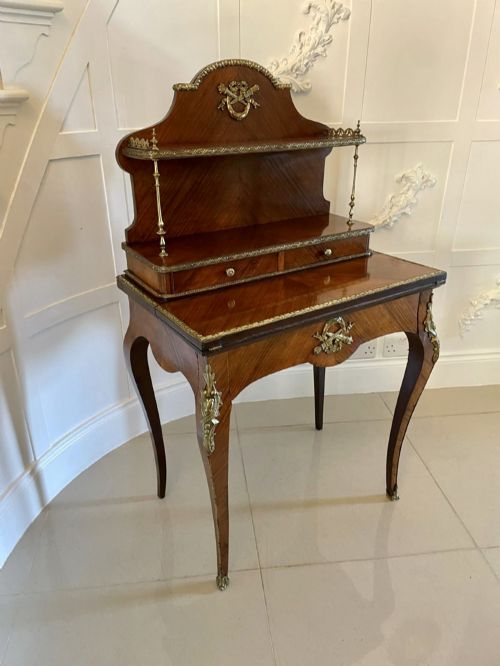
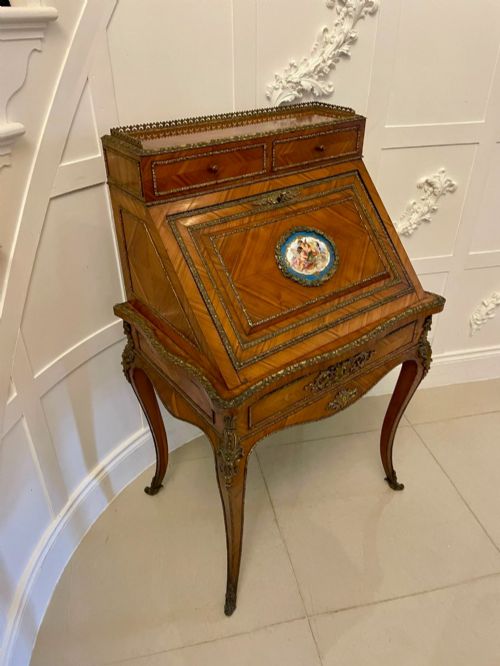
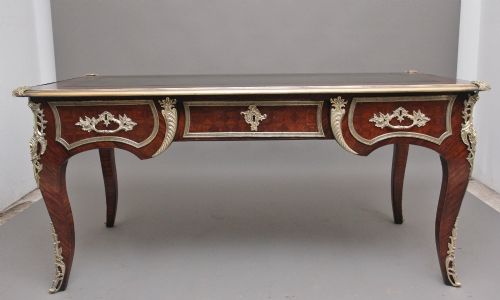
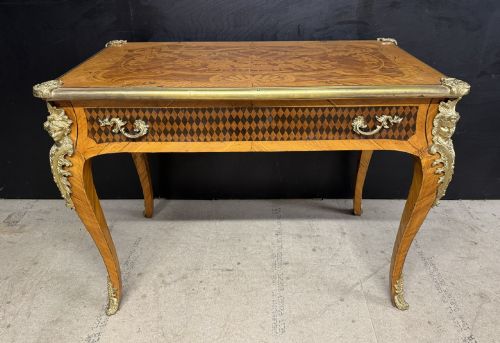
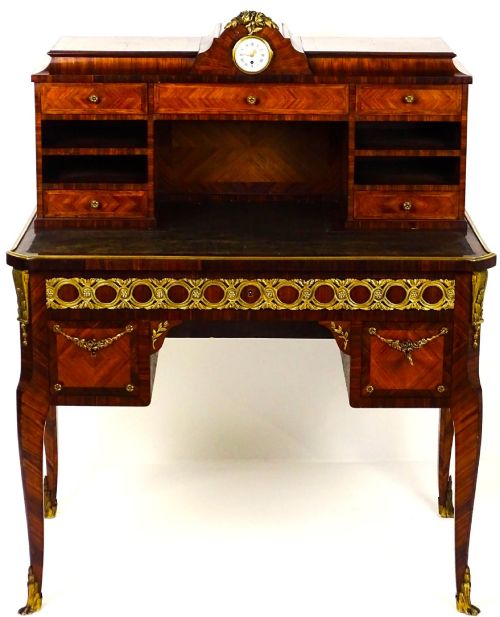
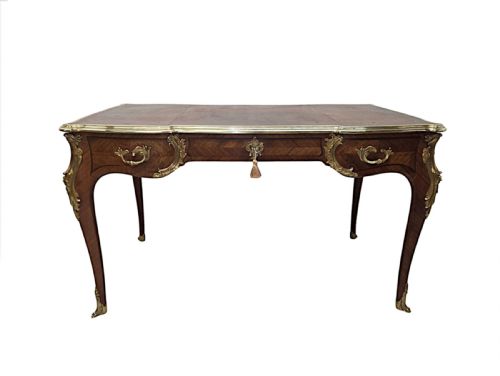
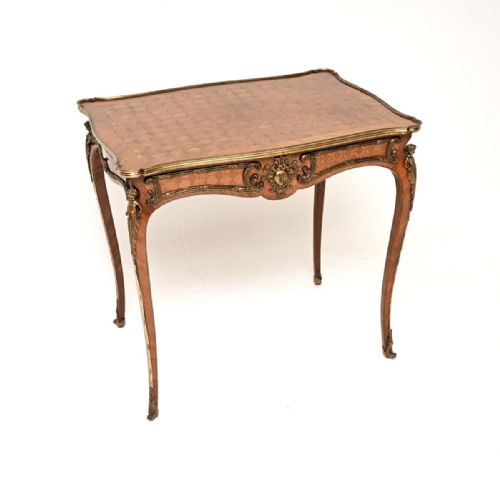
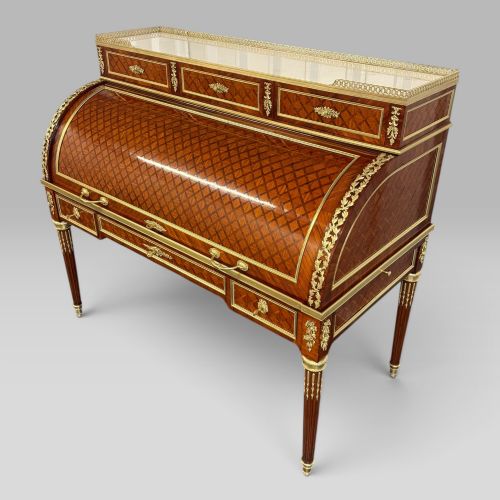
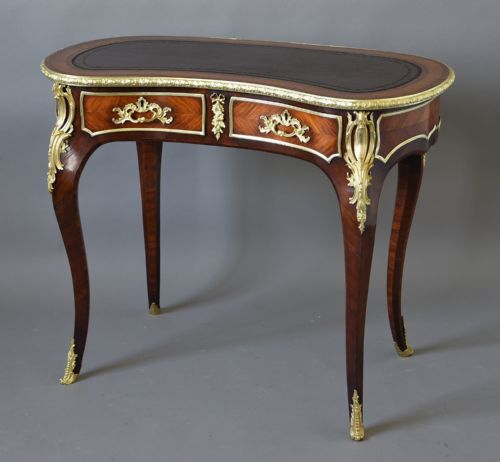
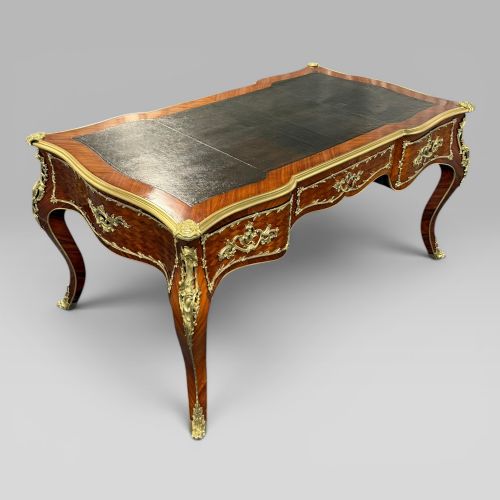
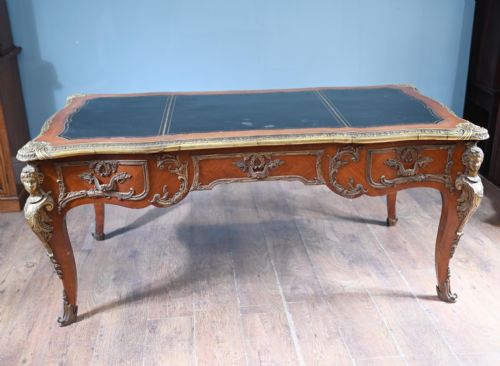
A parquetry kingwood desk brings together geometric wood veneers and writing surfaces shaped in the French revival styles of the eighteenth and nineteenth centuries. Bureau plat tables, cylinder desks and smaller bonheur du jour cabinets dominate the selection, often taking kidney or rectangular forms.
Most examples originate from nineteenth-century workshops producing Louis XV and Louis XVI revival pieces. These range from freestanding library tables to compact ladies writing desks designed for intimate domestic spaces.
How they were made
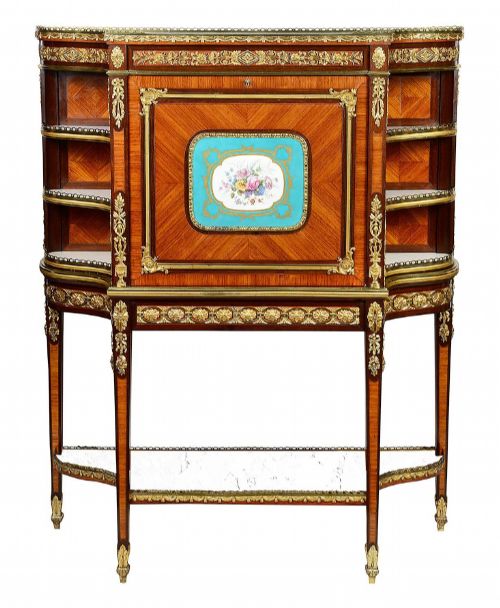
Cabinetmakers laid precise geometric patterns of kingwood, tulipwood and rosewood veneers over solid supportive carcases. These wooden surfaces were complemented by chased ormolu and gilt bronze mounts secured along the corners, legs and drawers.
Many examples incorporate leather writing inserts tooled with gold, alongside porcelain plaques or Vernis Martin panels. Structural frames rely on traditional joinery paired with heavy cast brass hardware.
Listings feature nineteenth-century French revival desks combining kingwood veneers with ormolu mounts and leather writing surfaces.
What varies in quality
Quality rests upon the crispness of the bronze casting and the precision of the veneer geometry across the parquetry panels. Tables bearing identifiable workshop signatures or closely following known models show superior execution in their mounts and internal drawer construction.
Weaker pieces exhibit simpler timber selection and cast metal elements lacking sharp hand-chased detail. The harmony between the bronze mounts and the underlying wood grain dictates the overall standing of the desk.
Paul Sormani·CH. Jeanselme and Co·Blake·François Linke
The Parquetry Kingwood Desk Glossary
- Kingwood
- A dense, heavily figured Brazilian timber displaying rich brown tones and dark grain streaks. It was widely utilised by elite cabinetmakers for high-end French veneered furniture.
- Bureau plat
- A freestanding writing table fitted with one or more drawers along the frieze. These tables are finished on all sides to sit centrally within a room rather than against a wall.
- Ormolu
- Cast brass that has been mercury gilded to achieve a bright gold finish. It serves as decorative mounts framing the drawers and corners of nineteenth-century desks.
- Parquetry
- A geometric mosaic of wood veneers arranged in repeating patterns such as cubes or chequers. It differs from pictorial marquetry by relying on abstract angles rather than floral scenes.
- Bonheur du jour
- A small light ladies writing desk featuring a super-structure of small drawers and cabinets above the main writing surface. These pieces often incorporate porcelain plaques and slender legs.
Parquetry Kingwood Desk: Frequently Asked Questions
How do I identify kingwood?
Kingwood is a dense, heavy hardwood recognisable by its distinctive deep brown colour and contrasting dark violet-black grain patterns. It polishes to a high gloss that accentuates the natural figuring of the veneer.
Cabinetmakers arranged these timbers in geometric parquetry patterns to catch the light across curved desk surfaces.
Where were these desks made?
The majority of these desks were produced in French workshops, particularly in Paris, during the nineteenth century. Master cabinetmakers revived earlier Louis XV and Louis XVI styles using traditional veneering and casting methods.
Some pieces were also produced by English makers adopting French aesthetic influences during the Victorian period.
How do I care for ormolu mounts?
Ormolu mounts require gentle dusting with a soft, dry cloth to prevent dust accumulation within the chased details. Avoid abrasive cleaners or chemical polishes that can strip the original mercury gilding from the cast bronze.
Maintaining a stable room humidity preserves both the metal mounts and the underlying wood veneers.