



Ladies Fall Front Desk
These ladies fall front desk examples offer compact writing surfaces paired with enclosed storage, designed for domestic correspondence.
Ladies Fall Front Desk
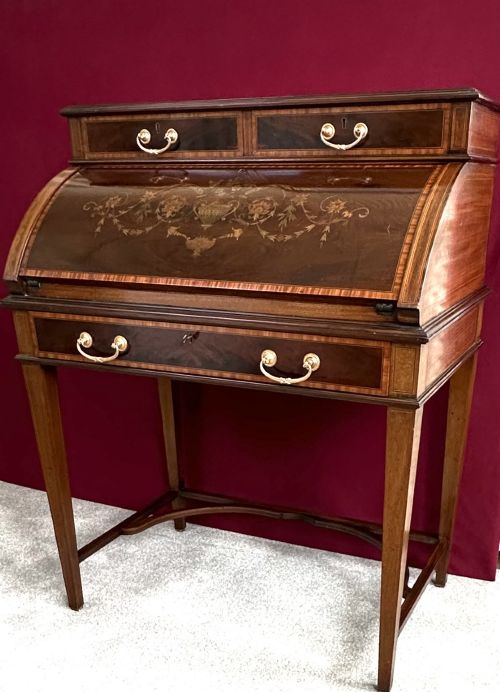
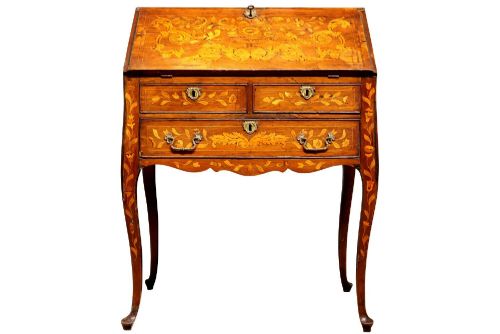
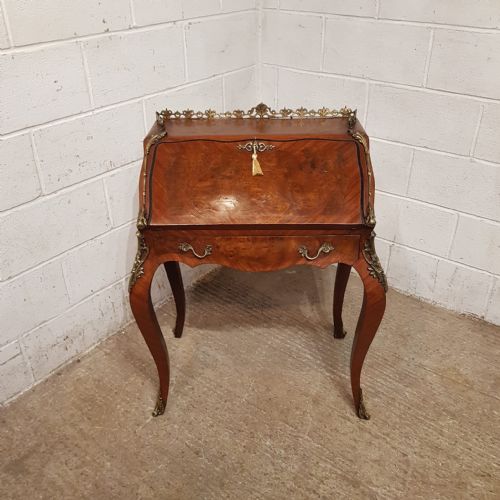
A ladies fall front desk provides a sloping or vertical hinged flap that drops down to form a writing surface, concealing small drawers and pigeonholes within. This furniture type appears frequently on this page under alternate terms such as bureau de dame and writing bureau.
The pieces seen here span multiple periods including the Victorian and Edwardian eras, alongside pieces dating back to 1800. Walnut, rosewood, and mahogany form the primary carcases, often finished with marquetry inlay or French stylistic revivals.
Most examples present compact proportions suitable for smaller rooms, ranging from freestanding cabinet forms to models raised on slender stands. French Louis XV styles and Sheraton revivals dominate the designs recorded in the current inventory.
Materials and construction
Cabinetmakers constructed these carcases using hardwoods like walnut, rosewood, and mahogany, frequently applying decorative veneers such as burr walnut, kingwood, satinwood, and amboyna to the exterior surfaces. Marquetry and floral inlay add pictorial detail across many of the panels.
Metal mounts in brass and ormolu edge the curves and protect the corners of French-influenced pieces, while porcelain plaques occasionally inset into the fall front. Interior compartments utilise smaller secondary timbers to construct the fitted stationery drawers.
Listings span the 19th century through to 1920, featuring woods such as walnut, rosewood, kingwood, and satinwood.
Quality variations
The refinement of the timber selection dictates much of the distinction between standard and superior pieces, particularly in the figuring of burr walnut or the symmetry of floral marquetry. Dense, well-matched grain patterns across the fall front require greater skill in veneer preparation.
The execution of brass ormolu mounts and the precision of internal joinery separate ordinary production from workshop pieces bearing attribution to known makers. Smooth action in the fall front hinges and tight joints in the small internal pigeonholes indicate superior cabinetmaking.
Paul Sormani·Druce & Co
The Ladies Fall Front Desk Glossary
- Fall front
- A hinged writing flap that drops to a horizontal position for use. When closed, it conceals the interior compartments.
- Bureau de dame
- A French term for a ladies writing desk, usually compact in scale and decorative in finish. These often incorporate cabriole legs and floral marquetry.
- Marquetry
- The art of applying pieces of veneer to a structure to form decorative patterns. Floral designs are common on these specific desks.
- Ormolu
- Gilded bronze used for decorative mounts and edgings on furniture. It appears frequently on French revival pieces.
- Secrétaire abattant
- A tall fall front desk or cabinet. This form provides vertical storage alongside the writing surface.
Ladies Fall Front Desk: Frequently Asked Questions
What is a ladies fall front desk?
A ladies fall front desk is a compact writing cabinet featuring a hinged flap that pulls down to create a writing surface. Inside, small drawers and pigeonholes organise stationery.
Most examples date from the Victorian and Edwardian periods, employing decorative veneers like rosewood and walnut.
How were these desks used?
These desks served private domestic spaces for writing letters, managing household accounts, and storing personal papers. The small internal compartments kept ink, paper, and envelopes tidy.
The drop-down flap provided an immediate writing surface that closed to hide the contents when not in use.
Where should I place one?
Because of their compact proportions, these desks fit easily into living rooms, studies, or bedrooms without dominating the floor space. Freestanding models look effective positioned away from walls where the polished rear timber remains visible.
Keep them away from direct heat sources and strong sunlight to protect delicate veneers and marquetry.
How do I identify the period?
Dating relies on timber choices, construction techniques, and stylistic revivals present in the design. Victorian pieces often use rosewood with brass inlay, while Edwardian examples frequently feature satinwood or Sheraton revival motifs.
Earlier pieces from around 1800 display distinct marquetry patterns and cabinetmaking structures unique to Dutch or English workshops of that time.