


Louis XV Bureau De Dame
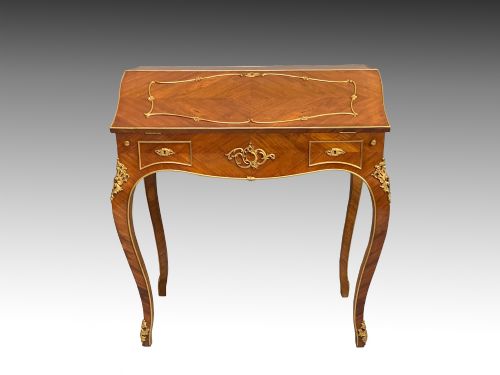
A louis xv bureau de dame is a small ladies writing desk offering refined slope-front surfaces and elegant curves.
Louis XV Bureau De Dame
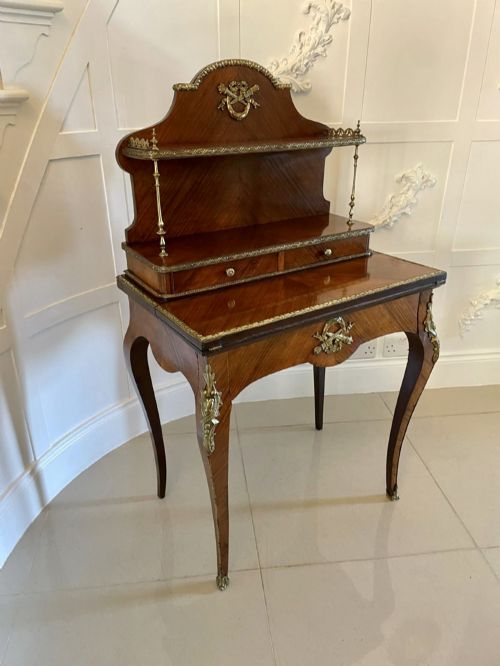
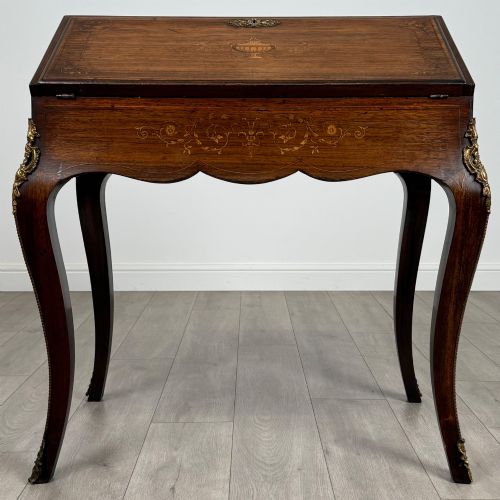
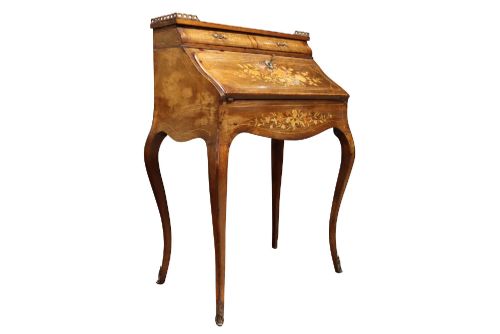
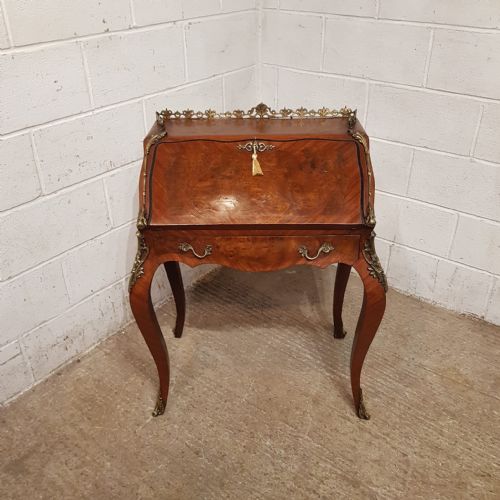
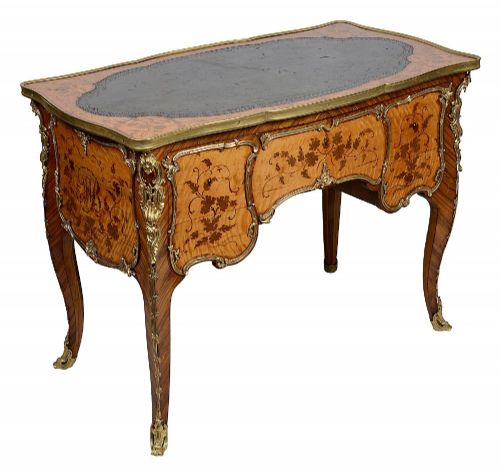
When you search for a louis xv bureau de dame, you are looking at compact writing desks designed principally for ladies, featuring sloping lids and delicate proportions. These pieces mostly emerge from nineteenth-century revival periods, particularly the Victorian era and the Napoleon III epoch, channeling earlier French rococo aesthetics.
Makers and workshops of the period drew heavily on eighteenth-century design vocabulary, producing items that balance decorative marquetry with practical writing surfaces. Surviving examples demonstrate the enduring appeal of these diminutive feminine writing cabinets in period interiors.
How they were made
Cabinetmakers constructed these desks using native carcase woods such as oak and pine, which were then veneered in decorative hardwoods including kingwood, rosewood, walnut, and tulipwood. Wood inlay and marquetry work created elaborate floral and geometric patterns across the sloping lids and drawer fronts.
Gilt metal mounts, brass stringing, and cast ormolu details enhanced the curved contours and protected vulnerable corners. Glass panels and porcelain plaques occasionally appeared as supplementary decorative elements on select superior examples.
Listings here span the Victorian era, nineteenth century, and early twentieth century, utilising rosewood, walnut, kingwood, oak, glass, brass, and ormolu.
What varies in quality
The standard of execution in the marquetry and timber selection largely separates standard production from exhibition pieces. Finer desks display meticulously matched veneer grains and complex pictorial wood inlay rather than repetitive stamped patterns.
The weight and crispness of the ormolu mounts indicate the underlying craftsmanship, with hand-chased gilt bronze sitting far above light pressed metal. Structural integrity in the fall-front hinges and internal drawer construction also marks out superior workshops.
BVRB
The Louis XV Bureau De Dame Glossary
- Bureau de dame
- A small lady's writing desk, typically featuring a sloping fall-front writing flap that conceals fitted interior compartments and small drawers.
- Bonheur du jour
- A small light desk featuring a tiered superstructure with shelves or miniature cupboards above the main writing surface.
- Ormolu
- Gilded bronze mounts applied to furniture for decorative enrichment and edge protection, cast and chased to accentuate the rococo curves.
- Marquetry
- The art of applying decorative veneer pieces in various timbers to form intricate geometric or floral patterns across the surface.
- Kingwood
- A dense, heavily figured South American timber prized for its rich dark violet and golden-brown tones used extensively in French revival cabinetmaking.
Louis XV Bureau De Dame: Frequently Asked Questions
What is a bureau de dame used for?
These compact desks served as private writing spaces for correspondence and letter writing in domestic sitting rooms.
The interior compartments held stationery, inkwells, and sealing wax behind the lockable sloping fall-front lid.
How do I date a bureau de dame?
Dating relies on timber choices, construction methods, and stylistic revival markers associated with nineteenth-century French and Victorian manufacture.
Most surviving examples date from the mid-nineteenth century up through the nineteen-twenties, reflecting periods of intense historical revivalism.
Are these desks suitable for modern rooms?
Their diminutive scale and refined proportions allow them to fit comfortably into bedrooms, living spaces, or home studies as statement accent furniture.
The flat top and practical writing flap provide functional surface area without dominating a modern interior.
What is the difference between a bureau and a bonheur du jour?
A traditional bureau relies on a sloping fall-front lid to enclose its writing area and internal pigeonholes.
A bonheur du jour incorporates an open or shelved superstructure directly onto the top of the desk surface.