



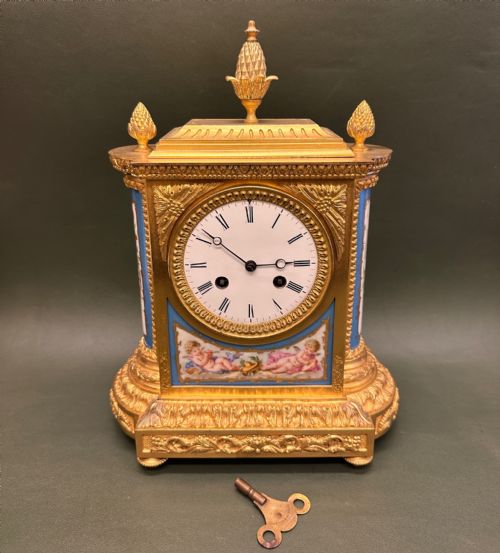


Porcelain Mounted Clock
A porcelain mounted clock brings together fine ceramic plaques and gilt metalwork to create a striking centrepiece for a mantel or bureau.
Porcelain Mounted Clock
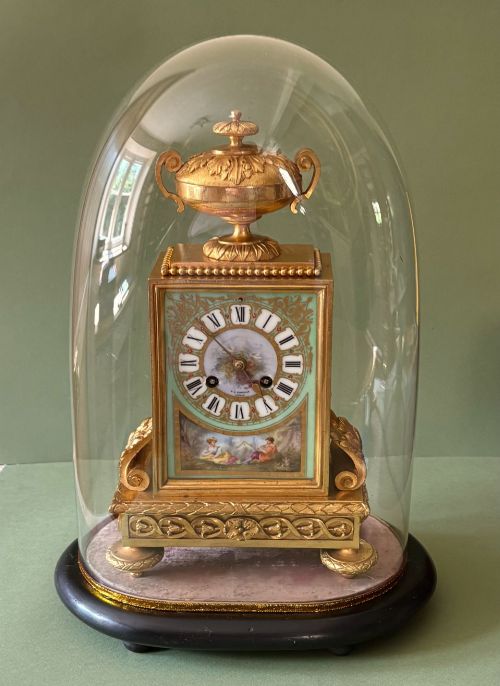
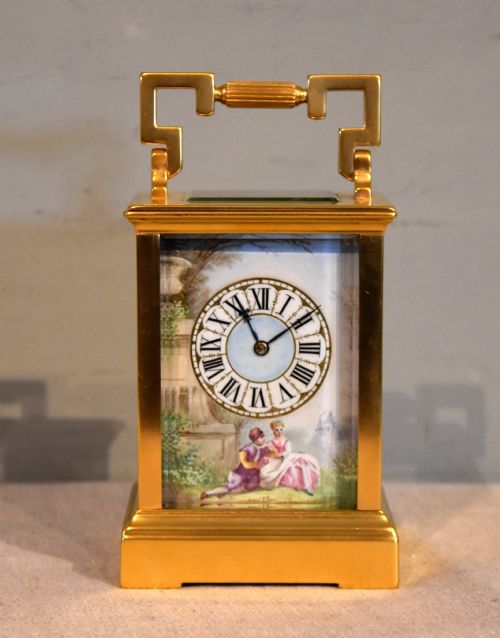
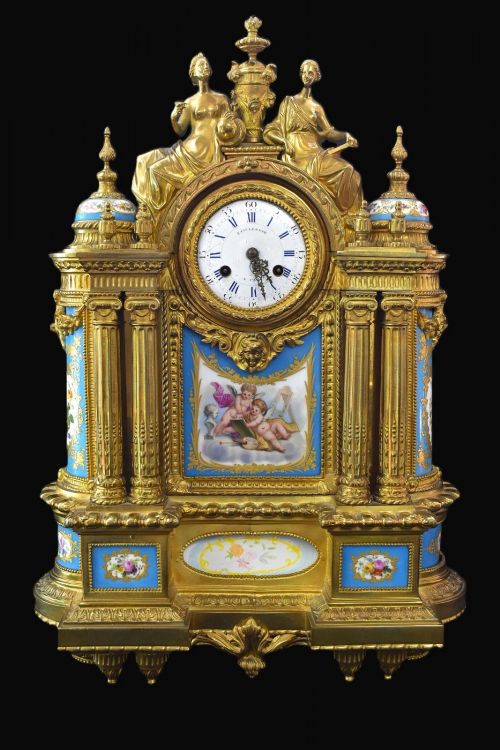
A porcelain mounted clock combines timekeeping with decorative ceramic panels, most frequently seen in French mantel clocks from the nineteenth century. These objects range from compact carriage pieces and boudoir clocks to large garniture sets completeside vases. The design often draws on Louis XVI Revival and Rococo styles, featuring ornate metal mounts around painted dials and plaques.
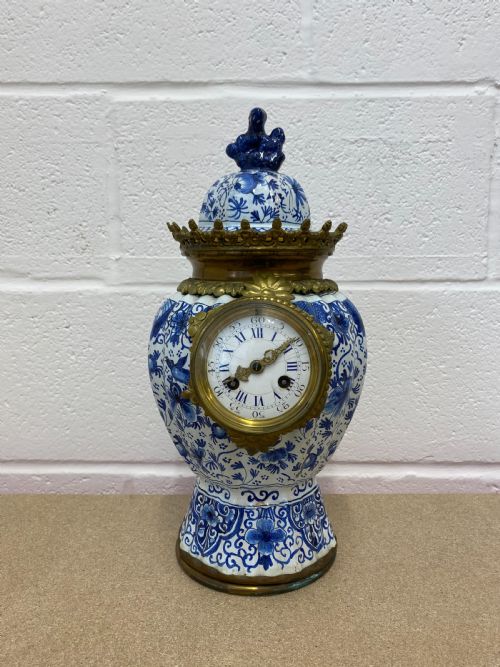
The ceramic elements take many forms, including Sevres style panels, Paris porcelain, and Imari wares, alongside specialised pieces incorporating Delft or Meissen figures. Makers frequently paired these ceramics with cast bronze, brass, or marble to build substantial housings for mechanical movements. The result is a dual function of practical timekeeper and sculptural ornament.
How they were made
The construction relies on combining fired ceramics with cast or gilded metalwork, principally ormolu and gilt bronze. Artisans shaped the metal mounts to hug the contours of painted porcelain plaques, dials, and urns. Mechanical movements were then fitted within these mixed-media housings alongside enamelled numerals.
Makers utilised wood, marble, and glass in specific structural roles to support the heavy combination of metal and ceramic. Surface gilding and chased details completed the bronze work, framing the hand-painted ceramic scenes which often depicted pastoral or floral subjects.
Listings feature Victorian and nineteenth-century pieces alongside eighteenth-century works, utilising materials such as straw, glass, and marble.
What varies in quality
Another factor is the integration of the movement with the case, as well as the presence of matching garniture pieces or signed maker details. Clocks by established makers exhibit superior mechanical reliability and more harmonious proportions between the ceramic body and the metal mounts.
Etienne Lenoir·JP Delettrez·Miroy Frères·J.B. Delettrez·Samuel Marti·Achilles Brocot·Japy Freres
The Porcelain Mounted Clock Glossary
- Ormolu
- Gilded bronze produced by applying a mercury-gold amalgam to cast brass or bronze. This technique creates a rich golden surface finish seen on many nineteenth century clock mounts.
- Garniture set
- A matching group of decorative objects consisting of a central clock flanked by matching vases or candelabra. These sets were designed to sit harmoniously on a mantelpiece.
- Paris porcelain
- Hard-paste porcelain produced by numerous independent workshops in and around Paris during the eighteenth and nineteenth centuries. It is known for bright glazes and fine gilding.
- Carriage timepiece
- A portable clock originally designed for travel, housing a spring-driven movement within a brass and glass case. Some versions incorporated porcelain plaques into the frame.
Porcelain Mounted Clock: Frequently Asked Questions
What is a porcelain mounted clock?
A porcelain mounted clock is a timekeeper that incorporates ceramic plaques, dials, or bodies into its architectural case. These pieces rely on metal mounts to secure the ceramic elements around the clock movement.
Most examples date from the nineteenth century and reflect revival styles like Rococo or Louis XVI. They served as prominent decorative furnishings in period interiors.
How do I wind my clock?
Winding requires a matching key inserted into the winding holes on the dial face or movement backplate. Turn the key gently until you feel resistance, taking care not to overwind the spring.
Many antique movements require attention every week or eight days. Consult a professional horologist if the mechanism feels stiff or fails to hold power.
What is a garniture set?
A garniture set consists of a central clock accompanied by two matching side pieces, such as vases or urns. These matched groupings were created to display together on a mantelpiece or sideboard.
The matching items share the same porcelain panels, ormolu mounts, and stylistic motifs as the main clock body. Complete sets are valued for their decorative symmetry.
How do I care for ormolu mounts?
Ormolu mounts require gentle dusting with a soft, dry cloth to prevent the accumulation of dirt in the chased recesses. Avoid using commercial metal polishes, as abrasive liquids can strip the original mercury gilding.
Keep the clock away from direct sunlight and damp environments to protect both the metal surfaces and the painted porcelain panels.
Are these clocks accurate timekeepers?
Antique mechanical clocks can keep good time when properly serviced and adjusted by a qualified restorer. However, older gear trains and pendulum suspensions are generally less precise than modern quartz movements.
Regular professional maintenance helps preserve the delicate brass gears and escapements within nineteenth-century French movements.