
Gold French Mantel Clock
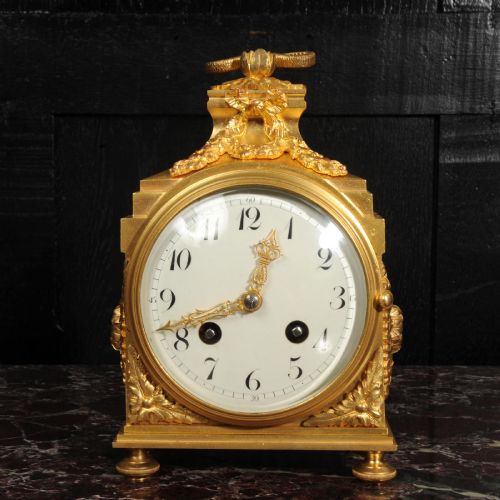
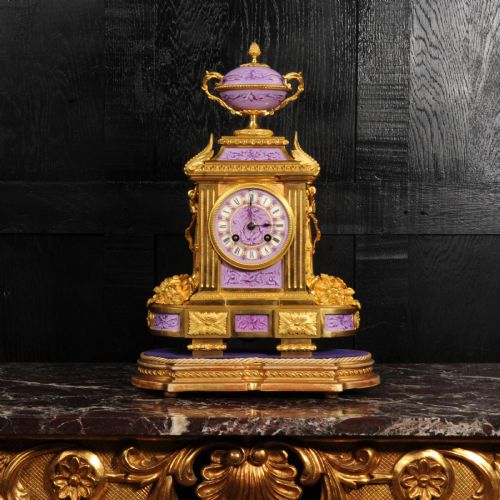
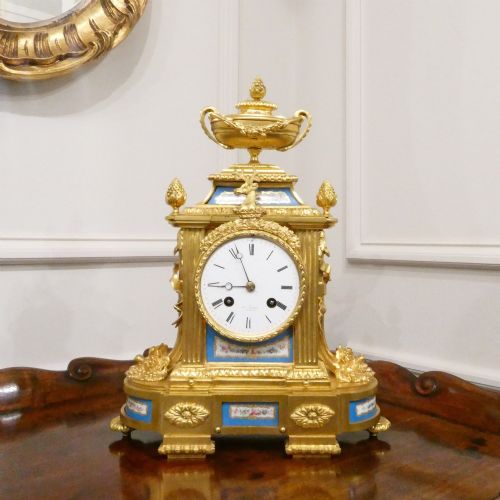
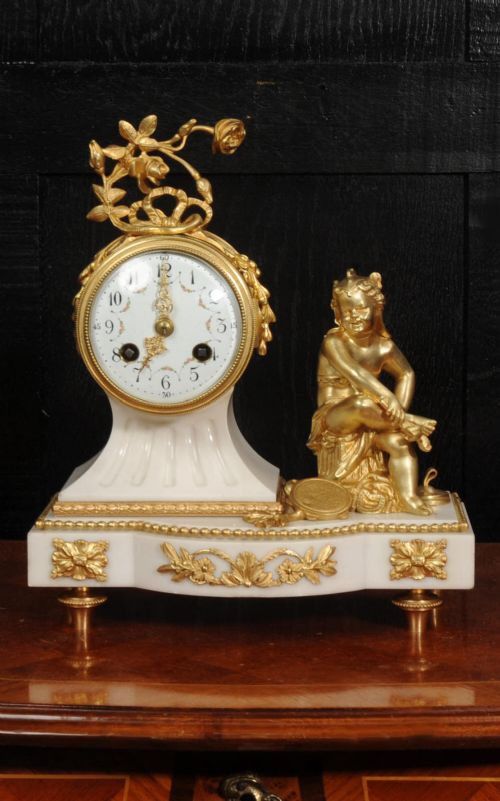
A gold french mantel clock brings heavy gilt bronze, gleaming enamel dials and precise mechanical movement into a room.
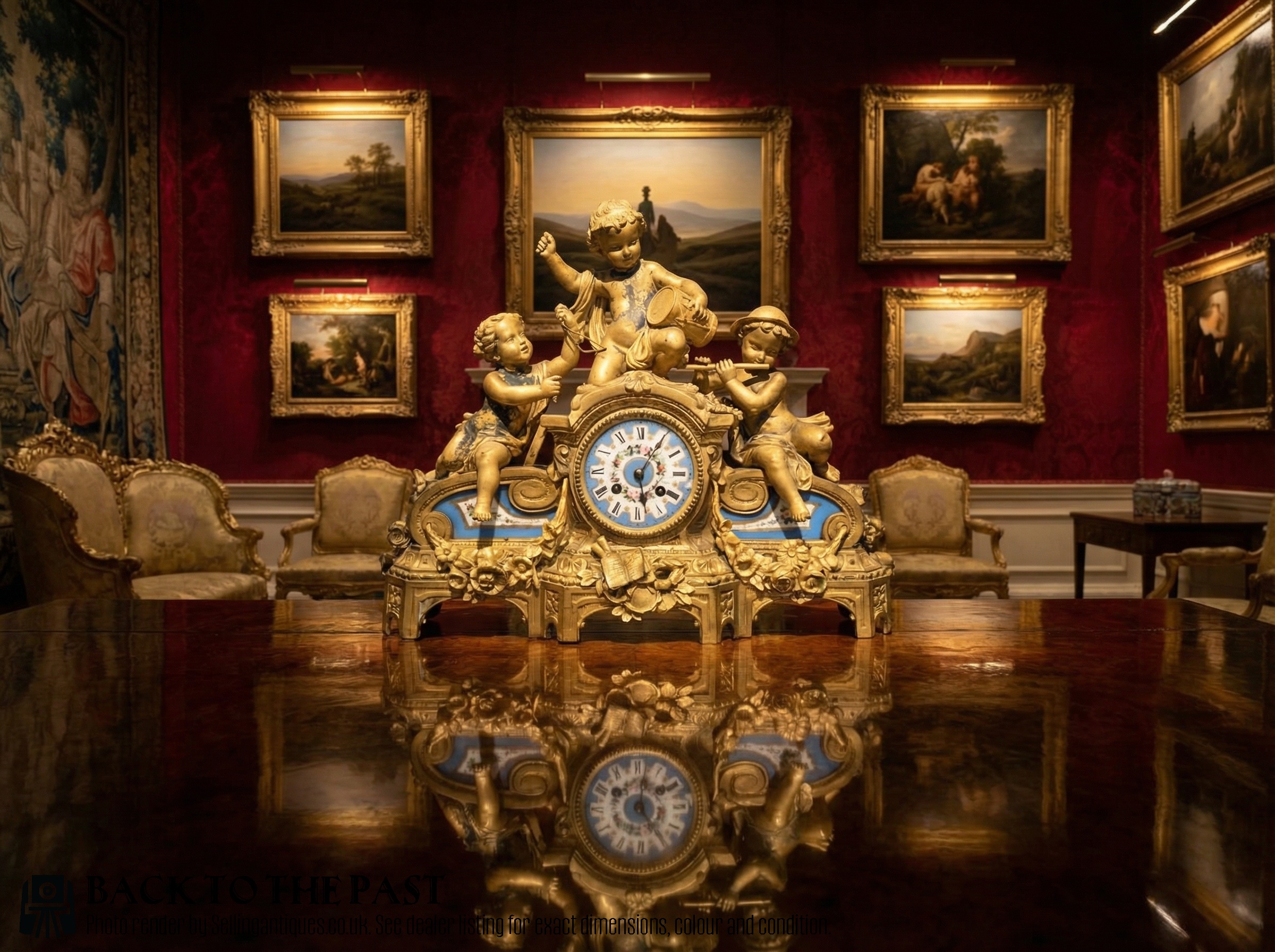
Gold French Mantel Clock
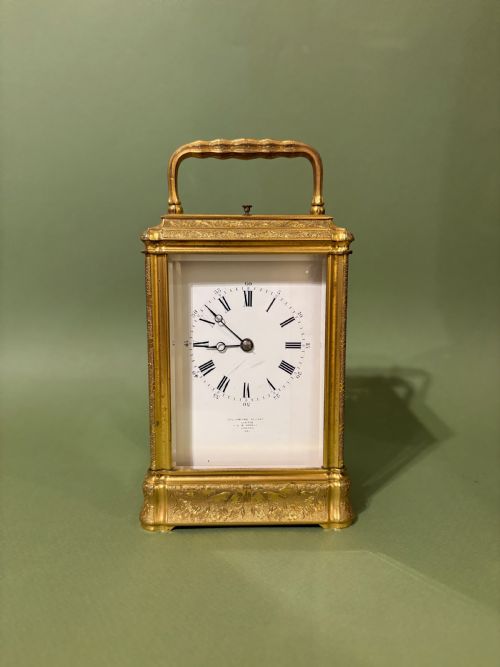
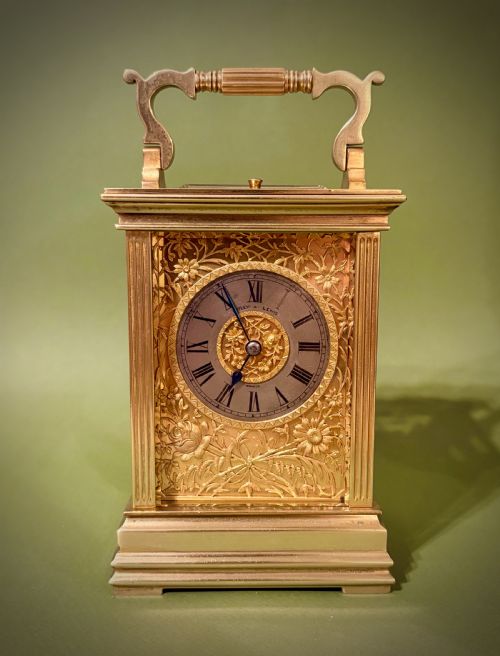
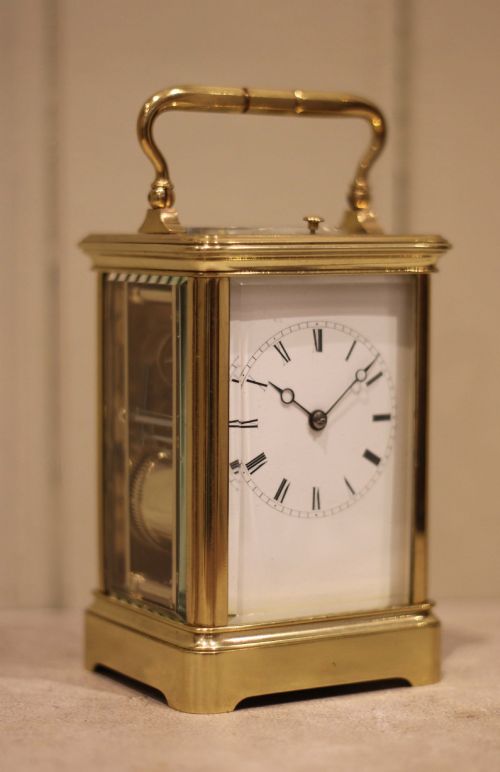
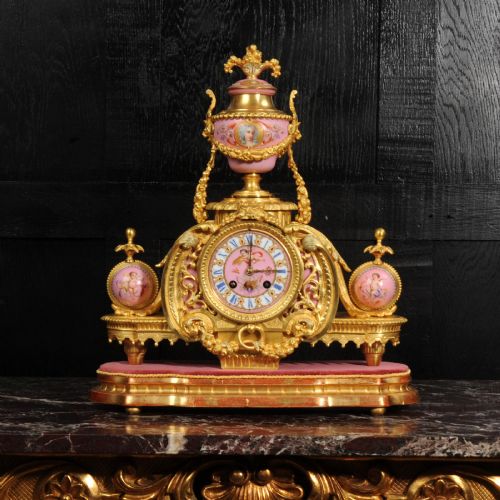
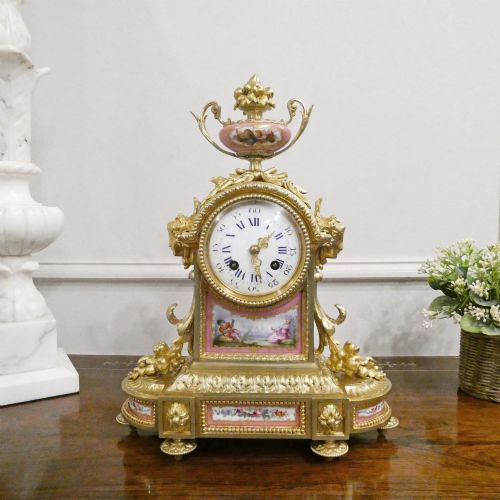
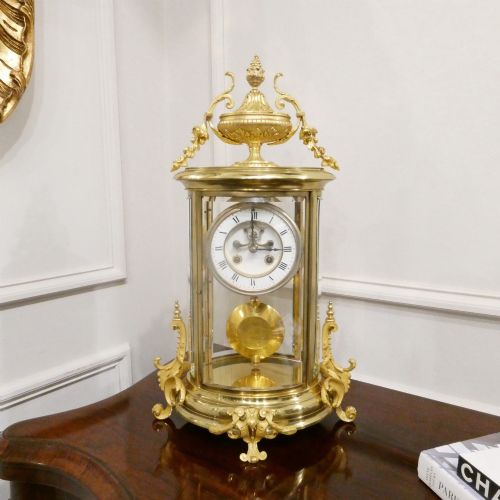
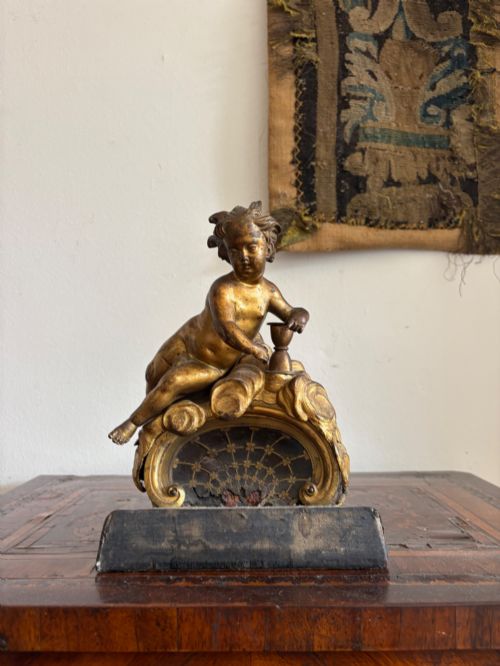
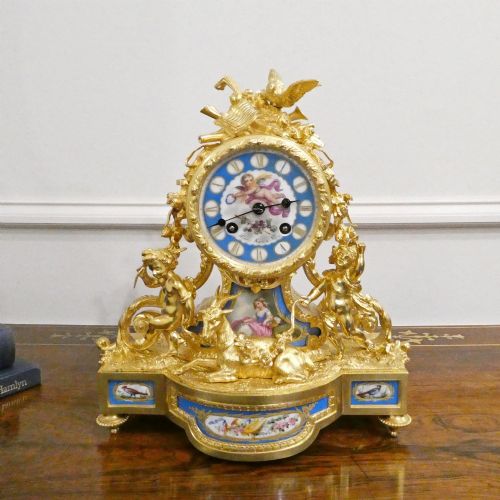
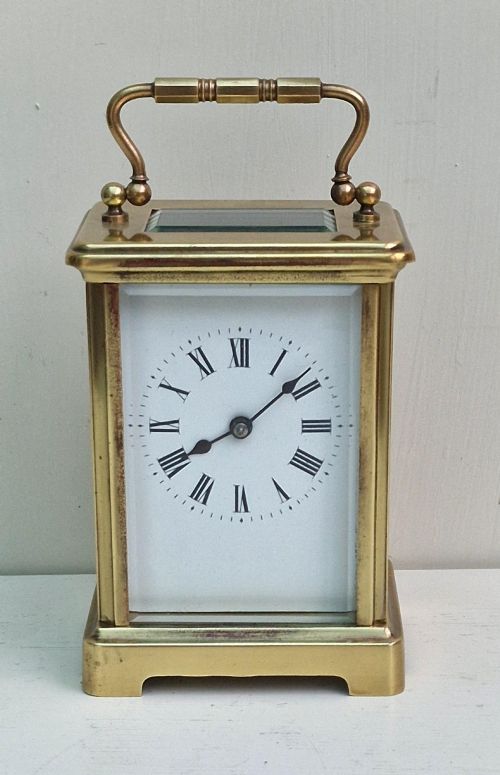
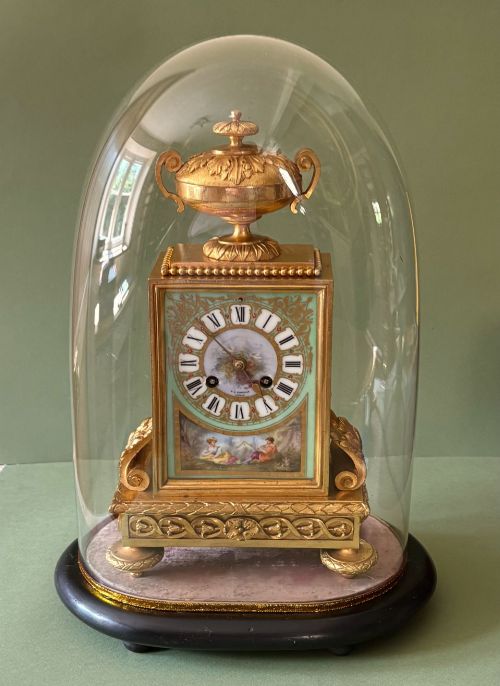
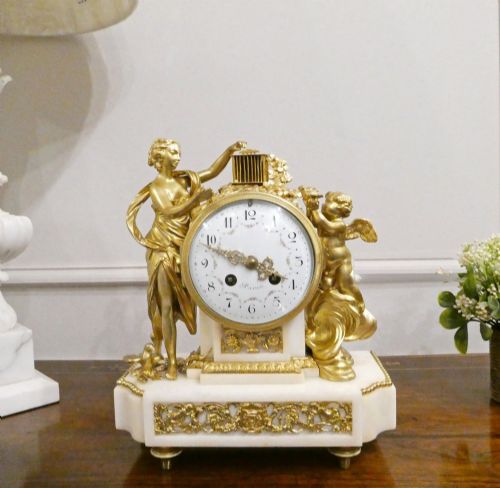
A gold french mantel clock covers a range of nineteenth-century decorative and timekeeping objects shaped by French design. Buyers searching for a gold french mantel clock encounter carriage clocks in brass, large porcelain-mounted architectural pieces, and figural ormolu designs.
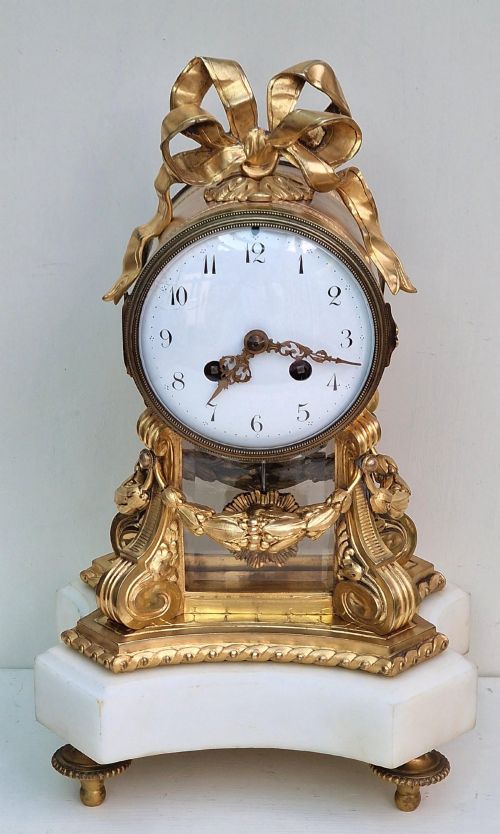
The selection on this page relies heavily on nineteenth-century periods, spanning from the eighteen-sixties through to nineteen-ten. Pieces draw upon styles such as French Rococo Revival, Louis XVI, and French Empire.
Makers and movements recorded in the evidence include notable names like Achille Brocot, Japy Freres, and Henri Jacot. Forms vary from simple glass-cased carriage clocks to elaborate marble and gilt bronze mantel clocks.

How they were made
The construction of these pieces combines cast metalwork with delicate dial painting and glass fitting. Gilt bronze, ormolu, and brass form the structural frames, often combined with white marble bases or Sèvres porcelain plaques.
Enamel provides the polished surface for clock dials, whilst bevelled glass panels enclose carriage clock movements. Makers assembled complex mechanical gear trains inside these metal and glass housings, incorporating striking and repeating functions.
Listings feature materials including enamel, glass, brass, gilt bronze, ormolu, porcelain, gilt brass, and marble.
What varies in quality
Quality rests in the crispness of the gilt bronze chasing and the integration of porcelain panels. Finer examples display deeply carved ormolu mounts and substantial marble plinths, whereas simpler pieces rely on standard brass cases.
The reputation of the maker, from Samuel Marti to Henri Jacot, dictates the precision of the interior movement. Fully restored mechanisms that retain original escapements and striking components distinguish top-tier examples.
Henri Jacot·Achille Brocot·Henry Marc·Japy Freres·Samuel Marti·Drocourt Paris
The Gold French Mantel Clock Glossary
- Ormolu
- Gilded bronze produced by applying a mercury-gold amalgam to a base metal. This technique creates a rich golden finish seen across nineteenth-century French clock cases.
- Carriage clock
- A portable timekeeper designed for travel, housed in a brass or gilt metal case with glass panels. These typically feature swing handles and platform escapements.
- Sèvres porcelain
- Ceramic panels produced or decorated in the tradition of the Sèvres factory. These are frequently mounted onto the front or sides of mantel clocks.
- Striking mechanism
- A secondary gear train within the clock that sounds the hours or half-hours on a bell or gong. Many nineteenth-century French examples include repeaters.
- Gorge case
- A specific style of carriage clock housing characterised by stepped mouldings at the top and bottom of the brass frame.
Gold French Mantel Clock: Frequently Asked Questions
How do I wind a carriage clock?
Most carriage clocks use a key inserted into the winding squares on the back plate. Turn the key gently until resistance signals the mainspring is fully wound.
Avoid overwinding, as this strains the internal steel springs and affects timekeeping accuracy.
What is the difference between a mantel clock and a carriage clock?
Mantel clocks are generally larger, heavier pieces designed to sit permanently on a fireplace shelf or sideboard. They often incorporate marble, porcelain, and extensive figural bronze casting.
Carriage clocks are smaller, portable units enclosed in glass and brass with folding top handles, originally built for travel.
How do repeating mechanisms work?
A repeating mechanism sounds the last elapsed hour or quarter-hour on demand when a lever or button on the case is pressed. This allowed owners to check the time in a darkened room without lighting a candle.
Complex gear trains inside the movement coordinate the striking sequence independently of the main timekeeping hands.
How should I clean ormolu surfaces?
Dust gilt bronze and ormolu gently with a soft, dry microfibre cloth or a clean artist's paintbrush. Avoid chemical cleaners, polishes, or abrasive cloths which strip the delicate gold layer from the bronze beneath.