
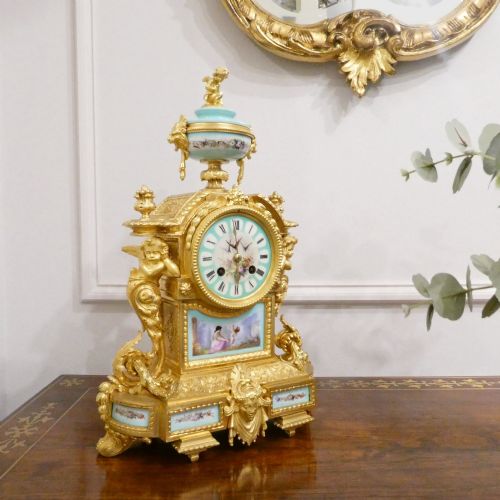
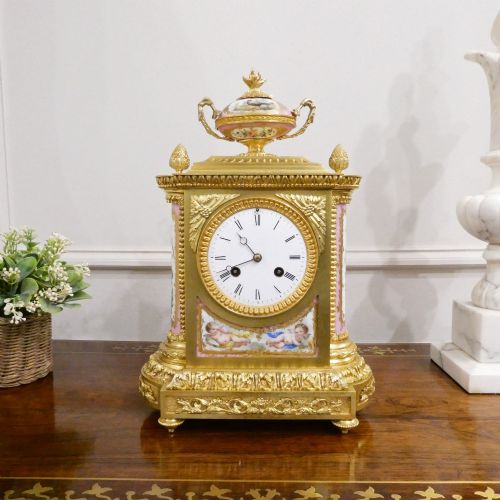
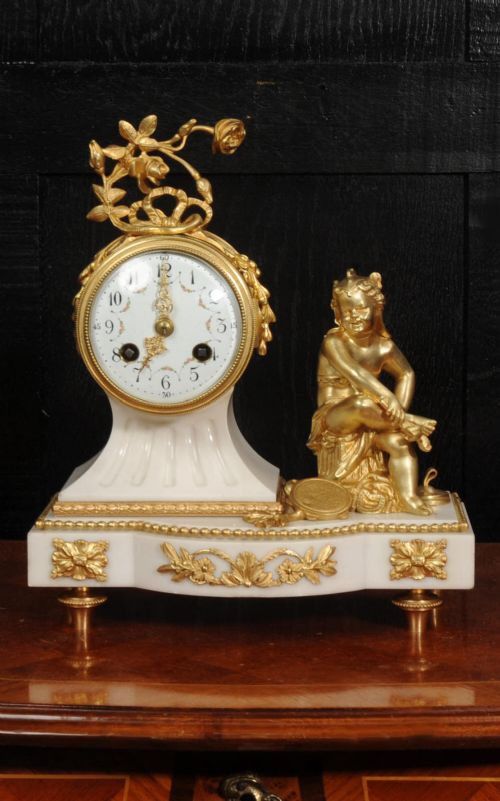
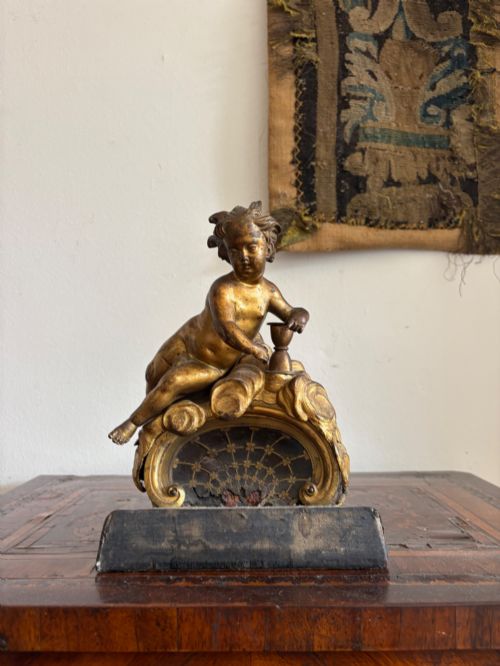
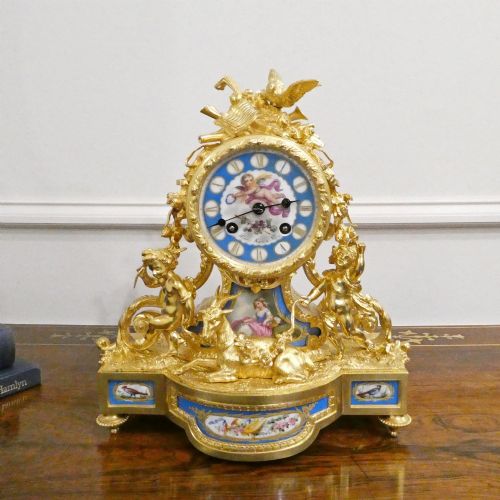
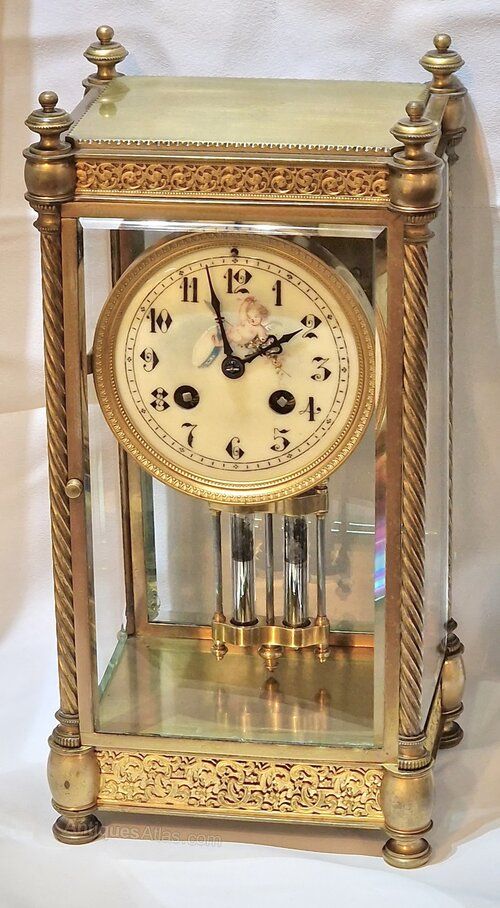
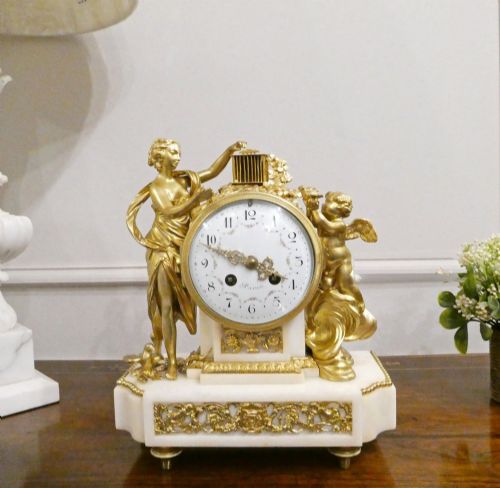
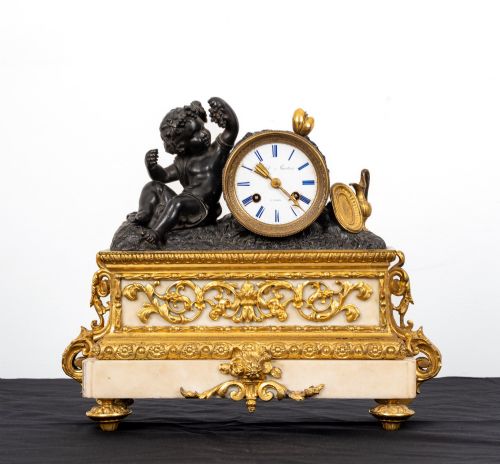




Cherub Gilt Mantel Clock
These heavy, gilded timepieces place cherubs and putti atop classical marble or bronze plinths, bringing French metalwork and porcelain into domestic rooms.
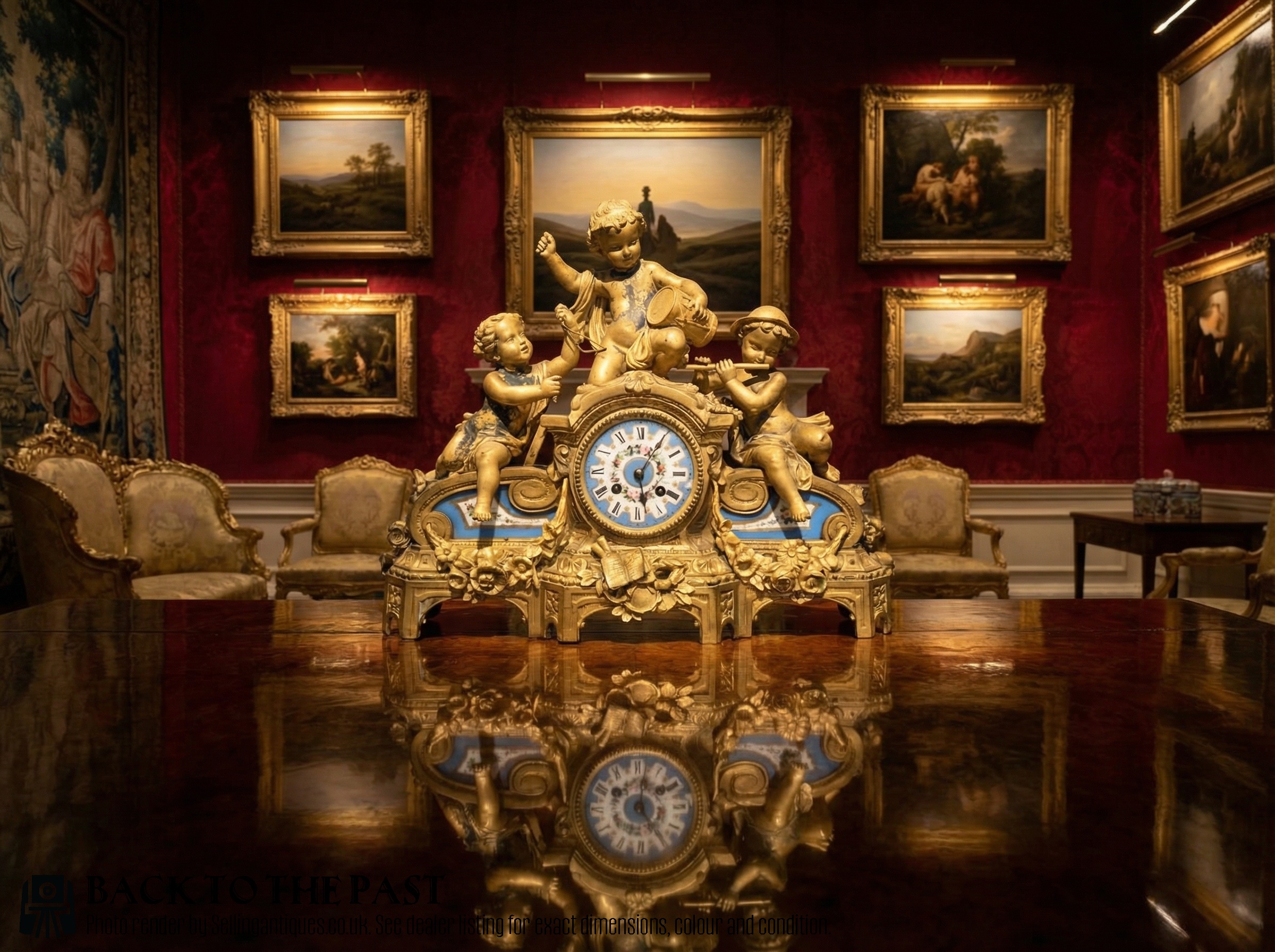
Cherub Gilt Mantel Clock
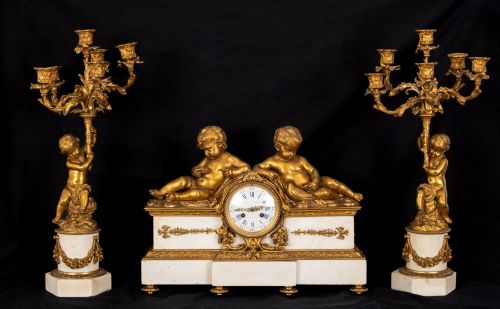
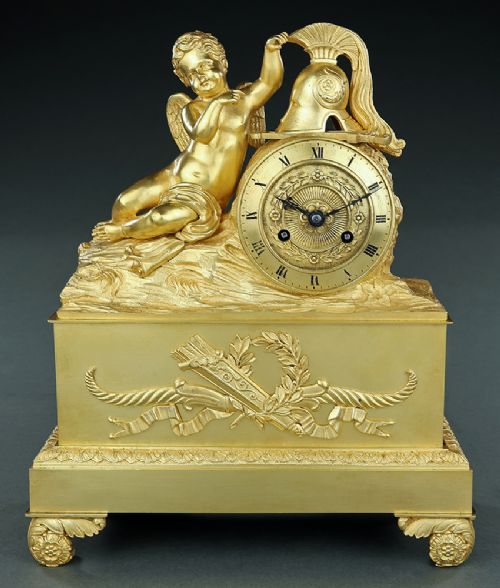
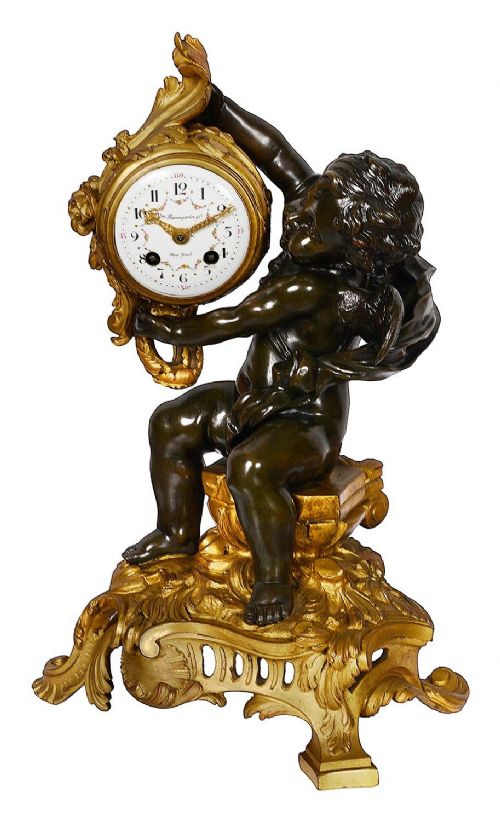
A cherub gilt mantel clock combines timekeeping with sculptural figures of winged putti, cast in metal and seated beside or atop the dial. These pieces emerge predominantly from nineteenth-century French workshops, spanning styles from Louis XVI revival to French Empire and Rococo.
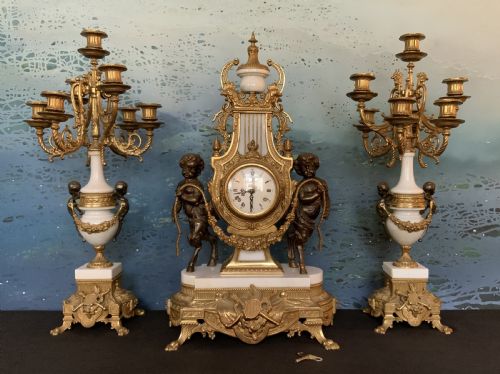
The format ranges from simple drum heads on plinths to larger three-piece garniture sets complete with matched candelabras. Buyers frequently encounter nineteenth-century examples utilising gilt bronze, ormolu, and white marble alongside hand-painted porcelain plaques.
How they were made
Foundries shaped these works using cast bronze and brass, applying mercury gilding or modern electroplating to create the signature ormolu surfaces. These metal mounts were then combined with turned white marble, onyx, or glass panels to house eight-day mechanical movements.
Clock dials often utilised painted enamel on copper or porcelain segments, sometimes framed by decorative mounts and topped with cast putti finials. Makers integrated these components by hand, resulting in heavy, substantial mantel pieces designed for display.
Materials recur across multiple listings, combining gilt bronze, ormolu, white marble, enamel, and hand-painted porcelain.
What varies in quality
The refinement of the cast bronze work separates standard production from superior pieces, visible in the depth of chasing on the cherubs' hair and wings. Sharper definition in the acanthus leaves and rococo scrolls indicates skilled hand-finishing after casting.
The integration of materials also dictates standard, where matched garniture sets and finely painted Sevres-style porcelain plaques elevate the piece. Heavier marble bases and signed movements by known Parisian makers denote superior workshop output.
Jean-Baptiste Delettrez·Henry Marc·Japy Freres·Henry Dasson·Leon Message·Samuel Marti·Achille Brocot
The Cherub Gilt Mantel Clock Glossary
- Ormolu
- A gold-coloured alloy of copper, zinc, and tin applied to bronze mounts. This technique creates a bright metallic finish characteristic of French decorative pieces.
- Garniture
- A set of decorative objects designed to be displayed together, typically comprising a central clock flanked by matching candelabras or urns.
- Putto
- A plump, naked male child figure often depicted with wings, frequently used as a finial or side ornament on these clocks.
- Boulle
- A marquetry technique using brass and tortoiseshell inlaid into furniture and clock cases, named after the French cabinetmaker Andre-Charles Boulle.
- Dial
- The face of the clock where hours and minutes are marked, often featuring Roman numerals painted on enamel or porcelain.
Cherub Gilt Mantel Clock: Frequently Asked Questions
How do I wind the clock?
Most nineteenth-century movements use a key inserted into specific winding holes on the enamel dial to tension the mainspring.
Care must be taken not to overwind the mechanism, as this can damage the internal springs and stop the clock from keeping accurate time.
Why does the clock run fast or slow?
Mechanical clocks require pendulum adjustments via a small regulating square on the dial to alter the speed of the swing.
Temperature changes and age can also affect the metal components, meaning periodic professional calibration helps maintain timekeeping accuracy.
How do I clean ormolu and bronze?
Dusting with a soft, dry brush prevents dirt accumulation in the recessed details of the cast metal mounts.
Harsh chemical polishes must be avoided entirely, as they strip away the historic gilt surface and expose the underlying base metal.
What is a garniture set?
A garniture set consists of the central mantel clock accompanied by matching side pieces such as candelabras or decorative vases.
These sets were designed to create a symmetrical, balanced display across a fireplace mantel or sideboard in nineteenth-century interiors.