
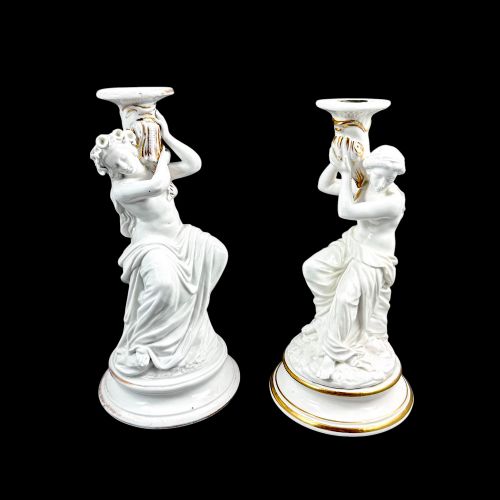


Porcelain Classical Maiden Figure
These porcelain classical maiden figure examples bring draped robes, urns and ancient postures straight into nineteenth and early twentieth century display cabinets.
Porcelain Classical Maiden Figure
Buyers seeking a porcelain classical maiden figure encounter decorative sculptures, figurines and figural candlesticks drawn from Victorian Neoclassical, Art Nouveau and revivalist aesthetics. These pieces typically depict women in antiquity-inspired dress, often accompanied by motifs such as doves, cornucopias, baskets of grapes or lizards.
The selection ranges from monumental figures to paired candlesticks and seated studies, originating predominantly across the nineteenth century, the Victorian era and the early twentieth century including the Edwardian period. Such works reflect the enduring nineteenth-century fascination with antiquity, filtered through Victorian sentiment or later decorative movements.
How they were made
Makers utilised standard ceramic techniques of the period, employing glazed porcelain, enamel colours and unglazed parian porcelain to achieve matte or glossy finishes. Many examples incorporate gilding, gold leaf or gilt accents to highlight drapery folds, hair ornaments and base details.
Figurines and statuettes were cast in moulds, allowing intricate details like feathers, fruit baskets and facial expressions to be rendered consistently across production runs. Selected pieces combine ceramic shafts with gilt bronze mounts, particularly in works influenced by Grand Tour tastes.
Materials recorded across the selection include standard porcelain, parian porcelain, biscuit porcelain, enamel, gilding and gold leaf.
What varies in quality
The application of enamel and gilding further separates standard production from superior output, with better pieces showing precise brushwork rather than flat, heavy application. Parian ware quality depends on the purity of the biscuit body and the smoothness of the surface texture.
Royal Worcester·Royal Dux·Copeland·Sutherland & Sons
The Porcelain Classical Maiden Figure Glossary
- Parian porcelain
- A fine-grained, unglazed biscuit porcelain developed in the nineteenth century to imitate marble. It was widely used for classical figures and sculptural busts because of its smooth, creamy appearance.
- Gilt bronze
- Metal cast and finished with a layer of gold or gold-coloured alloy. It frequently appears alongside ceramic elements in candlesticks and decorative objects.
- Cornucopia
- A horn-shaped container overflowing with fruit, corn or flowers. It serves as a traditional symbol of abundance in classical and neoclassical art.
- Caryatid
- A sculpted female figure serving as an architectural support or part of a shaft. These figures often take the place of columns or candlesticks.
- Victorian Neoclassical
- A nineteenth-century revival style drawing on ancient Greek and Roman art. It emphasises symmetry, heroic proportion and classical drapery.
Porcelain Classical Maiden Figure: Frequently Asked Questions
Are these figures made of marble or ceramic?
While many pieces imitate the appearance of carved marble through the use of parian porcelain, they are ceramic works produced from moulds rather than carved stone.
Enamelled and glazed porcelain variants further distinguish these sculptures from traditional stone statuary.
How do I identify a nineteenth-century piece?
Dating relies on stylistic markers such as Victorian neoclassical drapery, nineteenth-century costume details and manufacturing materials like parian ware or early enamel palettes.
Factory marks and registered design numbers found on the underside often narrow down the production decade.
Where were these displayed originally?
These decorative figurines and candlesticks were designed for prominent placement on mantelpieces, drawing-room side tables and cabinet tops within Victorian and Edwardian homes.
They served as conversation pieces that signalled the owner's appreciation for classical art and culture.