




Porcelain Child Figurines
Porcelain child figurines capture youthful innocence through delicate ceramic craft, offering collectors charming snapshots of past eras.
Porcelain Child Figurines
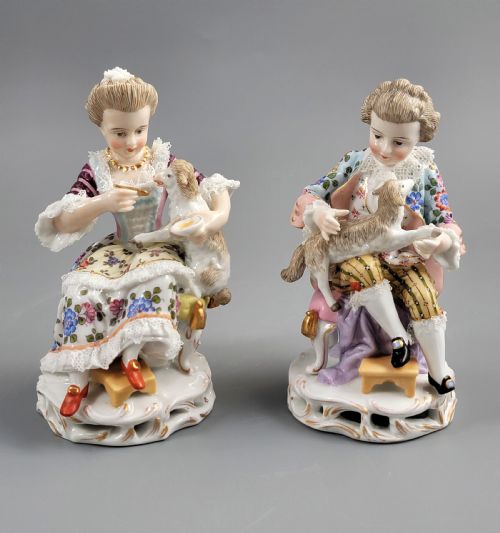
When you search for porcelain child figurines, you encounter charming sculptural representations ranging from eighteenth-century soft-paste groups to twentieth-century factory output. These pieces frequently depict children at play, often accompanied by pets like dogs, lambs, or kittens.
The selections available here lean heavily into nineteenth-century production, alongside Victorian pieces and works from the early nineteen-thirties. You will find single figures, matched pairs, and elaborate figure groups showing children in gardens or carrying household items.
Materials and construction methods
Makers utilised traditional porcelain, alongside unglazed bisque or biscuit porcelain and parian ware, to achieve different surface textures. Many figures received careful hand-painting, occasionally enhanced with enamel and gold leaf details.
Firms shaped these ceramics using moulds before firing, allowing workshops to produce detailed sculptures of human forms and animals with consistency. The resulting pieces combined durable ceramic bodies with delicate surface modelling.
Victorian children frequently shared their sculptural debut with stubborn geese, captive kittens, and overly large pet lambs.
Assessing quality in the medium
The application of paint and enamel work dictates visual success, where subtle shading elevates a piece above standard decorative output. Well-executed glazing or the smooth matte finish of parian ware indicates superior workshop standards.
Meissen Porcelain·Royal Dux·Royal Copenhagen·Royal Worcester·Carl Thieme Dresden·Ernst Bohne und Soehne·Helena Wolfsohn·Gebruder Heubach
The Porcelain Child Figurines Glossary
- Bisque porcelain
- Unglazed ceramic body fired once to create a matte, marble-like surface resembling skin tones. It gained immense popularity during the nineteenth century for portrait busts and figure groups.
- Parian ware
- A fine-grained unglazed porcelain developed by British potteries to imitate carved marble. It fires to a creamy, smooth finish that highlights sculptural detail.
- Enamel
- Low-melting glass colours applied over the glaze and fired again to fuse permanently. These pigments provide the vibrant clothing and facial details on decorated figures.
Porcelain Child Figurines: Frequently Asked Questions
How do I date an old porcelain figure?
Dating relies on identifying factory marks stamped or painted on the base, alongside stylistic clues like costume and hair. Comparing the modelling style to known manufacturing periods helps narrow down the decade of production.
Changes in ceramic bodies and glazing techniques also provide reliable chronological markers. Reference books specific to European factories often illustrate the exact evolution of these factory marks.
What is the difference between bisque and porcelain?
Standard porcelain receives a glossy transparent glaze before a final high-temperature kiln firing. Bisque porcelain remains unglazed, leaving a matte, porous surface that absorbs light softly.
This unglazed quality makes bisque particularly popular for depicting human skin and classical drapery. However, it also means the porous surface requires more careful cleaning to prevent staining.
How were these figures displayed originally?
Victorian and eighteenth-century households placed these figures on mantelpieces, side tables, and within glass-fronted cabinets. They served as conversation pieces that demonstrated the owner's refined taste and cultural interests.
Paired figures were often arranged symmetrically on either side of a clock or candelabra. Figure groups depicting children with pets were especially favoured in drawing rooms for their sentimental appeal.
Are pairs always sold together?
Many nineteenth-century figures were modelled as matched pairs representing complementary themes, such as day and night or contrasting seasonal activities. Keeping matching pairs intact remains important for historical completeness.
Over the decades, however, pairs frequently become separated through inheritance or breakage. When a complete pair survives together, it offers a glimpse into original parlour display practices.