


Porcelain Candle Holders
Porcelain candle holders bring refined British and continental ceramic artistry to the table, combining sculptural form with practical illumination.
Porcelain Candle Holders
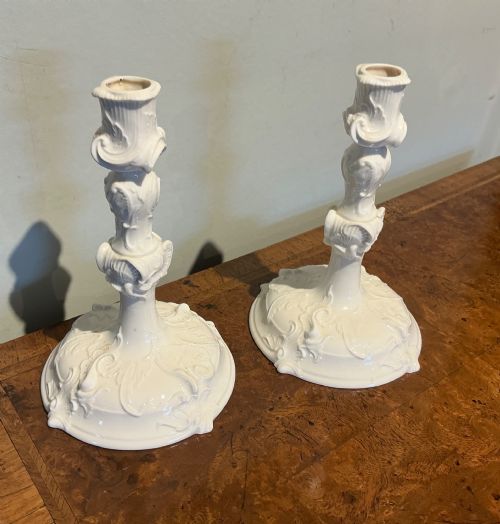
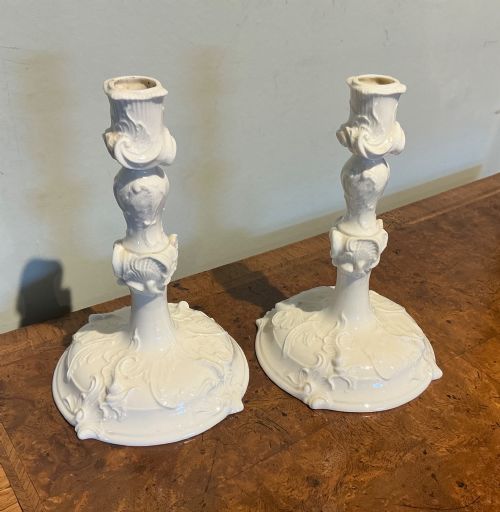
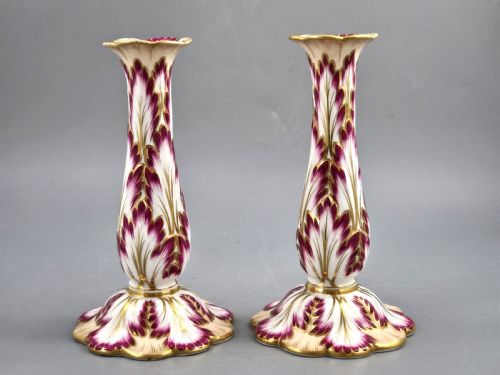
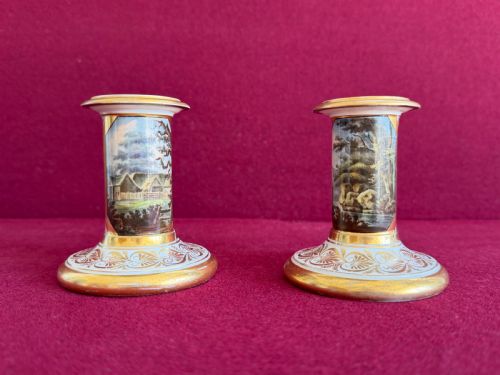
Porcelain candle holders encompass everything from single chambersticks to multi-armed figural candelabra, shaped by centuries of European and Chinese ceramic traditions. You will encounter forms ranging from Georgian rococo pairs to Victorian figural groups and chambersticks designed for domestic use.
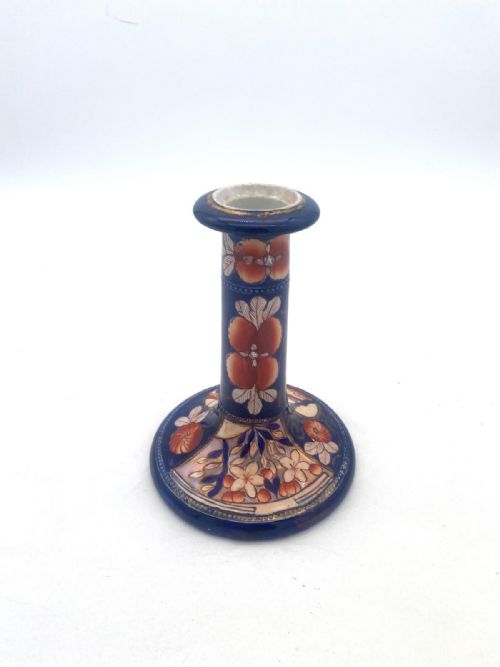
The pieces listed here span the 18th to the early 20th centuries, showing distinct regional shifts from Derby and Chelsea figures to continental German workshops like Sitzendorf and Meissen. These objects served both functional lighting purposes and decorative display in period interiors.
Makers represented in the evidence include English factories such as Derby, Minton, Spode, and Royal Worcester, alongside continental houses like Meissen and Nymphenburg. Buyers meet both utilitarian chambersticks and elaborate allegorical or botanical table centerpieces.
Materials and Technique
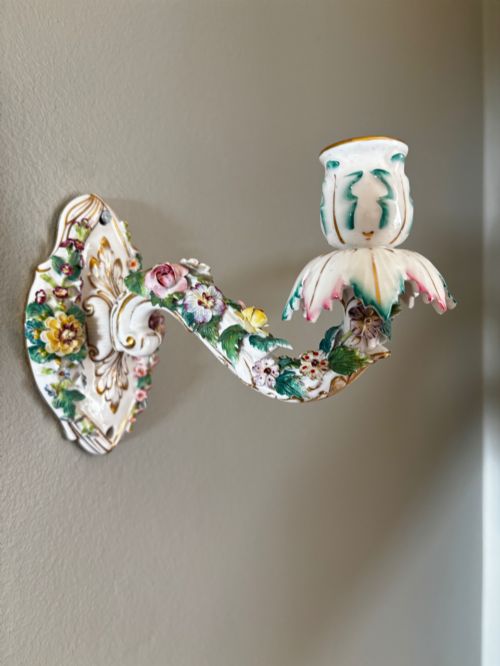
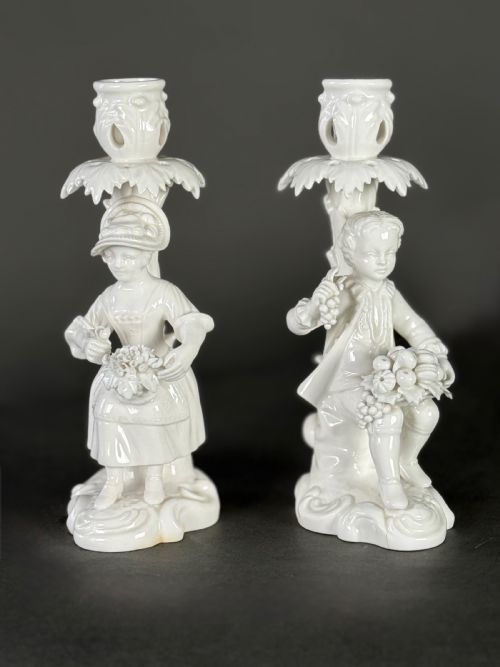
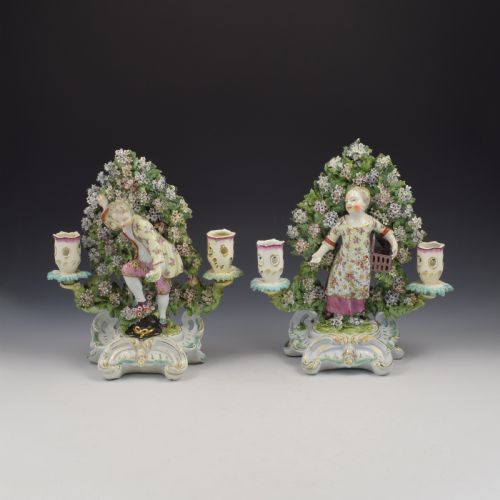
Makers utilised hard-paste and soft-paste porcelain body recipes, shaped through moulding or manual throwing, then fired at high temperatures to achieve a vitrified ceramic base. Intricate bocage work involved hand-applying delicate porcelain leaves and floral appliqués around the central figures.
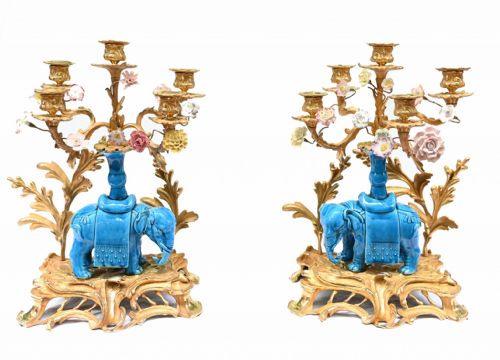
Glazing and enamelling processes added colour and protection, often complemented by hand-painted gilt bronze, gold leaf, or ormolu mounts. Secondary metals like brass appear in composite pieces where metal stems support porcelain sockets or figures.
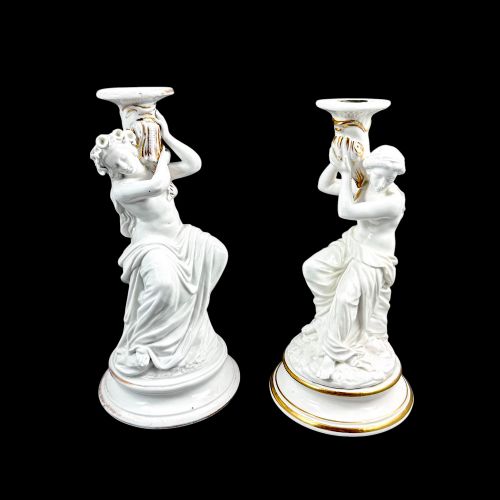
Several porcelain candle holders take the form of elephants, dancers, and children dressed as musicians, bringing a touch of theatrical charm to the mantelpiece.
Factors of Quality
Quality rests on the crispness of the moulding and the delicacy of hand-modelled details, particularly in complex figural groups and botanical bocage. Superior examples maintain intact enamel painting and crisp gilding without excessive rubbing or clumsy later restoration.
The sophistication of the painting and the reputation of the factory dictate the upper tier of the range, where factory marks and period authenticity align. Simpler utilitarian chambersticks rely on the purity of the glaze and the balance of the proportions rather than sculptural complexity.
Nymphenburg·Masons Ironstone·Ridgway·Barr Flight And Barr·Meissen·Derby·Sutherland And Sons·Volkstedt·Royal Worcester Hadley·Sitzendorf·Spode·Chelsea·Minton·Triebner Ens And Eckert·Bow
The Porcelain Candle Holders Glossary
- Bocage
- An ornamental background of branches, leaves and flowers made from porcelain, commonly found behind figures in 18th-century pieces. This fragile foliage was modelled by hand and applied before firing.
- Chamberstick
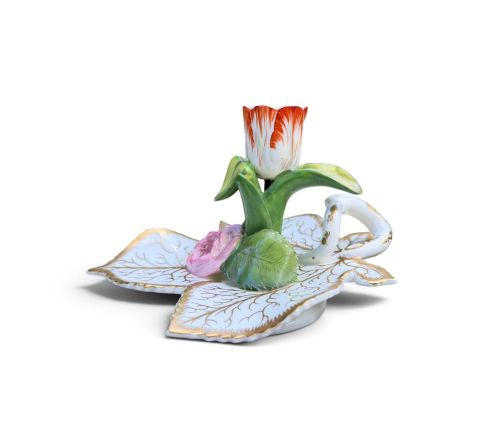
- A low portable candlestick fitted with a pan to catch dripping wax and a handle for carrying from room to room. These practical items often include a small socket for a snuffer.
- Candelabra
- A branched candlestick holding multiple candles on separate arms. They frequently incorporate sculptural figures or central columns.
- Hard-paste porcelain
- A dense, durable ceramic material composed of kaolin and petuntse, fired at very high temperatures. It resists scratching and possesses a bright white body.
- Ormolu
- Gilded bronze mounted onto or combined with ceramic bodies, providing structural support and decorative metallic contrast. The technique involves applying a gold amalgam to bronze.
Porcelain Candle Holders: Frequently Asked Questions
Were chambersticks used for dining?
Chambersticks were designed primarily for bedroom use and lighting hallways during nighttime movement around the house. Their low saucer base and finger ring made them safe to carry.
Dining tables utilised taller candlesticks and multi-armed candelabra instead of low chambersticks. These taller pieces placed the flame above eye level for seated guests.
How can I identify factory marks?
Look underneath the base for painted, impressed, or incised symbols such as crossed swords, anchors, or crown ciphers. Many 18th-century pieces bear patch marks or iron-red numerals rather than standard stamps.
Compare the style of the mark with reference books, keeping in mind that factories often used similar symbols across decades. Absence of a mark does not preclude authenticity in early soft-paste examples.
What is the difference between soft-paste and hard-paste?
Soft-paste porcelain contains glass frit and clay, firing at lower temperatures to produce a warmer, slightly creamy body with a softer glaze. It scratches more easily and transmits light differently than hard-paste.
Hard-paste porcelain uses true china clay and rock, resulting in a vitrified, highly durable body that withstands sharp metal points. Continental factories adopted hard-paste earlier than many English manufacturers.