


Porcelain Baluster Vases
Porcelain baluster vases unite the swelling curves of ancient vessel forms with the intricate painting of Chinese export and Japanese Imari workshops.
Porcelain Baluster Vases
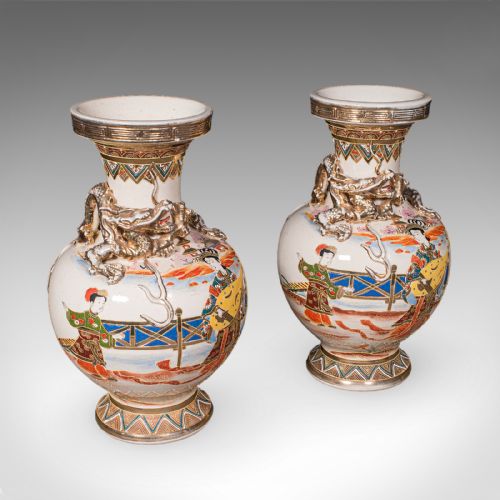
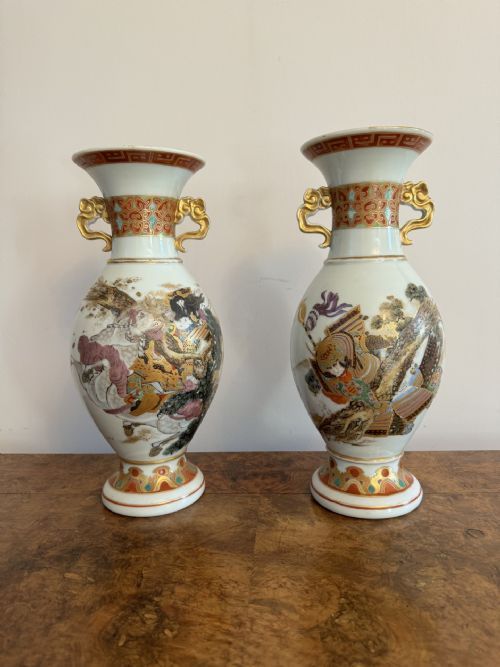
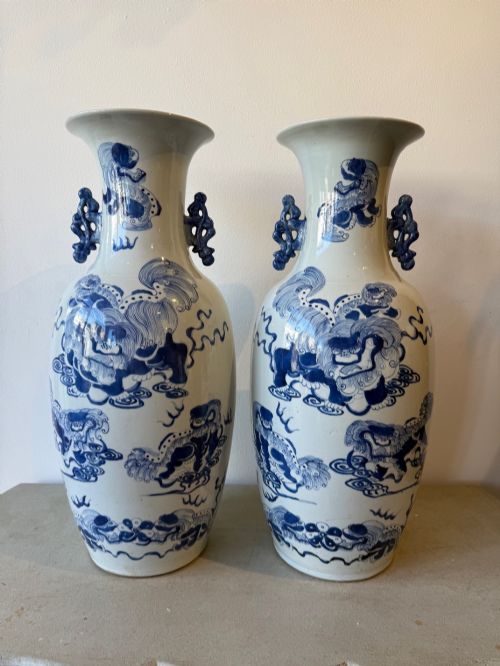
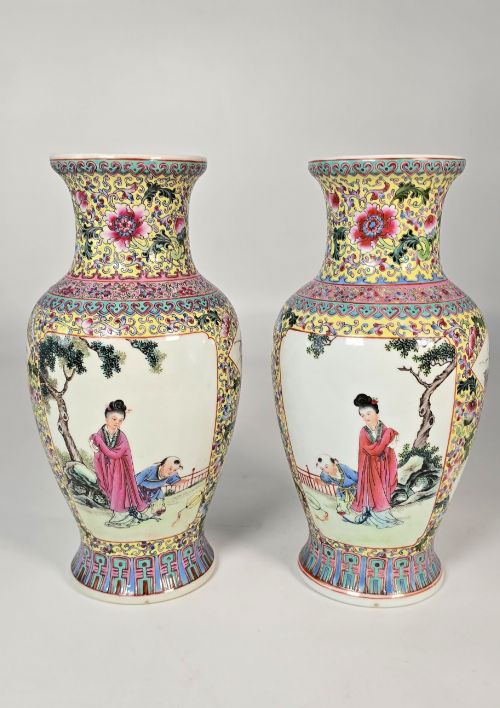
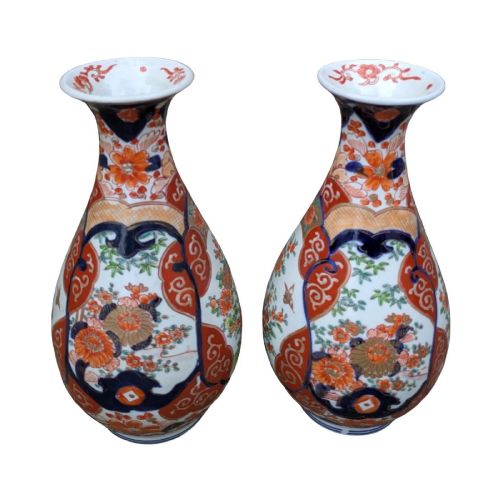
Porcelain baluster vases take their name from the architectural baluster, featuring a broad, bulbous lower body that tapers gently upward to a narrow neck. These vessels appear frequently in Chinese Qing Dynasty workshops, Japanese Meiji period studios, and European earthenware traditions.
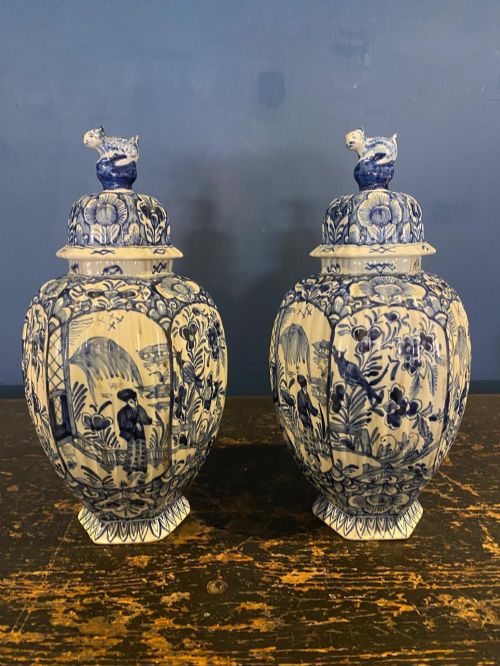
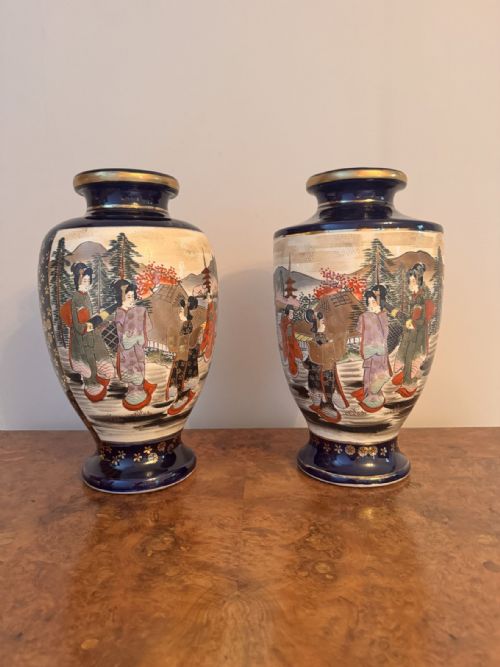
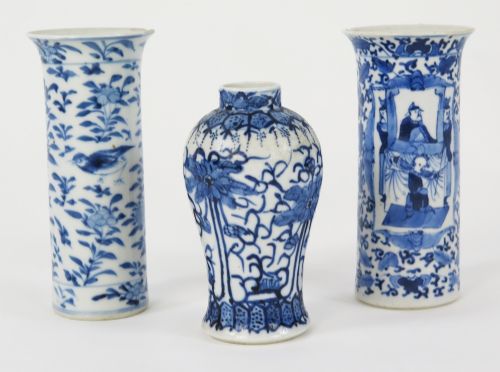
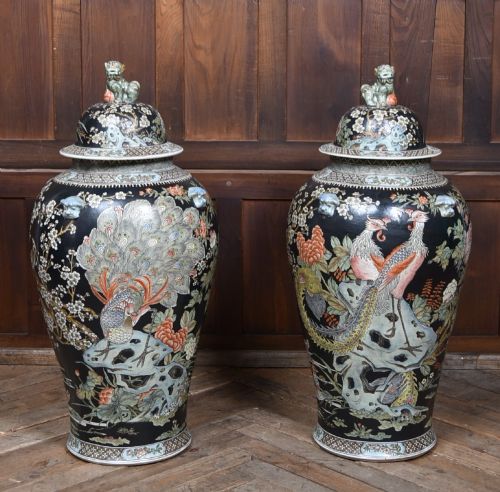
The selections on this page span the seventeenth through the twentieth centuries, encompassing monumental floor-standing jars, lidded garnitures, and pieces later converted to table lamps. Chinese export works and Japanese Imari palettes dominate the forms, alongside English ironstone and Dutch delftware interpretations.
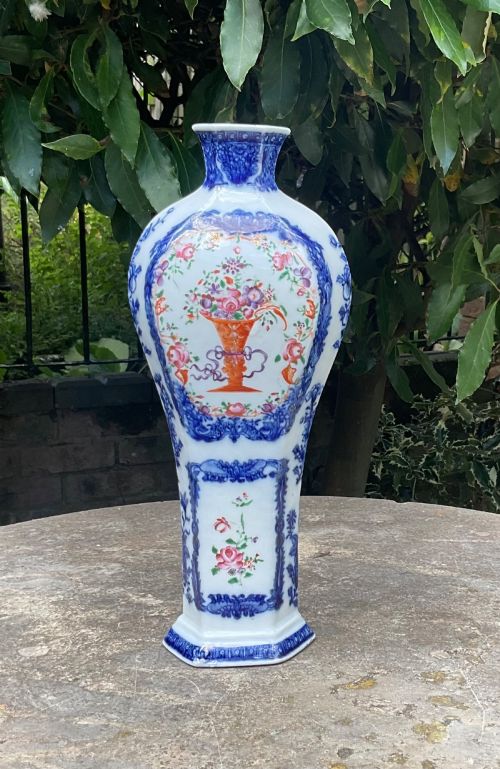
Buyers encounter everything from delicate cabinet pieces to imposing palace floor jars standing over seventy centimetres high. The silhouette remains constant while the decorative programmes shift between cobalt blue and white, famille rose enamels, and rich gilt motifs.
Materials and production
Ceramic bodies combine fine clay and glaze materials fired at high temperatures to achieve a dense, impermeable vitrified surface. Artisans then apply hand-painted enamels, cobalt pigments, or gold leaf before secondary firings fix the colour.
Surface enrichment often incorporates copper-based glazes, brass or ormolu mounts, and intricate overglaze enamelling. Ironstone variants utilise dense earthenware formulas designed to mimic porcelain strength while supporting heavy polychrome decoration.
Listings feature ceramics spanning the seventeenth-century Edo period through to twentieth-century production.
Assessing quality and execution
Quality reveals itself in the crispness of the hand-painted brushwork and the purity of the white glaze ground beneath the enamels. Superior examples demonstrate precise control over multi-layered firing techniques, where gold leaf and vibrant famille rose pigments retain sharp boundaries without bleeding.
Proportion and symmetry distinguish exceptional vessels from standard production wares. The graceful transition from the swelling belly to the slender neck requires precise throwing and turning before the kiln stage locks the form.
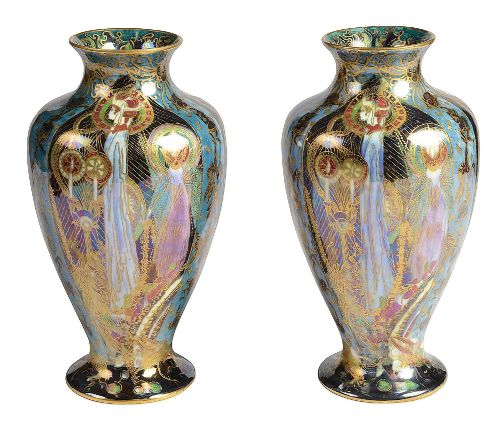
Daisy Makeig Jones·Makuzu Kozan
The Porcelain Baluster Vases Glossary
- Baluster
- A vase profile characterised by a rounded lower body and a narrow neck, derived from architectural railing supports.
- Famille Rose
- A palette of opaque pink and red enamel colours introduced to Chinese ceramics during the Qing Dynasty.
- Imari
- A style of Japanese export porcelain featuring deep cobalt blue, iron red, and gilt highlights, originating from Arita.
- Garniture
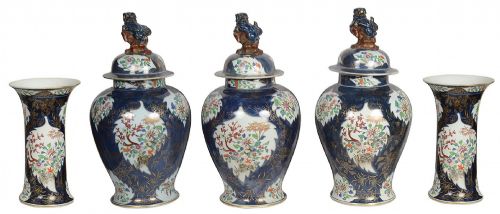
- A set of matching vases or jars, typically numbering three or five pieces, designed for symmetrical mantel display.
- Edo
- A period in Japanese history spanning from sixteen hundred and three to eighteen hundred and sixty-eight, noted for refined ceramic arts.
Porcelain Baluster Vases: Frequently Asked Questions
How do I spot Japanese Imari?
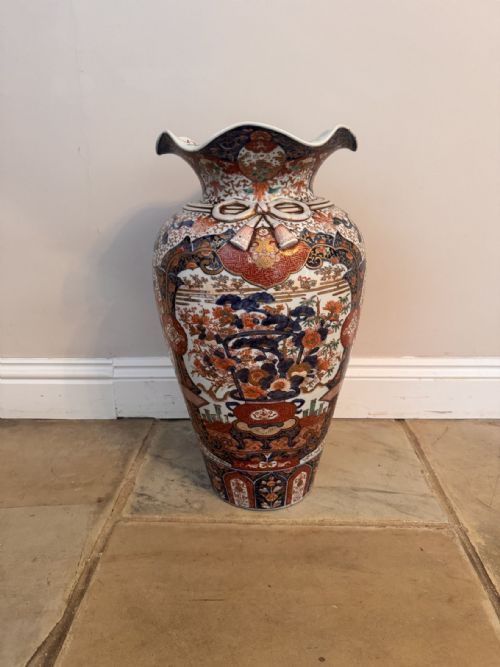
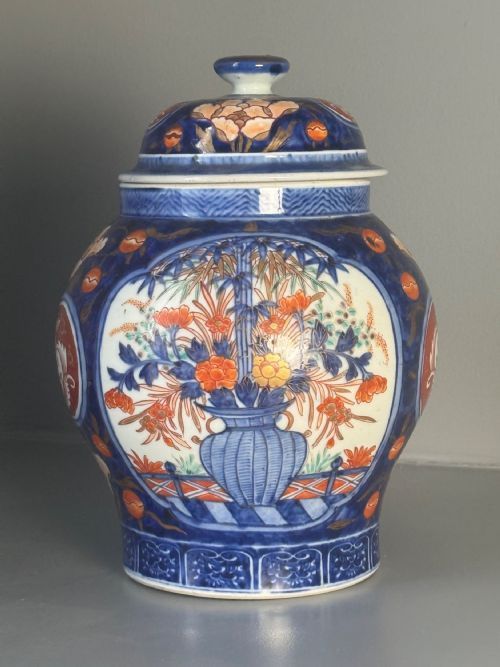
Japanese Imari pieces display a distinctive palette combining underglaze cobalt blue with overglaze iron red, green, and supplementary gold leaf. The decorative schemes frequently feature intricate floral and brocade patterns across a bright white ceramic ground.
Production centres around Arita during the Edo and Meiji periods, supplying extensive export markets across Europe. These vessels often take sturdy baluster or octagonal forms suited for grand interior display.
What is a garniture set?
A garniture set consists of three or five matched vases and jars designed to be displayed together on a mantelpiece or cabinet top. These symmetrical arrangements were highly fashionable in European stately homes during the seventeenth and eighteenth centuries.
Individual pieces within a set share identical decorative programmes, alternating between beaker shapes and lidded baluster forms. Surviving complete sets remain particularly desirable for period interiors.
How were these large jars used?
Monumental floor vases and palace jars served primarily as grand decorative statements in reception rooms and hallways. Their substantial scale allowed them to anchor large architectural spaces during the Qing Dynasty and Victorian eras.
Some examples were later adapted into table lamps during the nineteenth and twentieth centuries, fitted with brass or ormolu mounts. This secondary function preserved many historical vessels for domestic lighting.
How do I date Chinese porcelain?
Dating relies on stylistic markers, baseline reign marks, and the specific characteristics of the glaze and cobalt pigments. Earlier Qing pieces exhibit deep, bubbling underglaze blue, while later nineteenth-century exports often show more uniform mechanical precision.
Comparing the potting weight, foot ring finish, and enamel saturation against known period examples helps narrow the decade of manufacture. Transitional wares bridge the gap between distinct dynastic styles.