



Gilded Imari Porcelain Urns
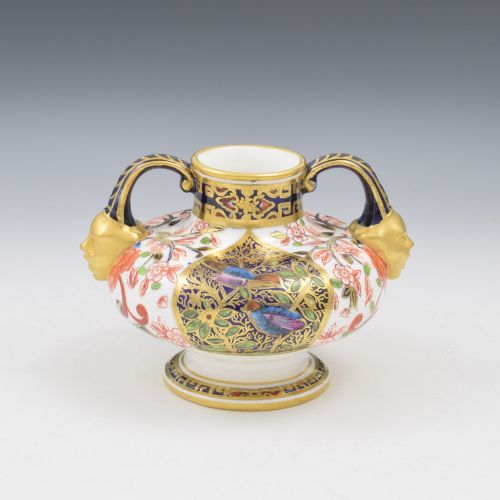
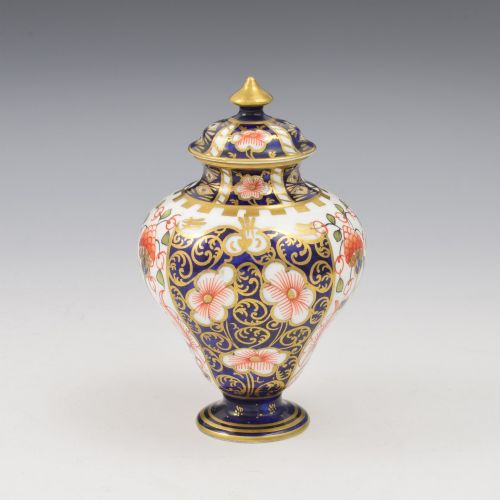
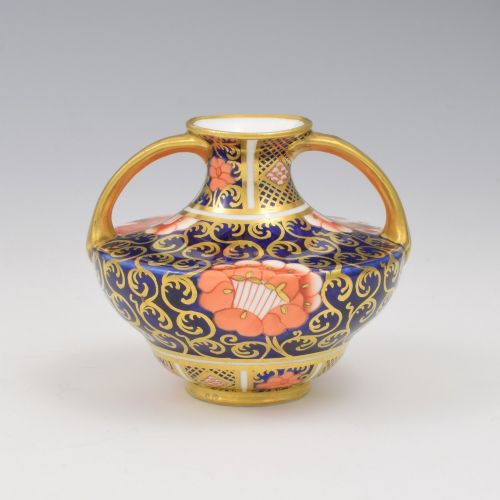
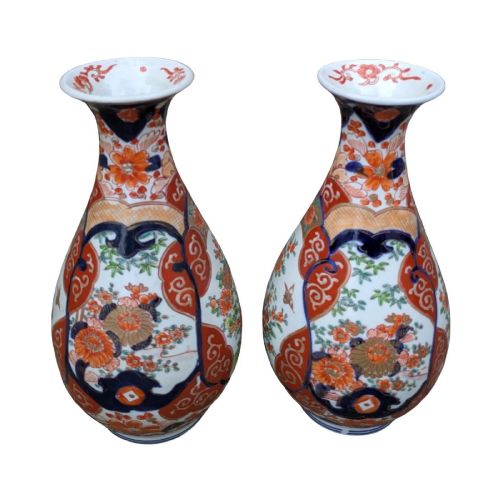
These gilded imari porcelain urns combine traditional palettes with rich metal leaf, bringing depth and colour to domestic interiors.
Gilded Imari Porcelain Urns
When buyers search for gilded imari porcelain urns, they discover both Japanese export pieces from the Edo and Meiji periods and British reinterpretations by factories such as Royal Crown Derby, Spode, and Worcester.
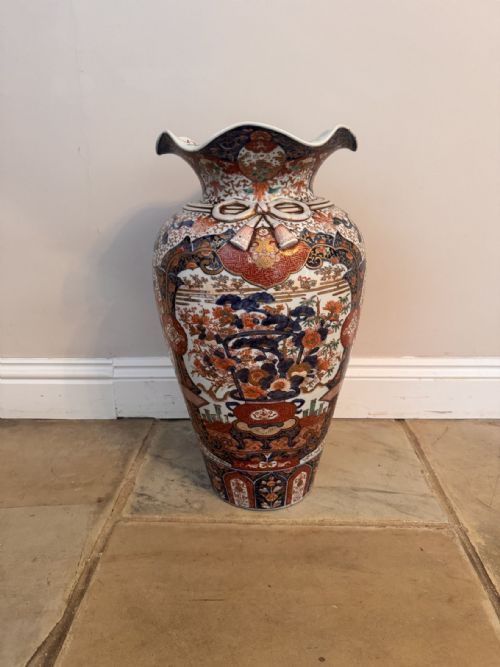
The domestic selection on this page leans heavily toward 19th-century Japanese vases and lidded vessels decorated in the distinctive imari palette, alongside English bone china and soft-paste porcelain counterparts.
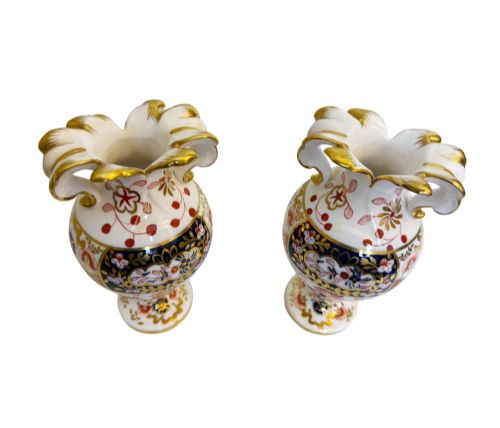
Forms range from miniature covered vessels and baluster shapes to monumental floor-standing vases and matching garniture sets designed for display on mantelpieces or side tables.
Assessment of quality
Quality rests in the crispness of the underglaze painting, the vibrancy of the enamel colours, and the purity of the white porcelain body beneath.
The precision and thickness of the gold leaf or gilding application distinguish finer studio and factory pieces from simpler utilitarian production.
Listings feature porcelain, bone china, and soft-paste porcelain across 18th-century, 19th-century, and Edwardian periods.
Royal Crown Derby·Spode·Chamberlain Worcester·Flight Barr And Barr·Mason S Ironstone·Samson
The Gilded Imari Porcelain Urns Glossary
- Imari palette
- A traditional decorative scheme utilising underglaze blue, iron red, and gilt highlights on a white porcelain ground. This distinctive colour combination originated in Japan before European factories adopted it.
- Garniture
- A set of matching vases or vessels designed to be displayed together on a mantelpiece or sideboard. These sets typically comprise three or more pieces of graduated or matching sizes.
- Baluster vase
- A vessel featuring a rounded body that tapers toward the base and swells outward, resembling an architectural baluster. This form frequently appears among larger lidded jars.
- Soft-paste porcelain
- A ceramic material composed of clay and glass frit, fired at lower temperatures than hard-paste porcelain. British factories utilised this body extensively during the Georgian period.
- Meiji period
- The era of Japanese history spanning from 1868 to 1912, noted for export porcelain production. Pieces from this time often display intricate enamel work and generous gilding.
Gilded Imari Porcelain Urns: Frequently Asked Questions
How do I care for gilded imari porcelain urns?
Dust these porcelain pieces gently with a soft, dry cloth to protect the delicate enamel and gold leaf layers.
Avoid using chemical cleaners or immersing the vessels in water, as moisture can damage the historic surface decorations.
Where were these urns originally displayed?
Owners placed these decorative vessels on mantelpieces, entrance tables, and within cabinet displays to showcase their colours.
Larger floor-standing examples stood directly in reception rooms to anchor the architectural corners of the space.
How do I distinguish Japanese imari from British imari?
Japanese export pieces utilise indigenous clay bodies and distinct underglaze cobalt tones characteristic of the Edo and Meiji periods.
British versions, produced by factories like Spode and Derby, employ domestic bone china or soft-paste recipes with European interpretation of the motifs.
What is a garniture set?
A garniture set consists of three or more matching vases and lidded jars manufactured to be displayed as a unified group.
These coordinated sets were traditionally arranged symmetrically across furniture surfaces to create a balanced decorative display.