

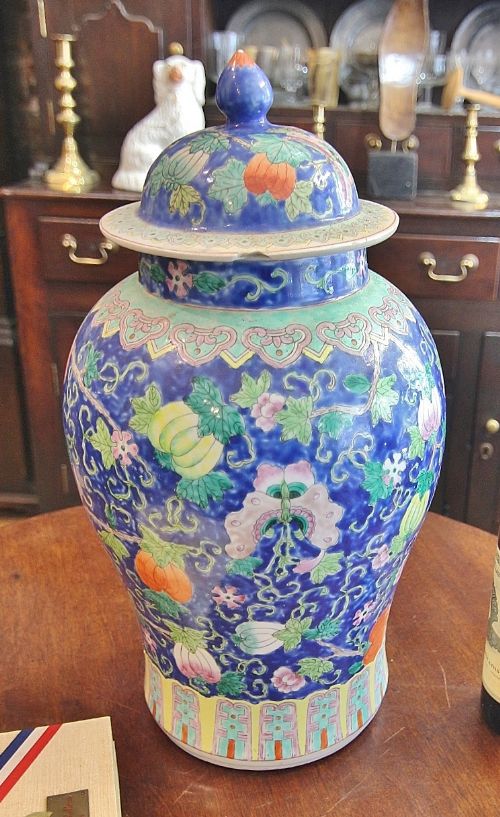


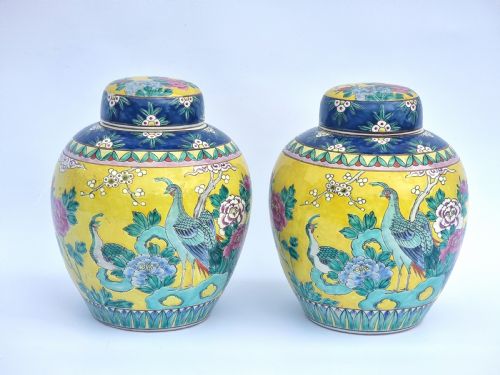
Polychrome Porcelain Jar
A polychrome porcelain jar brings colour and pattern into a room through hand-painted pigments and fired glazes.
Polychrome Porcelain Jar
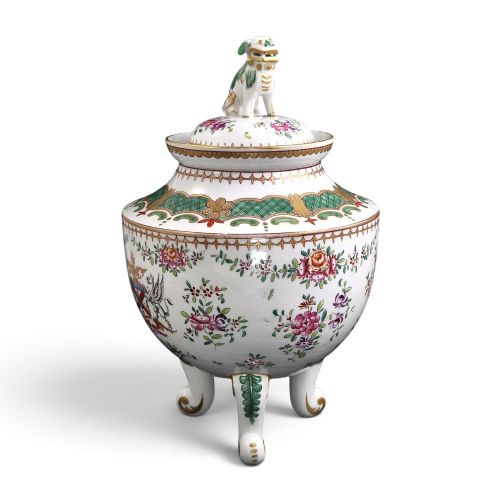
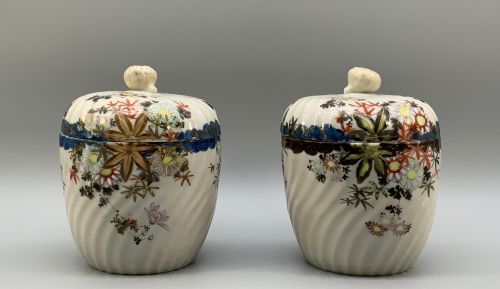
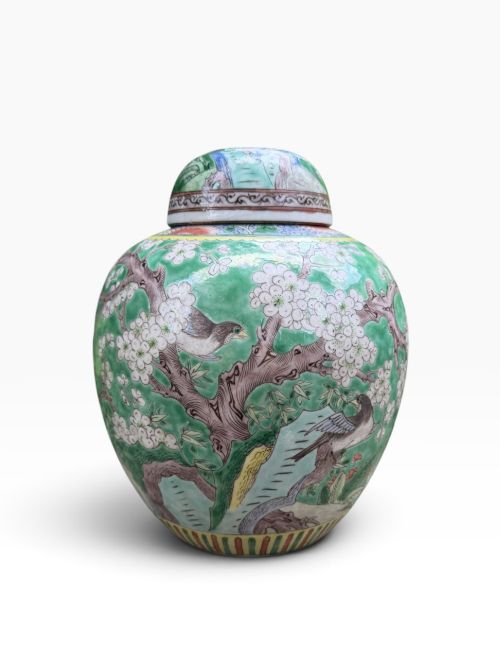
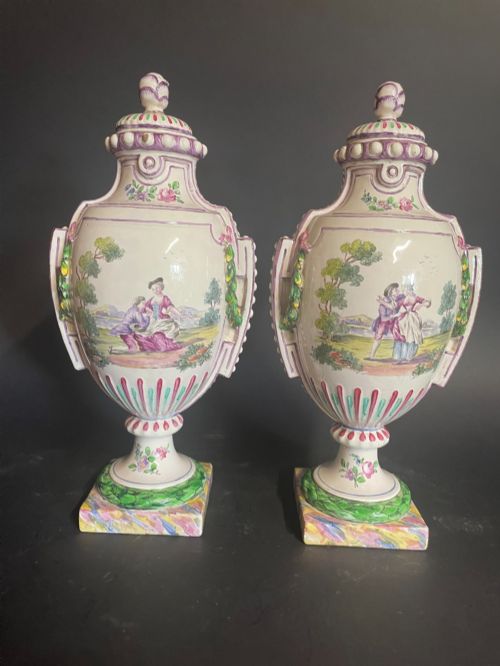
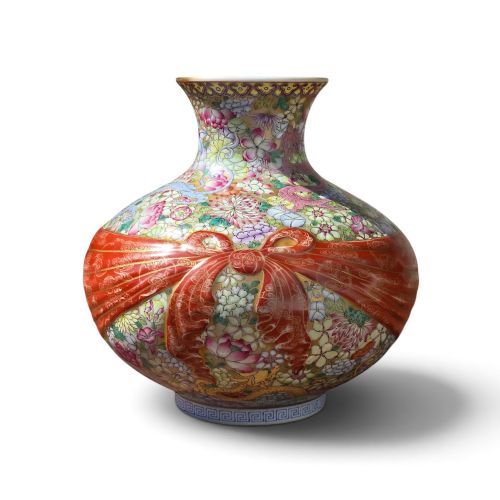
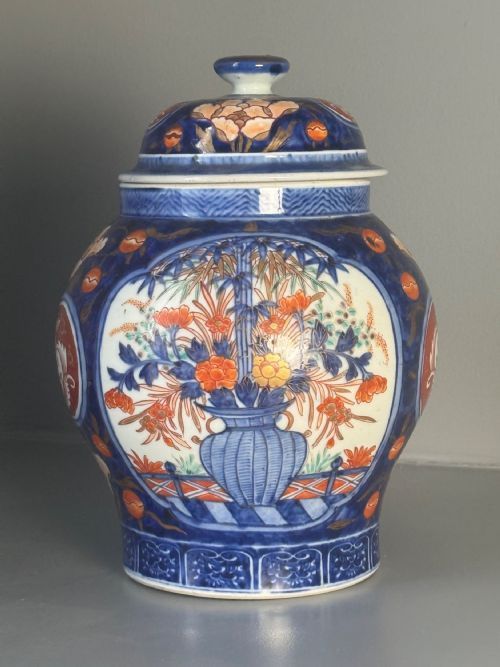
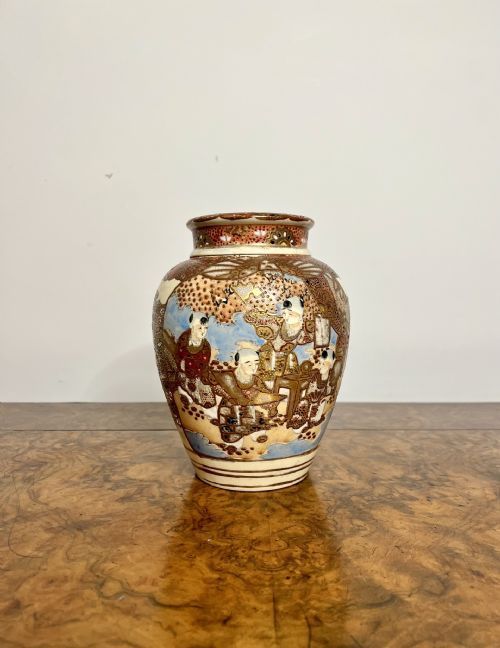
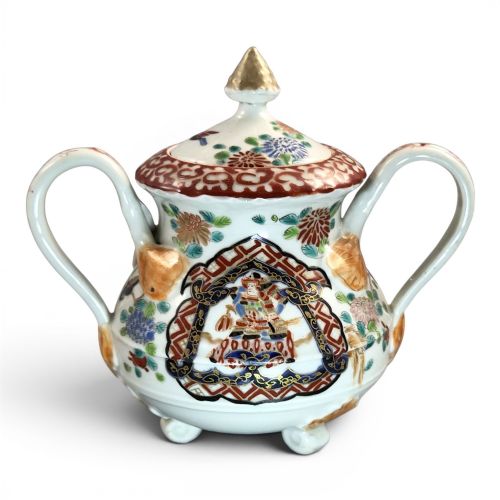
A polychrome porcelain jar combines white ceramic bodies with multi-coloured painted decoration, appearing frequently across nineteenth-century production from Asian and European kilns. Buyers searching for a polychrome porcelain jar encounter forms ranging from lidded ginger jars and temple vessels to baluster urns and tobacco containers. These pieces reflect diverse cultural traditions, including Qing Dynasty Chinese export wares and Japanese Imari, Satsuma, and Kutani styles.
Many examples arrive with fitted covers, while others function as decorative table lamps or lidded storage pots. The nineteenth century yields the highest volume of surviving specimens, spanning Victorian interpretations and earlier dynastic influences.
Makers across England, France, Germany, and Asia contributed to this tradition, utilising distinct regional palettes and motifs such as birds, flowers, and figural scenes.
Materials and methods
Makers shaped refined porcelain or earthenware bodies before applying complex layers of glaze, enamel, and occasionally gold leaf or gilding. Artisans hand-painted intricate floral, animal, and landscape scenes using mineral pigments that required multiple firings in kiln heat to fix the colours.
Some workshops incorporated wood or brass mounts to support lids and bases, particularly on larger lidded jars and monumental floor vases.
Samson workshops once recreated Chinese export designs so faithfully that modern collectors still double-check the marks.
Evaluating craftsmanship
The weight, symmetry, and firing stability of the ceramic vessel further separate standard production from exceptional studio output.
Samson Paris·Royal Worcester·Mason·Coalport·Fukagawa
The Polychrome Porcelain Jar Glossary
- Polychrome
- Decoration executed in multiple distinct colours. This technique defines the varied palette seen across many ceramic traditions.
- Imari
- A traditional Japanese style of porcelain featuring blue, iron-red, and gold hues. It originates from kilns near the port of Imari.
- Satsuma
- A type of earthenware with a crackle glaze, typically decorated with fine enamel and gilt patterns. These wares originated in the Satsuma Province of Japan.
- Famille Rose
- A palette of Chinese porcelain decoration dominated by opaque pink enamel. This style developed during the Qing Dynasty.
- Ginger Jar
- A high-shouldered ceramic vessel with a narrow mouth, originally designed for storing spices. These pieces frequently feature matching covers.
Polychrome Porcelain Jar: Frequently Asked Questions
Can I use a lidded jar for food storage?
Historic ceramic containers often contain lead or other heavy metals within their glaze compositions, making them unsuitable for modern consumption.
Display them empty or utilise them for dry non-food items like trinkets and pot pourri.
How do I distinguish Japanese Imari from Chinese export wares?
Japanese Imari typically employs a stark cobalt blue underglaze combined with rust red and dense gilding on a crisp white body.
Chinese export pieces from similar periods frequently favour pastel enamel families and narrative court scenes.
What indicates a nineteenth-century date?
Examine the foot ring for unglazed clay texture, baseline kiln marks, and hand-applied potting irregularities typical of period manufacturing.
Subtle wear on gilding and enamel surfaces from handling also points toward nineteenth-century origin.