





Polychrome Porcelain Group
A polychrome porcelain group brings together multiple figures in painted ceramic, capturing pastoral scenes, mythological tales, and domestic moments across the centuries.
Polychrome Porcelain Group
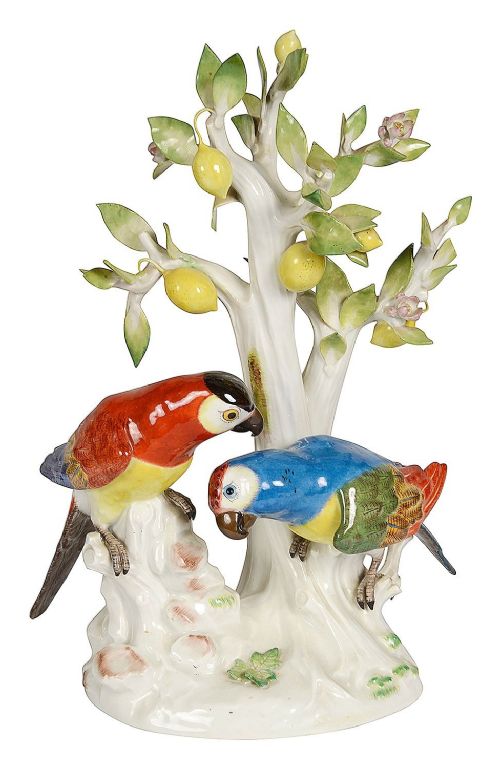
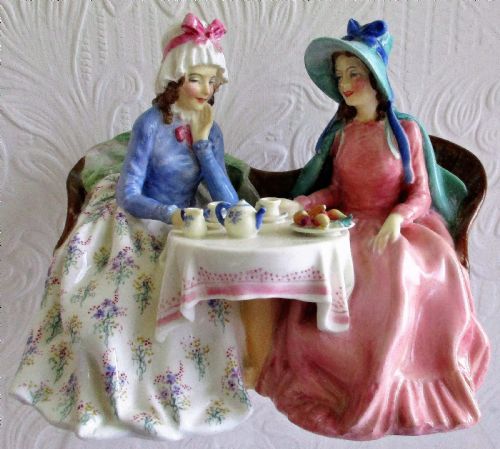
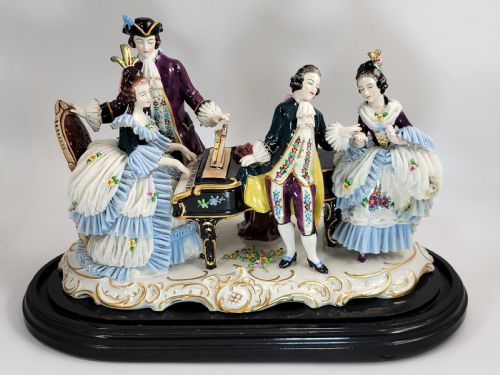
A polychrome porcelain group typically portrays several human figures engaged in an interaction, narrative, or allegorical scene, often accompanied by children, animals, or elaborate architectural and botanical backdrops. These sculptural arrangements serve primarily as decorative table or mantel ornaments rather than utilitarian objects.
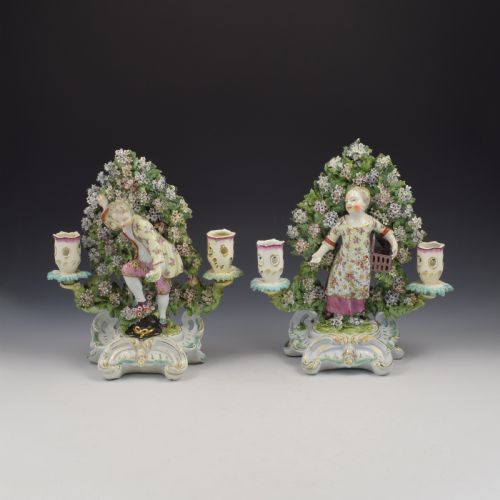
The versions met most frequently on this page originate from eighteenth-century European factories such as Meissen and Derby, alongside nineteenth-century Continental and English revivals. Subjects range from classical deities and theatrical characters to romantic couples, musicians, and allegories of the seasons.
Materials and construction
Makers shaped these complex sculptural compositions using hard-paste porcelain or earthenware, often building up the forms from multiple slip-cast or hand-modelled pieces joined before firing. Delicate additions such as bocage foliage or lace elements required meticulous manual application by skilled artisans.
The polychrome effect relies on hand-painted enamel colours applied over or under the glaze, frequently accented with gilding or gold leaf. Subsequent kiln firings fused these metallic and mineral pigments permanently to the ceramic body.
Polychrome Porcelain Group Retail Price Guide 2026
Typical asking prices for polychrome porcelain group among the pieces listed under this phrase on Sellingantiques today, from the lower quarter to the upper quarter. They describe what is for sale here now, not the wider market.
Listings for polychrome porcelain group span eighteenth-century Rococo figures, Victorian earthenware pieces, and early twentieth-century German salon porcelain.
Differentiating the work
Quality rests heavily on the crispness of the modelling and the finesse of the hand-painting, where the best examples display delicate facial expressions, fluid drapery, and subtle tonal shading in the enamels. Early factory pieces maintain sharper relief in the underlying porcelain form compared to later secondary castings.
The preservation of fragile applied details, such as intricate lace, leafy bocage backgrounds, and protruding limbs, strongly influences the integrity of the piece. Superior gilding and clean glaze application without pooling or firing blemishes also distinguish masterworks from standard production.
Meissen·Derby Porcelain·Carl Thieme·Ernst Bohne Sohne·Volkstedt Porcelain·Eugene Clauss
The Polychrome Porcelain Group Glossary
- Polychrome
- Decorated in multiple colours. This multi-coloured enamel palette distinguishes these pieces from plain white glazed porcelain.
- Bocage
- A background of carved or applied foliage and leaves. It frequently frames eighteenth-century figures in pastoral settings.
- Hard-paste porcelain
- A durable ceramic composed of kaolin and petuntse fired at high temperatures. It forms the dense body characteristic of Meissen and other major European factories.
- Spill vase
- A hollow cylindrical container incorporated into a figure group designed to hold wooden tapers for lighting fires. These practical elements blend utility with ornamental sculpture.
Polychrome Porcelain Group: Frequently Asked Questions
How were these figures used historically?
Historically, wealthy patrons displayed these sculptural groups on mantelpieces, sideboards, and dining tables to demonstrate taste, sophistication, and social standing. Some variations incorporated functional elements such as candlesticks or spill vases.
Rather than serving practical daily functions, their primary role was visual storytelling and conversation-starting decoration within affluent drawing rooms and salons.
How do I care for antique porcelain groups?
Living with these delicate ceramics requires careful placement away from direct sunlight, high humidity, and areas prone to accidental bumps or vibrations. Dusting should be done very gently using a soft, dry brush.
Avoid using water or cleaning solutions, particularly on areas with delicate applied elements like lace, gold leaf, or hand-painted enamel details that might lift from the ceramic body.
How can I tell the period of a piece?
Dating relies on examining factory marks, the style of the modelling, the palette of the enamel colours, and the composition of the porcelain body itself. Eighteenth-century examples often feature underglaze blue factory marks and distinct rococo or neoclassical styling.
Nineteenth-century revival pieces typically display heavier gilding, different base treatments, and distinct paste characteristics that separate them from their earlier eighteenth-century counterparts.