

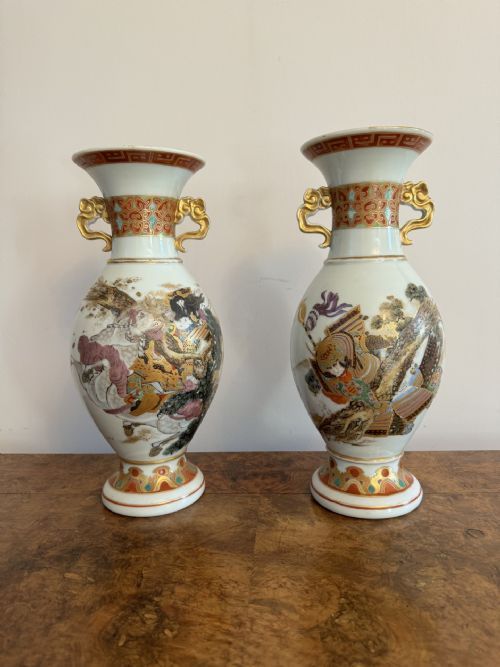
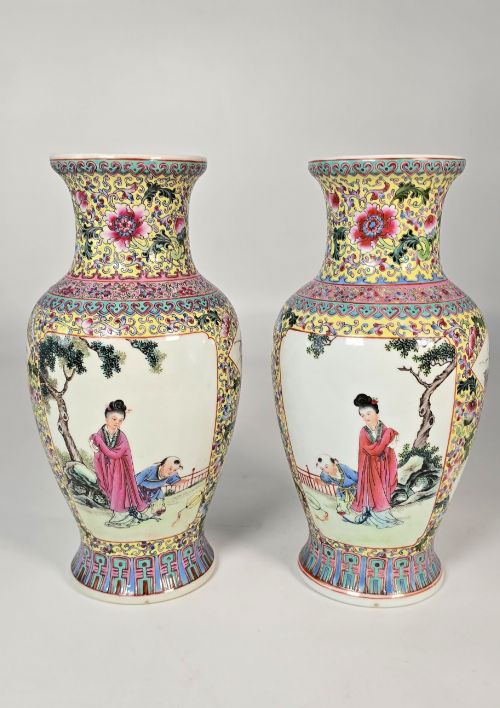
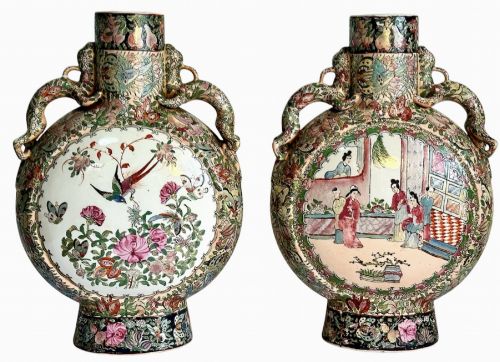
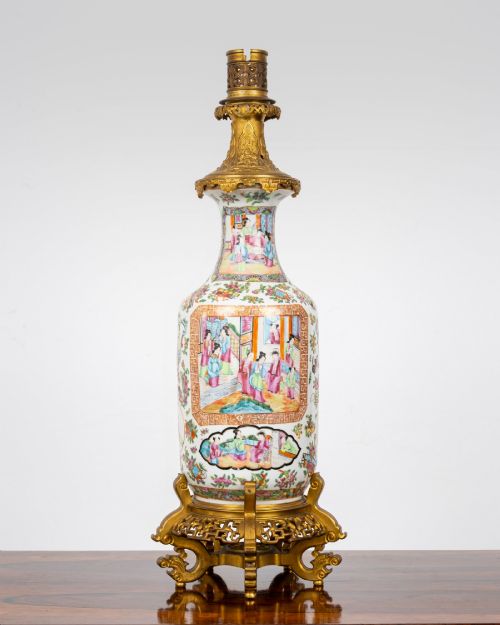

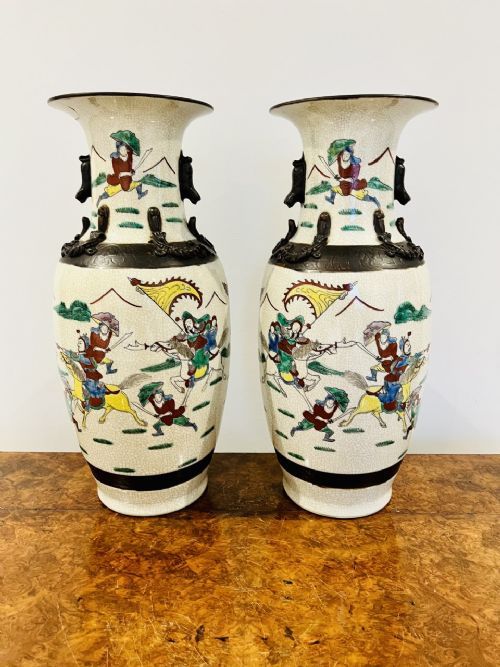
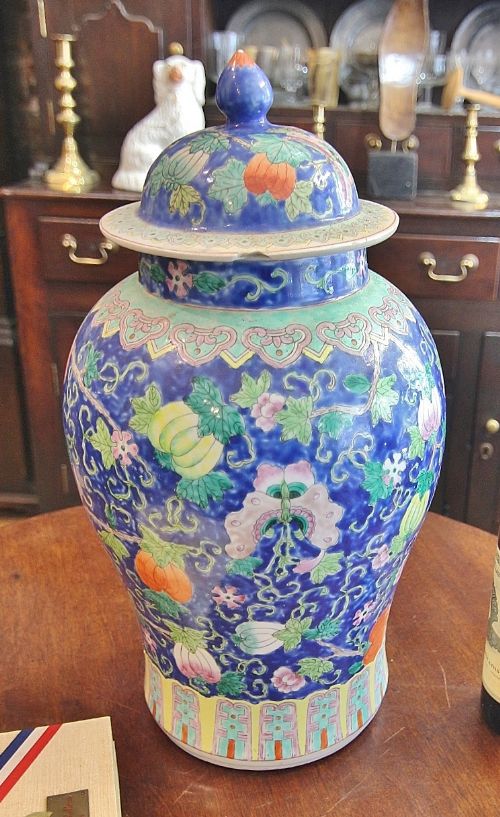


Polychrome Chinese Ceramic Vase
When buying a polychrome chinese ceramic vase, you are looking at vibrant works spanning the nineteenth and twentieth centuries.
Polychrome Chinese Ceramic Vase
A polychrome chinese ceramic vase brings together complex hand-painted enamel palettes and porcelain forms originating from periods like the Qing Dynasty and the Republic Period. You will encounter various shapes on this page, including baluster vases, moon flasks, ginger jars, and brush pots, alongside umbrella stands and floor vases.
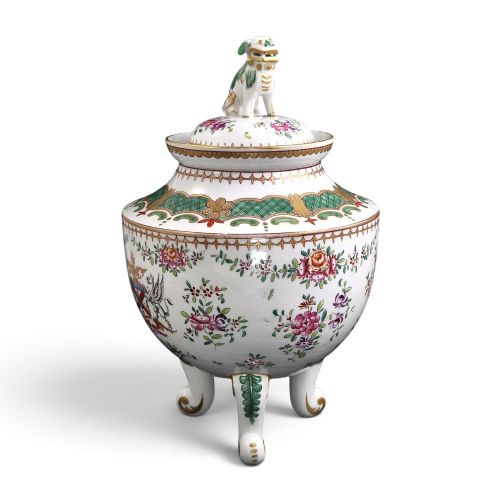
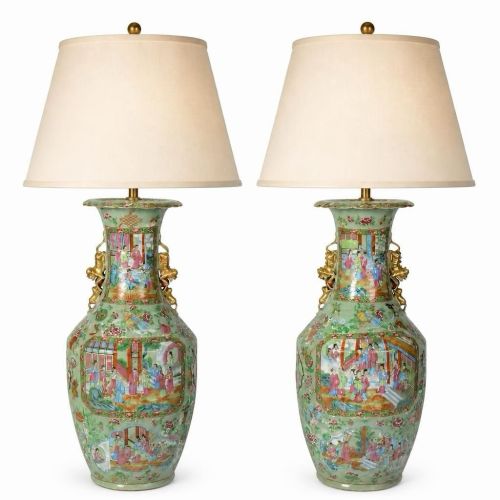
Many examples from the nineteenth century onward reflect trade and export traditions, including Canton and Rose Medallion styles alongside European interpretations from makers like Samson Paris. Pieces range from intimate scholar's brush pots to monumental floor vases and converted table lamps mounted in brass.
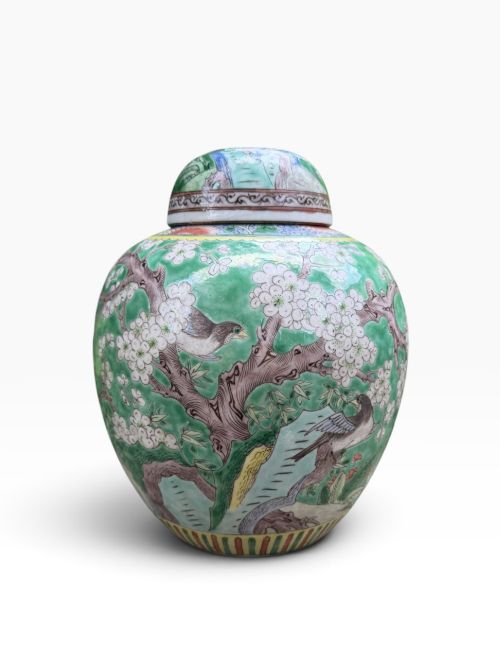
The aesthetic bridges traditional motifs such as birds, flowers, officials, scholars, and Buddhistic lions with rich overglaze enamel work. Finding the right piece means matching the specific form and period style, whether a late nineteenth century ginger jar or a 1930s Republic Period vessel, to your space.
How they were made
Makers shaped these pieces from porcelain, applying underglaze blue elements or cracked glazes before firing the clay body. Overglaze enamels including iron-red, green, and pink tones were then hand-painted across the surface in detailed pictorial scenes.
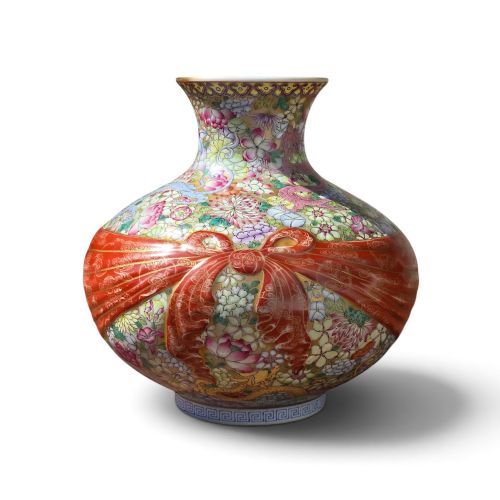
Some vessels incorporated subsidiary materials like gilt bronze mounts, brass fittings, and carved wood stands to adapt the ceramics for domestic furnishing. Artisans utilised techniques ranging from fine ribbon-wrapped detailing and Millefleurs designs to biscuit enamelling on specialised forms such as cong vases.
Buddhistic lions peer out from seventeenth-century transitional jars, guarding delicate enamel surfaces across the centuries.
What varies in quality
The precision and density of the hand-painted overglaze enamel work dictate much of the visual merit, separating standard export production from master-painted scholar pieces. Finely delineated brushwork on complex subjects like immortal figures or intricate bird and flower compositions signals superior workshop standards.
Proportion and scale also define the upper tier, where monumental floor vases and balanced baluster shapes maintain structural harmony despite heavy firing requirements. The addition of intact covers, original matching pairs, or documented maker and reign marks further distinguishes exceptional examples.
Samson Paris·Gao Hengsheng
The Polychrome Chinese Ceramic Vase Glossary
- Famille Rose
- A major palette of Chinese porcelain characterised by opaque pink enamel, introduced during the Qing Dynasty. This colour scheme allowed for subtle shading and intricate depictions of figures and botanicals.
- Famille Verte
- An overarching green-dominant enamel palette utilised predominantly in the seventeenth and eighteenth centuries and revived later. It relies on transparent green enamels combined with iron-red and other pigments.
- Ginger Jar
- A wide-shouldered, short-necked storage jar form originally used for spices and later adapted as a decorative vase or lamp base. Many examples retain their original fitted porcelain covers.
- Moon Flask
- A flattened, circular pilgrim flask form supported on a base, often featuring two arched handles flanking the neck. These decorative vessels provide wide flat panels ideal for detailed pictorial enamel work.
- Qing Dynasty
- The final imperial dynasty of China, spanning from 1644 to 1912, encompassing major periods of porcelain innovation such as the Qianlong and Guangxu reigns. Pieces from this era often display rich polychrome decoration.
Polychrome Chinese Ceramic Vase: Frequently Asked Questions
How do I identify a Republic Period vase?
Republic Period vases, dating from the early twentieth century, often display thinner porcelain bodies and more painterly, artistic enamel compositions. Look for specific artist signatures or transitional stylistic elements that break away from strict imperial formulas.
These pieces frequently feature modern framing techniques or specific hallmarks associated with twentieth-century ceramic guilds and individual master painters.
What is Rose Medallion porcelain?
Rose Medallion is a distinct nineteenth-century Cantonese export style featuring segmented panels filled with alternating scenes of figures, birds, and flowers. The composition is unified by dominant pink enamel roses and gilt detailing.
This style was produced extensively for Western export markets, resulting in numerous surviving table lamps, large vases, and complete matching pairs.
Can I use these vases as table lamps?
Many nineteenth and twentieth-century Chinese porcelain vases have been converted into table lamps, either historically or in more recent decades. This adaptation makes large ginger jars and baluster vases practical for modern interior lighting.
When living with lamp conversions, ensure the wiring meets current safety standards while preserving any original brass or gilt bronze mounts attached to the base.
What does a Guangxu mark indicate?
A Guangxu mark points to the reign of the Guangxu Emperor between 1875 and 1908 within the late Qing Dynasty. Marks from this period can be six-character imperial designations or cyclical dates corresponding to specific years.
Items bearing these marks demonstrate the continued high level of imperial porcelain production running alongside commercial export wares during the late nineteenth century.