






Polychrome Ceramic Serving Tray
These polychrome ceramic serving tray pieces bring handpainted colour and pattern to the table, uniting centuries of global craftsmanship into practical items that collectors value for display and use.
Polychrome Ceramic Serving Tray
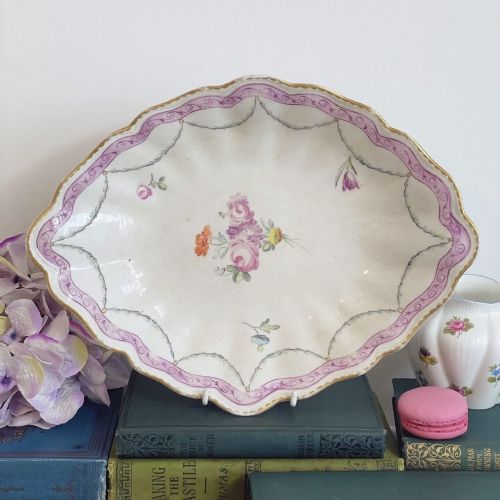
A polychrome ceramic serving tray covers a wide range of antique platters, plates, and dishes created across the eighteenth and nineteenth centuries. The pieces on this page span several distinct traditions, including English factories, French faience, and Asian export wares.
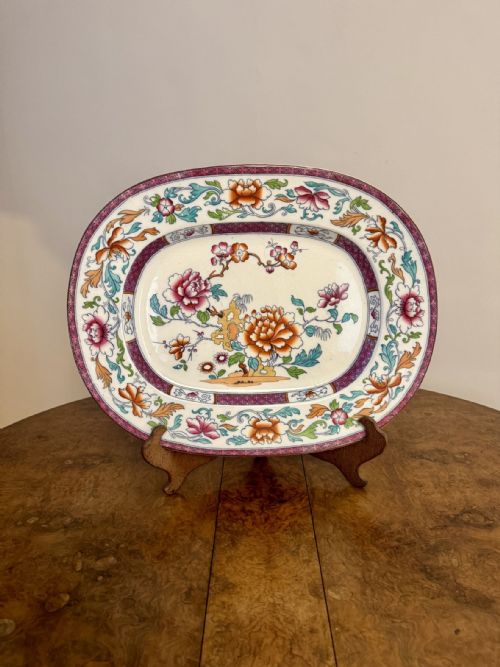
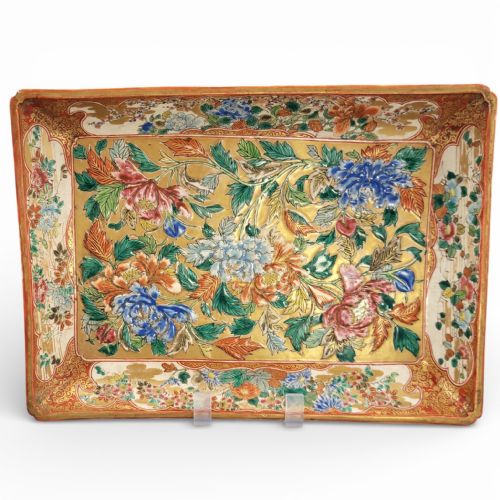
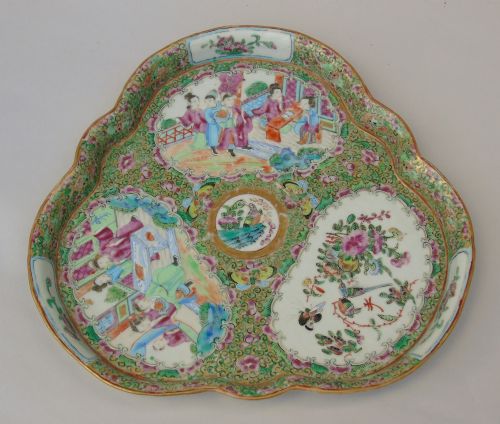
English examples range from Georgian porcelain serving plates to Victorian ironstone meat platters and Minton transfer-printed services. Alongside these, nineteenth-century Chinese Canton Famille Verte and Rose dishes sit next to Japanese Kutani platters.
Forms vary from standard rectangular meat platters to trefoil trays, shamrock-shaped dishes, and large bowls designed for presentation. Buyers searching for a polychrome ceramic serving tray will encounter both domestic utility wares and decorative export pieces.
Materials and production methods
Makers utilised ceramic bodies including porcelain, earthenware, and ironstone, shaping them into platters and trays before applying handpainted or transfer-printed decoration. Enamel paints provide the multi-coloured polychrome palettes seen across these objects.
Many nineteenth-century items incorporate gilding and gold leaf highlights applied over the glaze to accentuate borders and central motifs. High-temperature firing fixed the vibrant mineral glazes and underglaze blue marks onto the ceramic surfaces.
Listings feature items from both the Georgian and Victorian eras alongside nineteenth-century Chinese export porcelain.
Assessing quality in antique ceramics
Quality rests upon the precision of the handpainted brushwork and the clarity of the polychrome enamels applied to the ceramic body. Crisp definition in floral motifs, figures, or patterns distinguishes superior artistic execution from simpler commercial output.
The integrity of the glaze and the preservation of any gold leaf or gilt detailing significantly influence the overall condition and visual appeal. Finer pieces demonstrate careful kiln work with minimal warping and uniform surfaces across large meat platters.
Derby·Minton·Mason
The Polychrome Ceramic Serving Tray Glossary
- Polychrome
- Decoration executed in multiple colours. This multi-coloured approach defines the vibrant palettes found on these trays and platters.
- Ironstone
- A heavy, durable type of earthenware patented in the nineteenth century. It provided a robust alternative to porcelain for large meat platters and serving dishes.
- Famille Rose
- A Chinese porcelain palette dominated by opaque pink enamel colours. Introduced in the eighteenth century, it appears frequently on export dishes.
- Faience
- Tinned-glazed earthenware produced in France and other European regions. This technique yields an opaque white surface suitable for painted decoration.
- Gilt
- A thin layer of gold applied to the ceramic surface. It is often used to highlight rims and decorative borders.
Polychrome Ceramic Serving Tray: Frequently Asked Questions
How do I clean a antique ceramic tray?
Wash these pieces gently by hand using mild soap and warm water, avoiding harsh scourers or soaking them in water.
Dry them immediately with a soft cloth to protect any delicate enamel work, handpainted details, and gold leaf highlights.
Can I use these platters for serving food?
Many of these items were originally produced as meat platters, serving plates, and dishes for dining tables. However, antique glazes can sometimes be sensitive to acidic foods.
Inspect the condition of the glaze before use, or reserve them for dry foods and decorative display.
How do I date a nineteenth-century platter?
Examine the base of the piece for maker marks, factory stamps, or registration numbers that link to specific production years. Style, weight of the ceramic, and painting techniques also offer clues to the era.
English ironstone and porcelain often carry impressed or printed marks that narrow down the decade of manufacture.
What is the difference between porcelain and ironstone?
Porcelain is a fine, vitrified ceramic fired at high temperatures until it becomes translucent and non-porous. It tends to be lighter and more delicate.
Ironstone is a dense, opaque earthenware developed for strength and durability, making it heavier and well-suited for large meat service.