




Victorian Ironstone Meat Platter
These robust victorian ironstone meat platter items are heavy-duty service vessels designed for joint carving, prized for durability and grand scale.
Victorian Ironstone Meat Platter
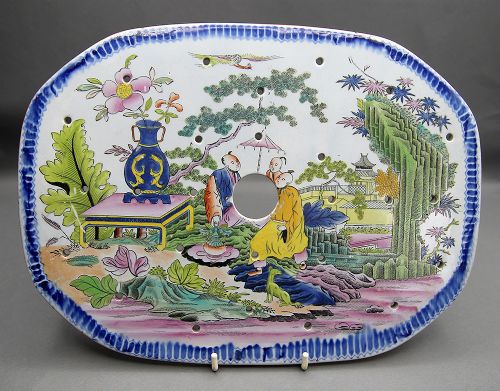
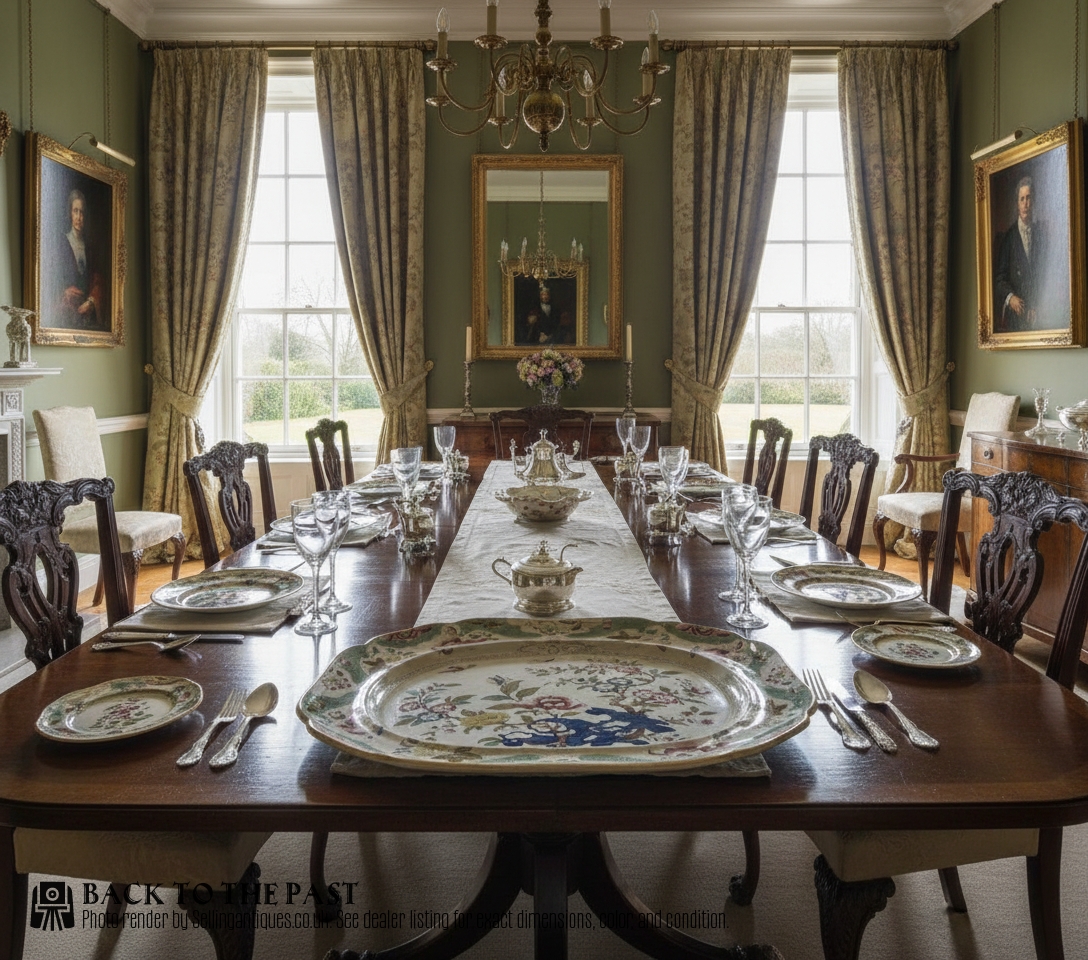
A victorian ironstone meat platter is a substantial ceramic serving dish engineered for heavy dining table service during the nineteenth century. These items appear primarily as large serving platters, meat dishes, and asheds alongside specialised components like matching platter drainers and well and tree designs.
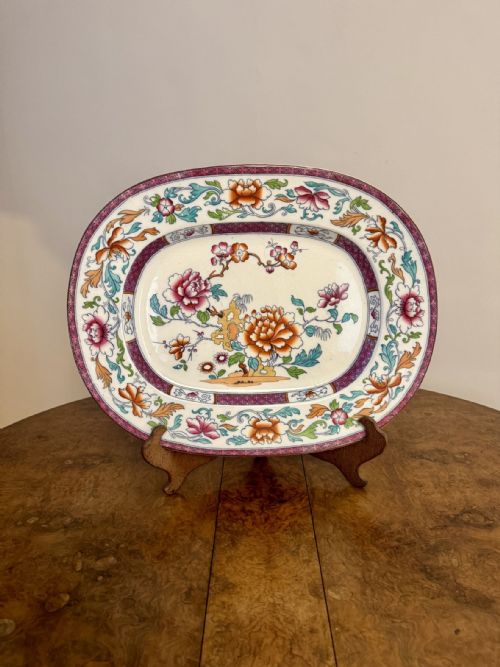
The pieces on this page span the 19th century, featuring Victorian eras alongside specific dates from 1800 to 1850 and 1880. Forms range from game plates and huge ironstone dishes to patterned ashets bearing regional English and oriental-inspired motifs.
How they were made
Potters utilised durable earthenware and ironstone china body compositions to create these heavy service vessels, applying specialised glaze finishes to seal the dense ceramic. Some examples incorporate enamel decoration and gold leaf accents over the fired body.
Makers applied intricate aesthetic schemes onto the ironstone surfaces, ranging from blue and white transfers to Victorian Chinoiserie and Victorian Imari patterns like the Elkington pattern, Chinese Villa, Mogul pattern, and Old School House pattern.
Listings feature items spanning the nineteenth century, utilising ironstone china, earthenware, glaze, enamel, and gold leaf across Chinoiserie and Imari styles.
What varies in quality
The sophistication of the surface decoration determines much of the distinction among these platters, separating simple blue and white transfers from multi-coloured enamel work and gold leaf detailing. Hand-painted patterns and named designs like Mogul or Chinese Villa demand greater skill than standard production runs.
Elkington·Minton·Mason’s Ironstone China
The Victorian Ironstone Meat Platter Glossary
- Ironstone
- A heavy, durable type of earthenware patented in the nineteenth century to rival porcelain. It provides exceptional resistance to chipping and cracking during heavy kitchen use.
- Drainer
- A perforated ceramic insert that sits inside the platter to lift meat above accumulated juices. This component separates the joint from its drippings during carving.
- Ashet
- A regional term of Scottish origin used to describe a large serving platter or meat dish. These vessels anchor the centre of the dining table for joint service.
- Well and Tree
- A specialised platter surface featuring a central carved well connected to radiating channels. This layout drains meat juices away from the carved joint towards a reservoir at one end.
- Imari
- A decorative style inspired by Japanese export porcelain featuring deep cobalt blue, iron red, and gold leaf highlights. Potters applied this palette extensively to Victorian earthenware.
Victorian Ironstone Meat Platter: Frequently Asked Questions
What is an ironstone meat platter?
These items are heavy ceramic serving vessels produced in the nineteenth century for presenting large joints of meat at the dining table.
Built from dense earthenware, they withstand vigorous carving and frequent washing while maintaining their structural integrity.
How were well and tree platters used?
The sloped channels direct meat juices away from the carved roast and down into a central well.
This keeps the meat elevated from its drippings for cleaner presentation during formal Victorian dinners.
What does a platter drainer do?
A ceramic drainer fits snugly inside the well of the platter to support the meat above the liquid pool.
Such inserts ensure the joint remains dry as guests slice portions at the table.
How do I identify a Victorian ironstone piece?
Look for the dense, heavy earthenware body characteristic of nineteenth-century British potteries alongside typical transfer-printed or hand-enamelled motifs.
Stylistic markers range from blue and white landscapes to Chinoiserie and Imari patternwork.