


English Ceramic Meat Dish
An English ceramic meat dish is a substantial serving platter from the Georgian or Victorian eras designed for joint presentation at the dining table.
English Ceramic Meat Dish
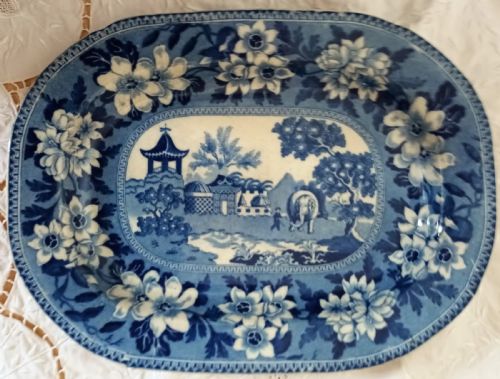
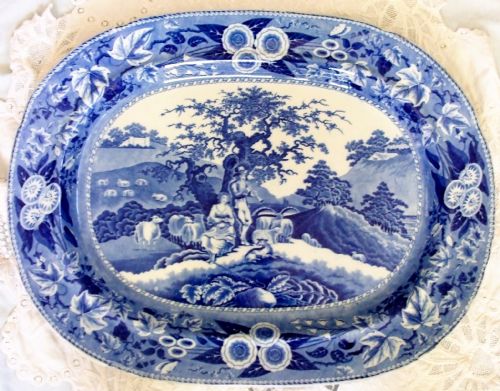
When searching for an english ceramic meat dish, you encounter large serving platters, ashets and well and tree trays originating from the Georgian and Victorian periods. These pieces include large rectangular shapes and specialised forms featuring reservoirs for juices.
The most common examples on this page are blue and white transferware platters displaying classical ruins, Chinese patterns, and figural scenes by makers such as John Rogers & Son, Thomas Lakin, Don Pottery, and Spode. Ironstone china and pearlware bodies also appear frequently alongside traditional earthenware.
Makers such as Minton and Mason's dominate the later offerings, often employing rich transfer printing and enamelled palettes like Imari or the Chinese Tree pattern. These large serving dishes fulfilled a central role in formal dining before the advent of modern tableware sets.
How they were made
Potters shaped these large platters from earthenware, pearlware, and ironstone, applying glaze and cobalt pigment to achieve the deep blue tones seen in transfer-printed scenes. Some pieces incorporated gold leaf and enamel to accent intricate borders and pictorial subjects.
Transfer printing allowed workshops to apply complex designs like the Tower pattern or pastoral views directly onto the ceramic body before firing. Certain specialist serving platters included a well and tree layout with a reservoir to collect meat juices during carving.
Periods represented span the Georgian and Victorian eras, with dates ranging around 1800 to 1852.
What varies in quality
Quality rests in the crispness of the transfer print, the depth of the glaze, and the clarity of the pattern details across a large surface. Well-executed pieces maintain register and depth in complex pictorial subjects such as shipping series or classical ruins.
Structural heft and stability distinguish robust ironstone and pearlware bodies from lighter earthenware, particularly in large serving platters designed to support heavy joints of meat. Finer examples display meticulous hand-finishing in enamel colours or gold leaf highlights.
John Rogers & Son·Thomas Lakin·Don Pottery·Minton·Spode
The English Ceramic Meat Dish Glossary
- Ashet
- A regional term for a large meat platter or serving dish, commonly used in Scotland and northern England. It describes the wide, shallow vessels used for presenting roasted joints.
- Transferware
- Pottery decorated by applying a design from an engraved copper plate onto tissue paper, which was then transferred onto the unglazed or bisque ceramic body. This technique defined nineteenth-century blue and white production.
- Pearlware
- A refined earthenware developed by Josiah Wedgwood that featured a bluish glaze pooling in crevices to mimic Chinese porcelain. It bridges the gap between creamware and later white ironstone.
- Ironstone
- A dense, durable type of ceramic patented in the early nineteenth century by Mason's. It resists chipping and staining better than standard earthenware.
- Well and tree
- A platter design featuring channels and a central reservoir to drain and collect juices from carved meat. It represents a practical innovation in nineteenth-century dining table accessories.
English Ceramic Meat Dish: Frequently Asked Questions
What is a well and tree platter?
A well and tree platter is a specialised serving dish featuring carved channels that direct meat juices down into a central reservoir. This prevented liquids from spilling onto the table during carving.
These functional vessels were essential for large roasted joints at formal nineteenth-century dining tables. Their robust construction allowed them to withstand the weight of heavy meats.
How do I date a transferware platter?
Dating relies on stylistic evidence, potter's marks, and the ceramic body type, such as early pearlware versus later ironstone. Transfer patterns often correspond to specific decades of production.
Makers frequently stamped their names or pattern titles onto the reverse of the platter. Comparing these marks with historical registry records narrows down the year of manufacture.
Can I use these platters for serving food?
Most antique ceramic platters are safe for serving dry foods, though crazing in the glaze can absorb liquids over time. Hand washing protects the historical surface from modern detergents.
Ironstone and sturdy earthenware bodies handle regular use better than delicate porcelain examples. Many collectors prefer to use them strictly for display or occasional festive dining.
What is the difference between earthenware and ironstone?
Earthenware is a porous, lower-fired ceramic body that requires a complete glaze to remain waterproof. It forms the base for most early blue and white transferware.
Ironstone is a heavily vitrified, denser material introduced in the nineteenth century to imitate porcelain. It offers greater weight and resilience against daily wear.