



Polished Brass Taper Holder
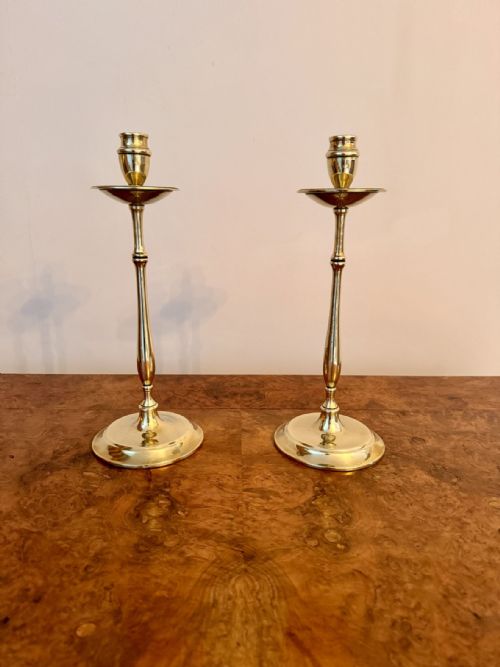
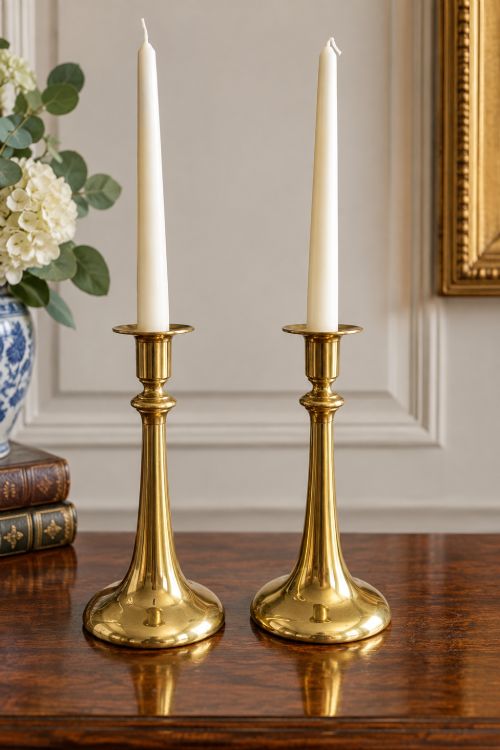
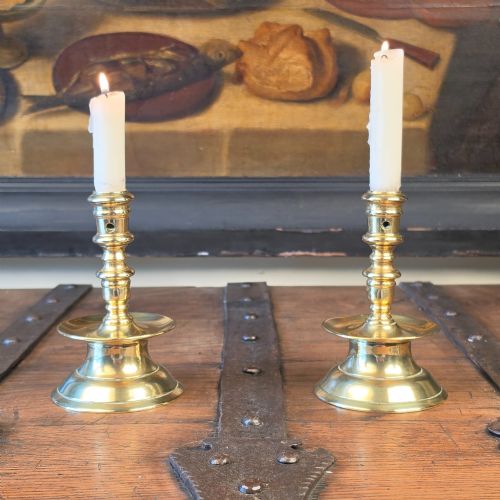
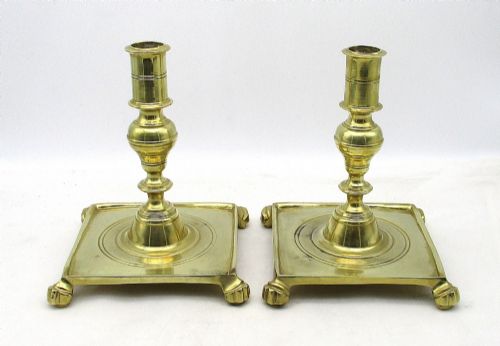
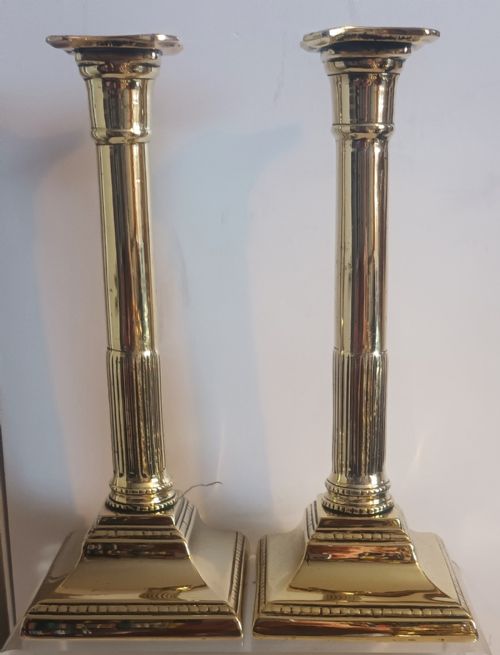
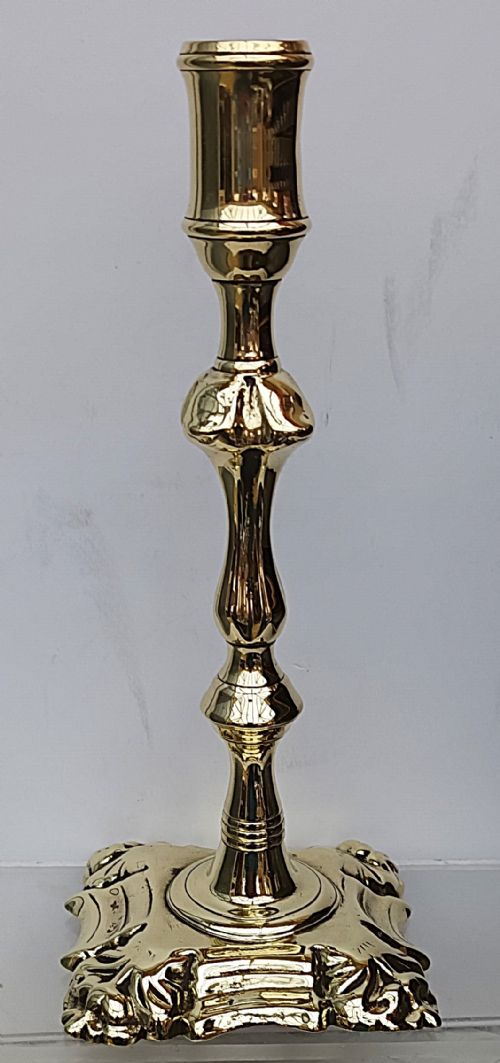
These polished brass taper holder examples are practical domestic lighting pieces designed to burn narrow candles safely, prized for their bright metal surfaces and traditional forms.
Polished Brass Taper Holder
A polished brass taper holder serves as a small domestic light source designed specifically for thin taper candles rather than heavy household wax dips. Buyers searching for a polished brass taper holder typically encounter antique candlesticks originating from the eighteenth, nineteenth, and early twentieth centuries.
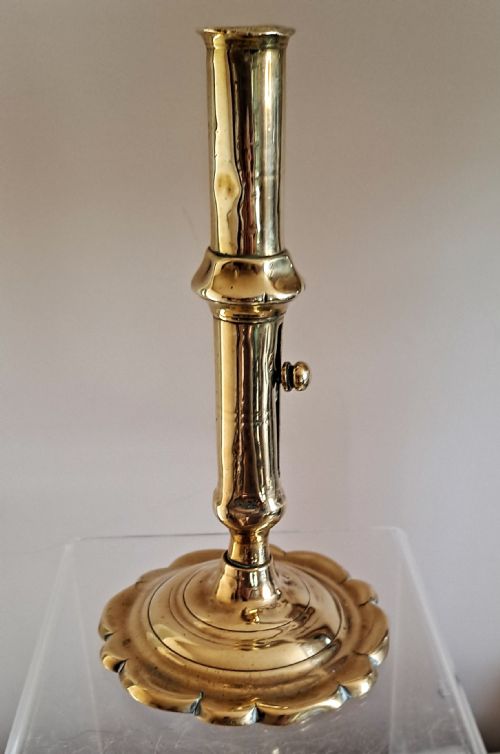
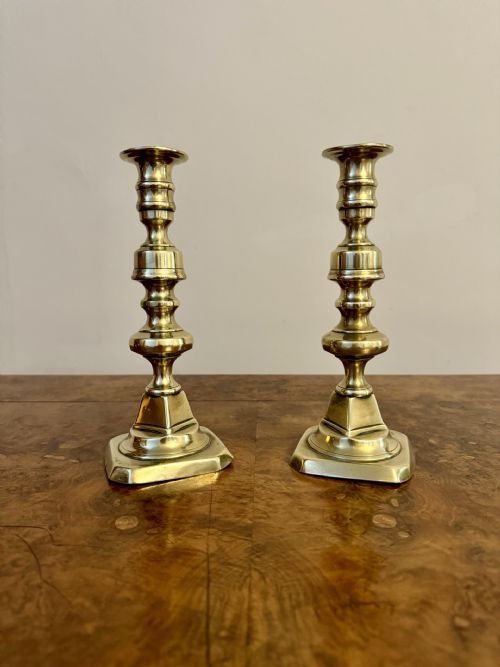
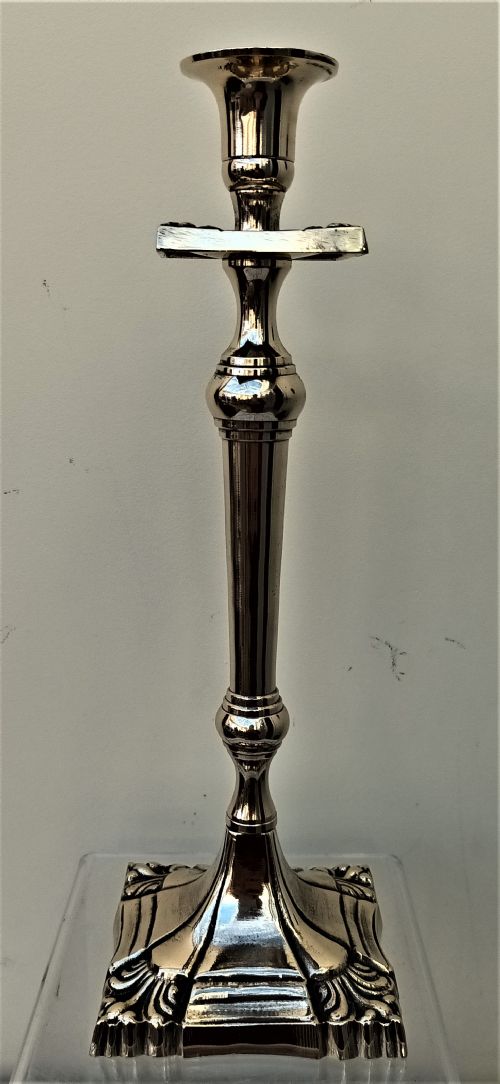
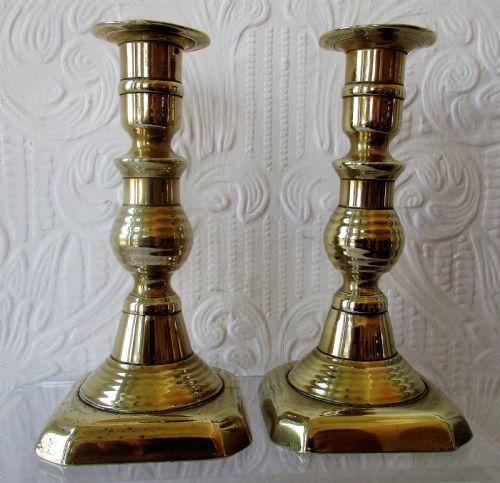
The selection ranges from early Georgian petal base designs to ornate Victorian church candlesticks and slender Edwardian or Art Nouveau creations. Most survivors appear in matched pairs, though single examples and ejector mechanisms also feature regularly across the periods.
Originating largely from English workshops, these items display distinct regional forms spanning the Georgian, Victorian, and Edwardian eras. The enduring appeal lies in the warm reflection of polished metal paired with robust historical construction.
Materials and construction
Makers relied primarily on brass, bronze, and solid brass alloys cast in sections before being turned on a lathe and joined. Seamed construction appears frequently in nineteenth-century examples, where sheet metal was rolled and soldered down a vertical axis.
Surface finishing involved manual polishing to achieve a bright reflective sheen that contrasts with the darker patinated state found in uncleaned antiques. Component parts such as vase-shaped columns, tear-drop stems, and stepped bases were cast separately and assembled securely.
Assessing quality in antique brass lighting
Quality rests upon the crispness of the casting detail, the weight of the metal, and the precision with which individual turned sections fit together. Superior examples exhibit sharp petal bases or cleanly articulated mouldings without excessive smoothing from over-polishing.
Proportion and structural balance also distinguish finer specimens from standard utility pieces, with heavier solid brass weights providing greater stability. The integrity of the original construction, including uncompromised sockets and steady bases, defines the upper tier of the range.
J Miller·Frederick J Smith and Co·Wm Tonks and Sons
The Polished Brass Taper Holder Glossary
- Ejector candlestick
- A candlestick fitted with an internal sliding mechanism designed to push out the remaining candle stub. This mechanical element usually operates via a small side lever.
- Petal base
- A multi-lobed base shape resembling the petals of a flower, popular during the Georgian period. This design adds both weight and decorative width to the foot.
- Seamed brass
- Metalwork constructed from rolled sheet brass joined along a visible vertical seam rather than being cast as a single solid unit. This technique marks specific manufacturing periods.
- Tear-drop column
- A stem design featuring bulbous, teardrop-shaped turning profiles that catch the light. This stylistic flourish appears frequently on Victorian examples.
- Vase-shaped column
- A central stem profile curving outward into a swollen centre resembling a classical vase. It provides a balanced grip for moving the light.
Polished Brass Taper Holder: Frequently Asked Questions
How do I clean polished brass safely?
Maintain the bright surface using a soft cloth and a proprietary brass polish formulated for antiques, applying it sparingly to avoid removing historical detail. Rinse thoroughly with mild soapy water and dry immediately to prevent residue build-up in crevices.
Avoid abrasive scouring pads or harsh chemical dips that strip away the natural ageing and soften crisp cast edges. Regular gentle dusting preserves the reflective quality without harming the underlying metal.
What periods do these candlesticks represent?
The available selection spans from the eighteenth century through the Victorian and Edwardian eras up to the early twentieth century. Georgian pieces often display restrained classical lines, whereas Victorian examples tend toward heavier ornamentation.
Later items incorporate Arts and Crafts or Art Nouveau stylistic influences with more stylised plant motifs. Each era brings distinct manufacturing marks and column silhouettes that help date individual pieces.
Are these items supplied as pairs?
Many listings feature matched pairs intended for mantelpieces or dining tables, reflecting how they were originally used in historical homes. Single candlesticks also appear for buyers seeking accent pieces or replacements.
Matching pairs share identical height, base configuration, and casting characteristics, though slight hand-finished variations remain normal in antique metalwork.
How were taper holders used originally?
These small holders supported slender wax tapers utilised for sealing letters, lighting larger hearth fires, or guiding individuals through dark corridors at night. Their compact size made them portable tools for daily household administration.
Unlike large altar or dining table lighting, taper holders prioritized portability and quick illumination in domestic spaces.