

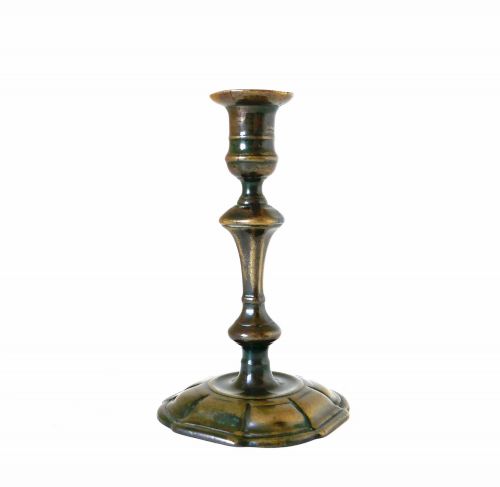
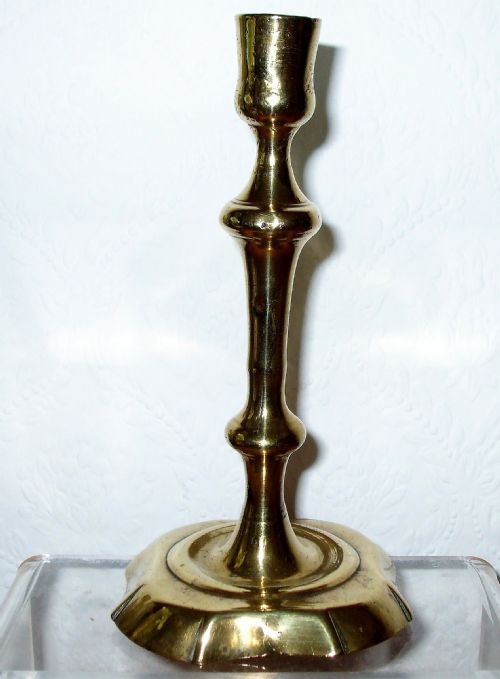
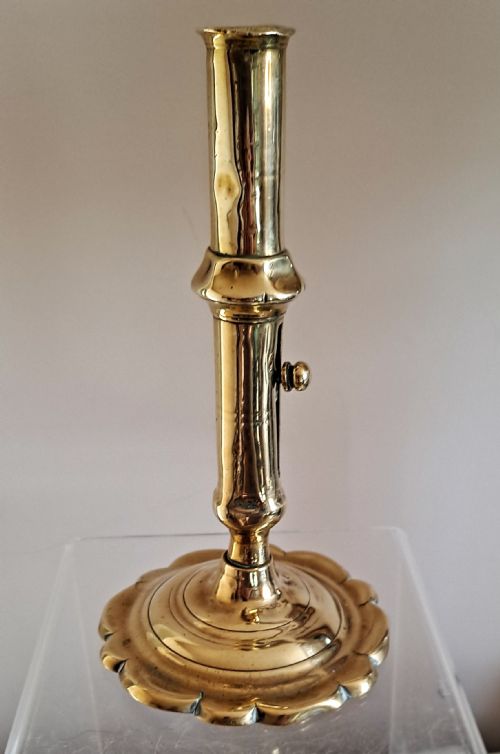


Petal Base Candlestick
A petal base candlestick brings Georgian form and weight to a table, combining structured brass profiles with distinct lobed feet.
Petal Base Candlestick
The petal base candlestick groups lighting from the Georgian and eighteenth-century periods, characterised by lobed feet shaped like flower petals. These domestic objects appear predominantly in brass, occasionally formed with multi-knopped stems and side ejector mechanisms.
Most examples met on this page belong to the eighteenth century or the George III period, including matching pairs and single lighting pieces. Later variants extend into the late nineteenth century through Arts and Crafts designs executed in brass and copper.
Materials and construction methods
Makers utilised brass and bell metal as primary materials, casting components separately before joining them into sturdy stems and bases. Seamed construction methods leave vertical lines on specific eighteenth-century shafts where metal sheets were folded and joined.
Makers also employed solid casting techniques for multi-knopped stems and heavy bases, producing substantial domestic objects designed to withstand daily use. Copper surfaces appear alongside brass in later nineteenth-century pieces to create contrasting tones.
Petal Base Candlestick Retail Price Guide 2026
Typical asking prices for petal base candlestick among the pieces listed under this phrase on Sellingantiques today, from the lower quarter to the upper quarter. They describe what is for sale here now, not the wider market.
Listings demonstrate a concentration of eighteenth-century and George III brass and bell metal forms alongside nineteenth-century Arts and Crafts copper pairings.
Distinctions in craftsmanship
The definition of the petal moulding on the foot distinguishes examples, with sharper lobes showing greater control in the initial metalwork. Proportions between the knopped stem and the spreading base dictate the visual balance of the lighting.
Surface patination and the survival of original components, such as side ejector slides within the sconce, separate standard domestic utilitarian items from refined examples of metalware.
Dr Christopher Dresser
The Petal Base Candlestick Glossary
- Petal base
- A foot moulded into lobed, overlapping curves resembling flower petals. This form provides a wide stance for stability on wooden tables.
- Knopped stem
- A shaft punctuated by rounded or swelling ornamental rings. These profiled sections improve grip when moving the candlestick.
- Sconce
- The upper cup designed to hold the candle securely in place. Some examples incorporate internal ejector mechanisms to push out remaining wax.
- Bell metal
- An alloy of copper and tin traditionally used for bells and durable domestic metalware. It produces a resonant tone and a dark golden surface.
- Seamed
- A method of joining folded metal plates to form hollow tubular stems. Visible vertical seams indicate specific eighteenth-century manufacturing techniques.
Petal Base Candlestick: Frequently Asked Questions
What is a petal base candlestick?
A petal base candlestick is a lighting device featuring a spreading foot shaped into rounded lobes resembling flower petals. These pieces date primarily from the Georgian era and eighteenth century.
They were cast in brass or bell metal to support wax candles in domestic rooms, offering both weight and decorative presence on furniture.
How do you use antique brass candlesticks?
These candlesticks hold standard taper candles for ambient room illumination or table lighting. Their heavy cast metal bases provide stable support during use.
Care should be taken to place them on heat-resistant surfaces and protect the aged metal from moisture and modern polishes.
How are eighteenth-century candlesticks dated?
Dating relies on stylistic markers such as multi-knopped stems, lobed petal feet, and manufacturing traces like vertical seams. Eighteenth-century examples typically display heavy brass casting and simpler turnings than later Victorian reproductions.
The presence of functional side ejector slides also points toward specific mid-Georgian production periods.
Why do some candlesticks have side ejectors?
Side ejectors are internal sliding mechanisms operated by a small thumbpiece on the stem. They allowed users to push remaining candle stubs out of the sconce easily.
This practical feature appears on eighteenth-century lighting where candles burned down close to the socket.
What is the difference between brass and bell metal?
Brass is primarily an alloy of copper and zinc, while bell metal contains a higher proportion of tin mixed with copper. Bell metal yields a harder material with a distinct sonorous quality when struck.
Both materials were cast to form durable domestic objects throughout the eighteenth century.