
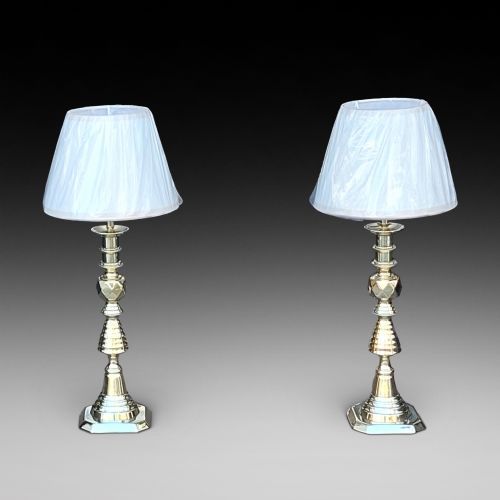
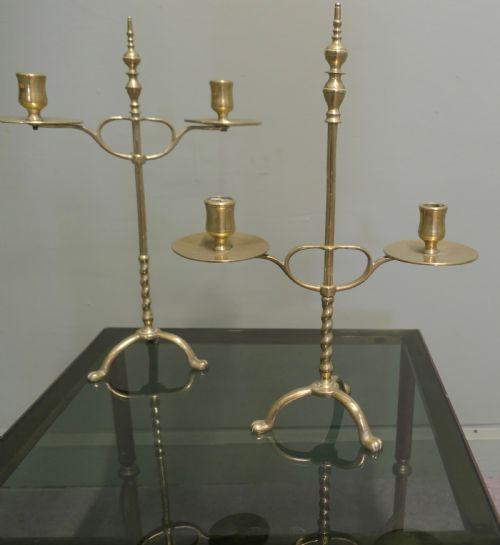
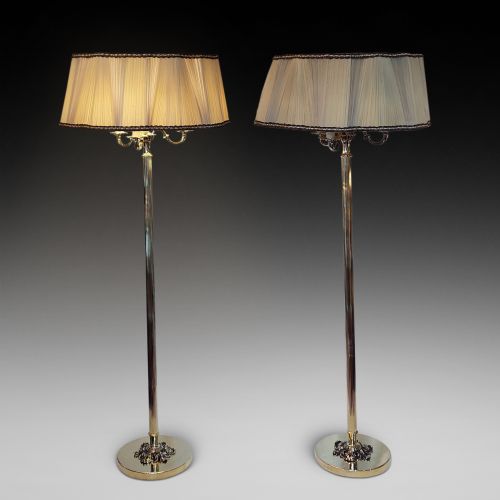


Polished Brass Standing Lamp
A polished brass standing lamp brings a warm, reflective glow and sturdy vertical presence to a room.
Polished Brass Standing Lamp
A polished brass standing lamp sits on the floor to cast light downward or upward, drawing on designs from the Victorian, Edwardian, and Art Nouveau periods. These fittings often utilise telescopic columns or adjustable arms to alter height and angle according to the room's needs.
Most examples found here date from the nineteenth and early twentieth centuries, appearing as single standards or paired items. Alongside conventional floor lamps, the selection includes standard lamp uplighters, student lights, and converted oil lamps.
Makers such as Hinks contributed substantial work to this tradition, producing heavy brass forms that anchor a traditional or revivalist interior. Buyers frequently encounter combinations of brass with materials like marble and fabric shades.
How they were made
Makers constructed these floor standing lamps primarily from cast and spun brass, often pairing the metal with weighted marble bases for stability. Telescopic mechanisms allowed sections of the brass shaft to slide smoothly within one another.
Surface finishing involved thorough polishing to highlight the warm metallic sheen of the brass and copper components. Details such as Corinthian columns and decorative collars demonstrate traditional metalworking techniques of the period.
Some nineteenth-century student lights were built heavy enough to stay put while midnight scholars burned the oil.
What varies in quality
Substantial weight and gauge of metal distinguish the finest standard lamps from lighter commercial production. Heavier brass castings provide better balance, particularly on tall telescopic or column designs.
Refinement in surface chased detail and the precision of adjustable joints mark out superior examples. Makers who invested time in mechanical parts ensured that extending mechanisms operated smoothly over decades of use.
Hinks
The Polished Brass Standing Lamp Glossary
- Telescopic standard lamp
- A floor lamp with a shaft that adjusts in height using sliding brass tubes. This mechanism allows the user to raise or lower the light source.
- Corinthian column
- A classical architectural column style featuring ornate leaf ornamentation at the top. Makers applied this motif to brass lamp standards during the Victorian and Edwardian eras.
- Uplighter
- A lamp designed to cast light upwards toward the ceiling rather than down into the room. These frequently appeared in domestic interiors during the nineteen-twenties.
- Amsterdam School
- An architectural and design style known for expressive forms and rich surface textures. Items in this taste combine brass with materials like marble.
Polished Brass Standing Lamp: Frequently Asked Questions
Where should I place a floor standing lamp?
Position these tall lamps beside armchairs, in dark corners, or near seating areas where direct reading light is helpful. Their vertical height helps balance rooms with substantial furniture.
Ensure the heavy base rests firmly on level flooring so the extended metal shaft remains balanced and secure.
How do I tell Edwardian lamps from Victorian ones?
Victorian examples often favour heavy, ornate castings and elaborate classical revival detailing such as Corinthian columns. Edwardian pieces frequently adopt slightly cleaner silhouettes while retaining traditional brass construction.
Examine the weight of the metal and the complexity of the base to understand the stylistic priorities of each era.
How do I care for polished brass?
Dust the metal regularly with a soft cloth to prevent grime settling into decorative recesses. Avoid harsh chemical cleaners that strip the polished finish.
Occasional gentle wiping keeps the brass surface bright without removing the natural character acquired over decades of use.