




Art Nouveau Standard Lamp
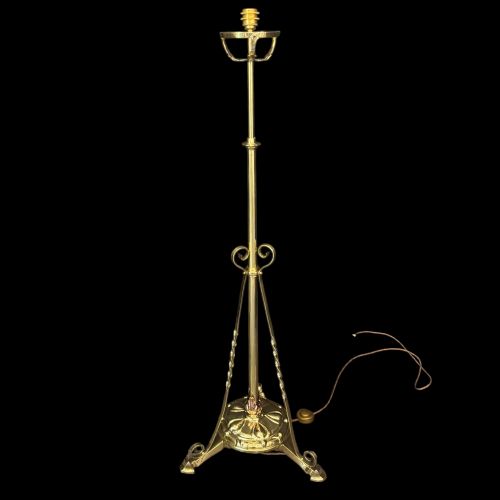
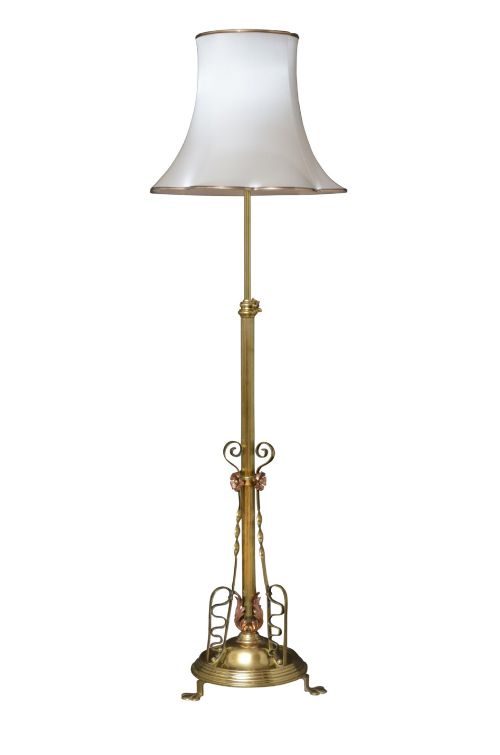
These art nouveau standard lamp examples bring fluid organic lines and height to a room, offering both practical illumination and period presence.
Art Nouveau Standard Lamp
An art nouveau standard lamp is a tall floor standing lighting fixture designed to illuminate a room from a single vertical column. The selection here spans the Victorian and Edwardian eras, reaching into the early twentieth century and the Belle Epoque period.
The standard lamps and floor lamps appearing in this category include adjustable, telescopic, and rise and fall mechanisms. Many examples originate from British, French, and Dutch workshops, showing the widespread reach of the style.
Brass is the dominant metal across the forms, frequently paired with copper, marble, iron, and bronze. Buyers also encounter converted oil lamps alongside standard electric fittings.
How They Were Made
Maker workshops utilised solid brass and copper to form the slender shafts and weighted bases necessary for stability. Telescopic and adjustable mechanisms allowed users to alter the height of the standard lamp according to room requirements.
Cast iron and bronze provided heavy support, particularly in pieces featuring verdigris finishes and heart details. Marble bases added stability and weight to the base of the taller brass columns.
Art Nouveau Standard Lamp Retail Price Guide 2026
Typical asking prices for art nouveau standard lamp among the pieces listed under this phrase on Sellingantiques today, from the lower quarter to the upper quarter. They describe what is for sale here now, not the wider market.
Listings feature brass, copper, marble, iron, and fabric materials across Victorian, Edwardian, and 1910 periods.
What Varies in Quality
The complexity of the metalworking separates the standard production pieces from the finer examples. Telescopic and rise and fall mechanisms require precise engineering to function smoothly over time.
Material combinations elevate certain pieces, such as those uniting brass with copper or incorporating marble into the base. The presence of decorative motifs, such as heart details on cast iron, indicates greater attention to design.
The Art Nouveau Standard Lamp Glossary
- Telescopic
- A design featuring an inner shaft that slides upward to increase the overall height of the standard lamp. This mechanical feature allowed Victorian and Edwardian users to adapt the light level for reading or general room illumination.
- Rise and fall
- A weighted pulley or sliding mechanism that permits the lamp height to be adjusted effortlessly. This system frequently appears on oil lamps converted later to electricity.
- Standard uplighter
- A floor standing lamp designed to direct illumination upward toward the ceiling rather than downward. These pieces provide ambient room light through tall brass columns.
- Verdigris
- A green patina formed naturally on copper, brass, or bronze through atmospheric exposure. Victorian makers sometimes utilised this finish deliberately for decorative effect on iron and metal bases.
- Belle Epoque
- A period of European social and artistic life spanning the late nineteenth century and the years leading to the First World War. Standard lamps from this era often reflect French aesthetic influences.
Art Nouveau Standard Lamp: Frequently Asked Questions
How do I adjust a telescopic standard lamp?
The inner brass shaft slides upward from the main column to alter the height. A thumbscrew or collar secures the pole at the desired level.
Older telescopic mechanisms require gentle handling to avoid straining the internal metal threads or catching the original wiring.
Were these lamps originally for oil or electricity?
Many examples began as oil lamps featuring reservoirs before being converted to electricity during the twentieth century. Other pieces were manufactured specifically as electric standard uplighters.
Checking the upper collar reveals whether the fitting held a burner or an early electrical socket.
Where should I place a floor lamp in a room?
These tall fixtures suit corners or seating areas where they provide direct task lighting for reading. Their slender metal columns occupy minimal floor space while adding vertical presence.
Heavier marble-based pieces provide stability when positioned on open wooden floors or carpets.