

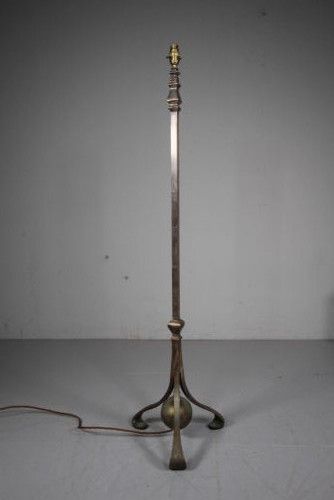
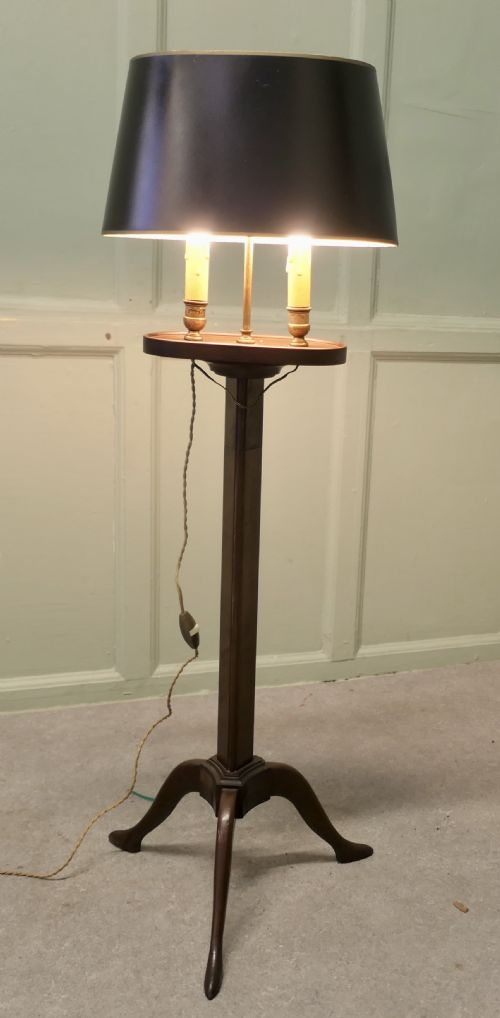
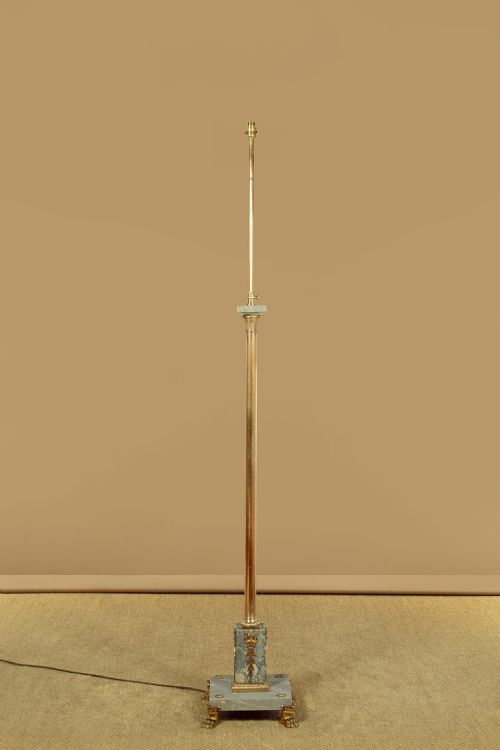
Antique Lighting Standard Lamp
An antique lighting standard lamp brings architectural presence and adjustable height to a room, drawing the eye upwards with period character.
Antique Lighting Standard Lamp
An antique lighting standard lamp stands as a vertical floor-standing column designed to illuminate interior spaces from an elevated position. Buyers search for these pieces to anchor a corner or seating arrangement with traditional vertical volume.
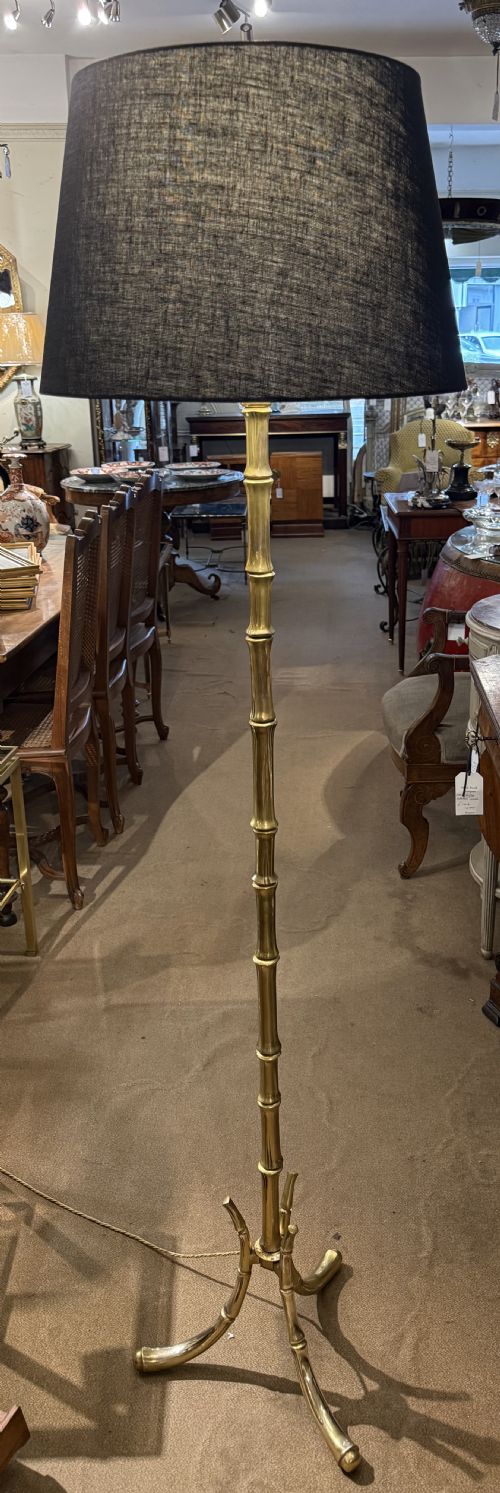
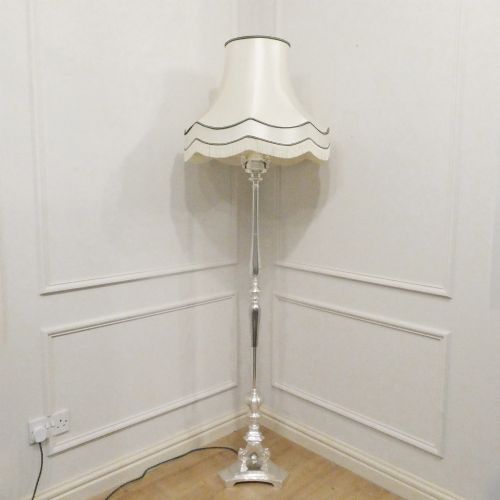
The most common versions met on this page span the Victorian and Edwardian eras, alongside later Art Deco and 1930s interpretations. These pieces take the form of floor lamps and standard lamps, often incorporating adjustable heights or converted oil mechanisms.
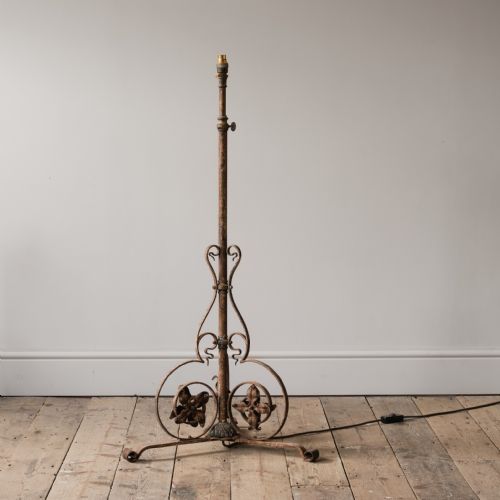
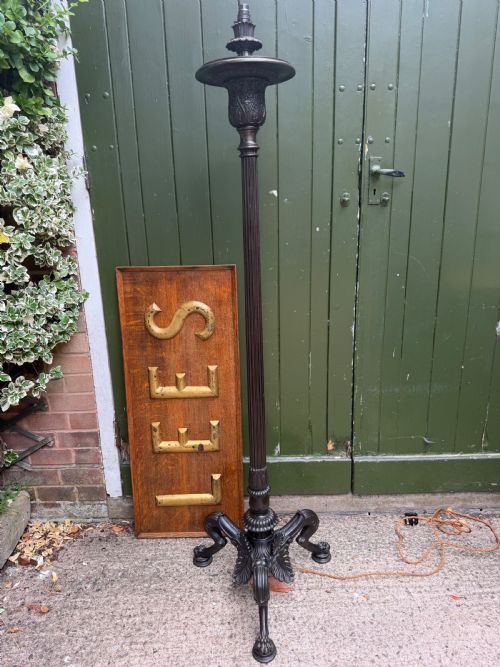
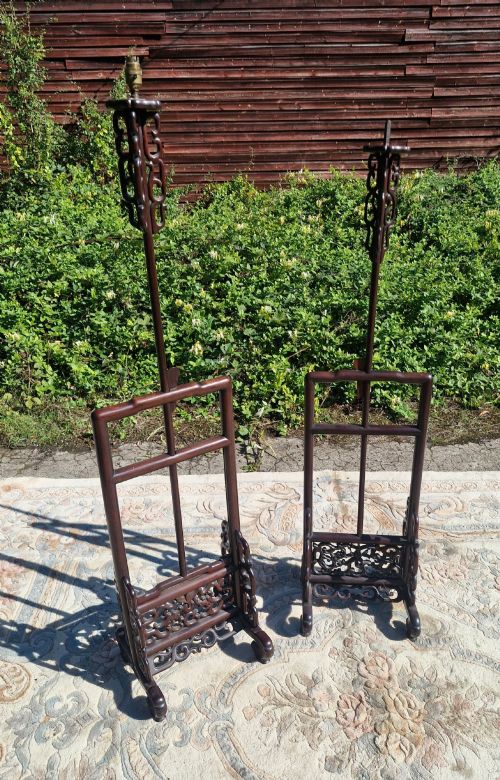
The selection ranges from classical Grecian bronze and Gothic Revival iron to lacquer, satinwood, and carved walnut or oak columns. Regional and stylistic influences stretch from English and French workshops to Chinese, Japanese, and Middle Eastern designs.
Materials and construction methods
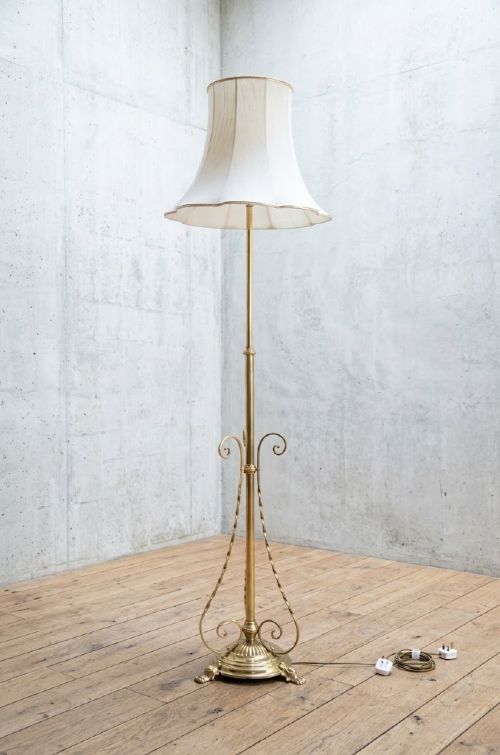
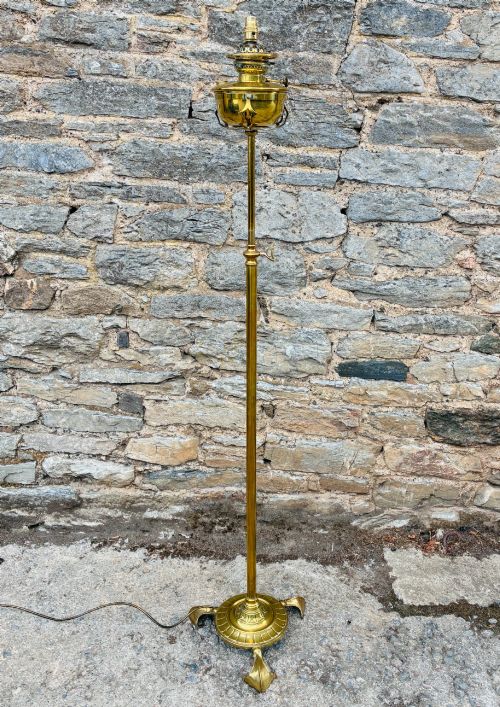
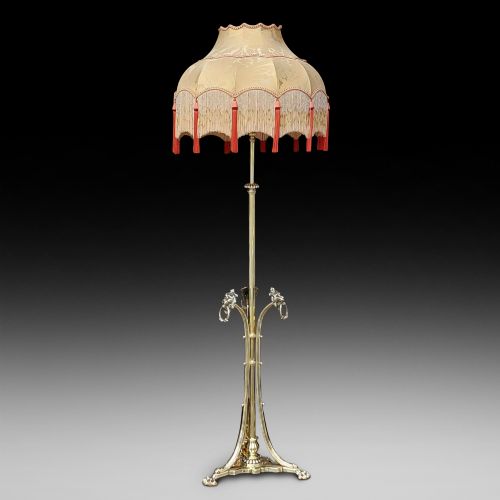
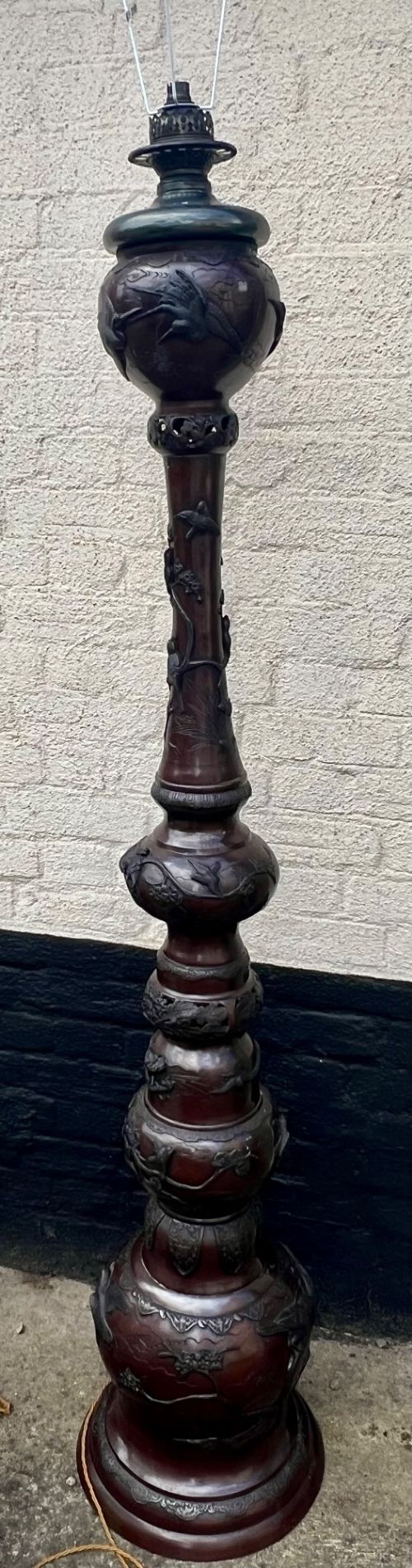
Metals form a significant portion of the construction, utilising cast brass, bronze patinated cast-iron, silver plate, and copper. Many Victorian examples utilise telescopic mechanisms or convert earlier oil lamp reservoirs for electrical use.
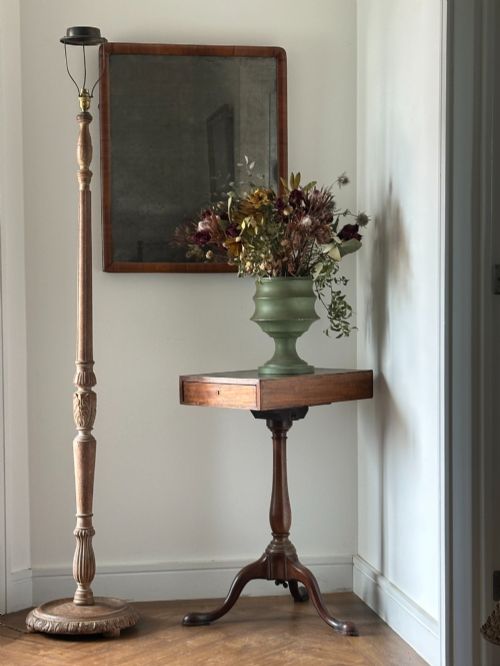
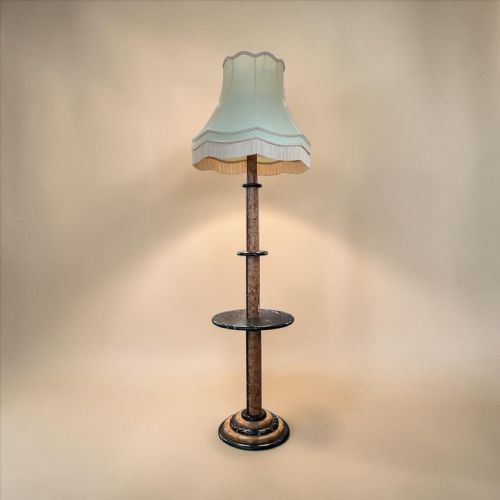
Timber variations rely on hardwoods such as walnut, oak, satinwood, and giltwood, alongside black lacquer finishes for Chinoiserie and Oriental aesthetics. Solid marble also appears as a weighty base material supporting the vertical standard.
Shades and decorative elements introduce fabric, vellum, and intricate hand-applied decoration. Blacksmith-made ironwork demonstrates forged structural integrity tailored to individual floor-standing proportions.
Several lamps double as small furniture pieces, integrating solid marble table surfaces into their vertical stands for resting a book.
Distinctions in craftsmanship and design
The degree of hand-carving and surface ornamentation separates standard production from exceptional examples, seen in giltwood carvings, detailed Chinoiserie lacquer work, and cast classical motifs. Finer pieces display crisp casting and integrated decorative vocabularies spanning Neoclassical and Gothic Revival styles.
Mechanical complexity and engineering define the upper tier, particularly in adjustable and telescopic brass columns that retain smooth operation. The weight and stability of the base, whether cast metal or solid marble, determine the structural composure of the floor lamp.
Hinks of B'ham·Maison Bagues
The Antique Lighting Standard Lamp Glossary
- Standard lamp
- A tall floor-standing lamp designed to illuminate a room from a vertical post. These fixtures serve as both functional lighting and architectural furniture.
- Telescopic
- A construction method allowing the height of the vertical shaft to extend or contract. This feature is frequently found on brass oil lamp conversions.
- Chinoiserie
- European decorative style incorporating East Asian artistic motifs, often rendered in hand-painted lacquer on wooden standards. It gained popularity during the Edwardian period and the 1930s.
- Gothic Revival
- A nineteenth-century design movement drawing inspiration from medieval architecture and ecclesiastical forms. Pieces in this style often feature pointed arches and heavy iron or oak construction.
- Neoclassical
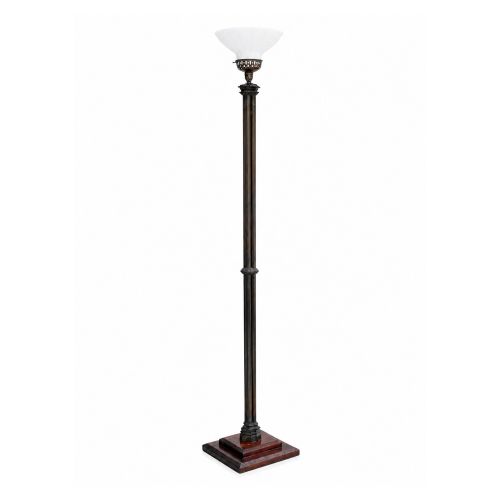
- A revival style referencing classical Greek and Roman art, utilising columns, urns, and bronze patination. This aesthetic appears frequently in nineteenth-century and Edwardian floor lamps.
Antique Lighting Standard Lamp: Frequently Asked Questions
How do I convert an old oil lamp?
Many Victorian standard lamps were originally designed for oil and have since been adapted for modern electrical wiring by running a cord through the central column.
Professional conversion preserves the original burner assembly and telescopic key while updating the internal fittings to meet safety standards.
How do I style a floor lamp?
These tall floor-standing fixtures work best in corners or beside heavy armchairs where their vertical height can balance low seating and tables.
Pairing a period standard lamp with a complementary fabric or vellum shade helps diffuse light evenly while anchoring the surrounding interior palette.
How do I tell Edwardian from Victorian?
Victorian standard lamps often lean towards heavy brass, ornate cast-iron, and dark carved timber with robust historical revival details.
Edwardian examples frequently introduce lighter woods, painted Chinoiserie finishes, and more restrained neoclassical proportions.