



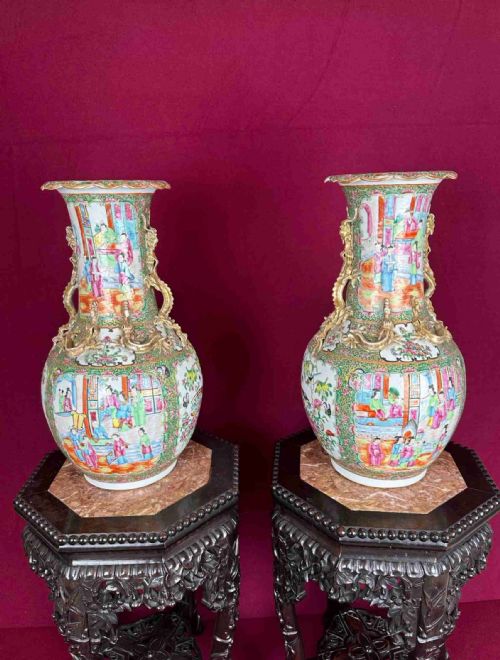


Pink Rose Porcelain Jar
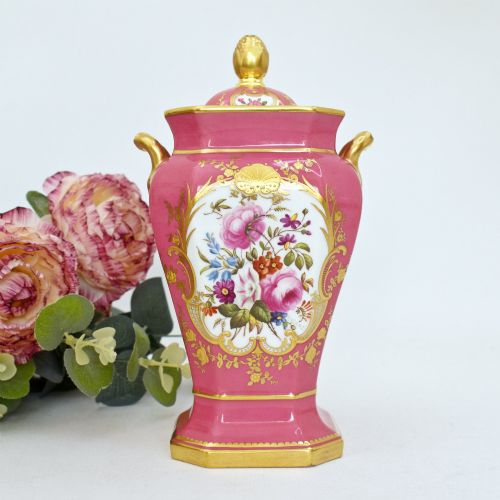
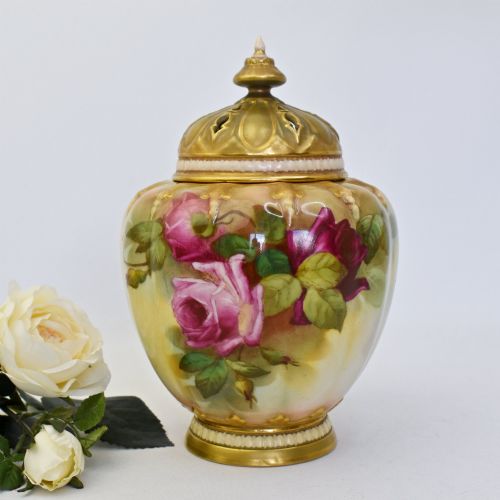
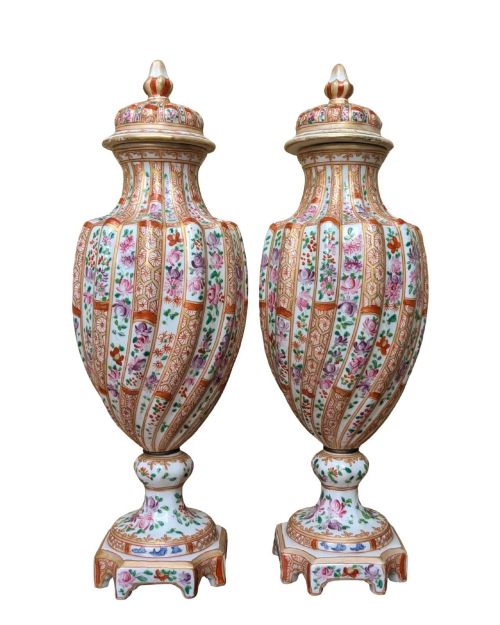
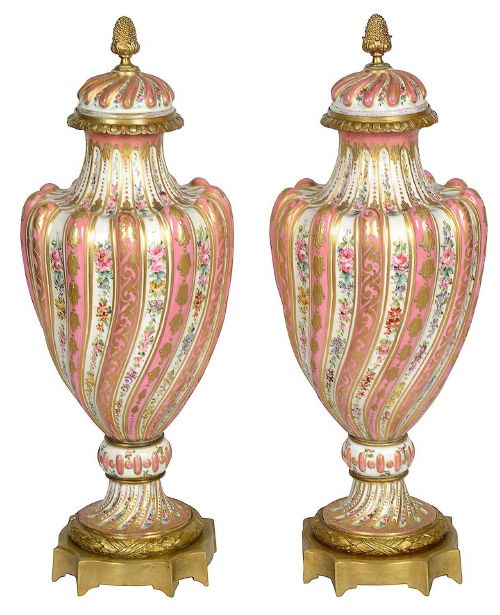
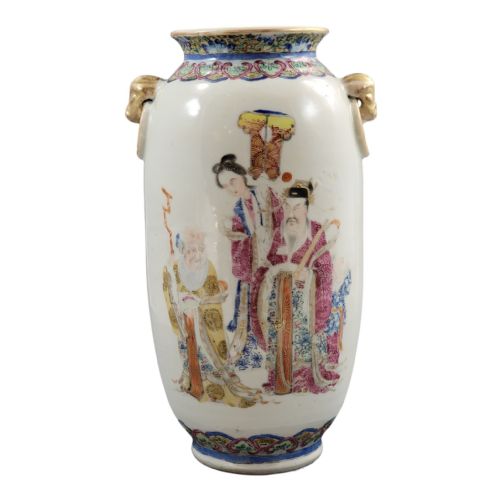
These pink rose porcelain jar examples are decorative vessels defined by hand-painted floral motifs and rich enamel palettes.
Pink Rose Porcelain Jar
A pink rose porcelain jar represents a diverse group of lidded vessels, vases, and ginger jars spanning the nineteenth and early twentieth centuries. You will most frequently encounter nineteenth-century Chinese export wares alongside European revival pieces.
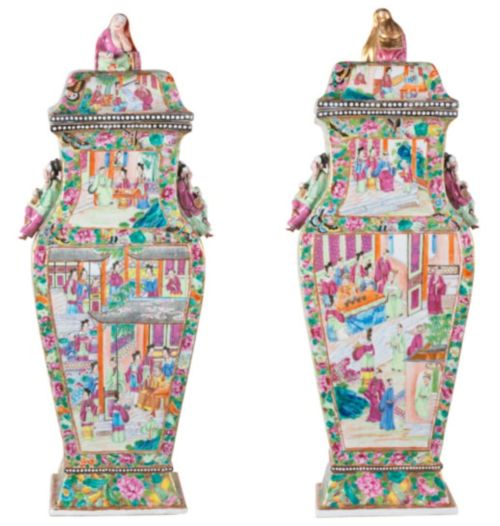
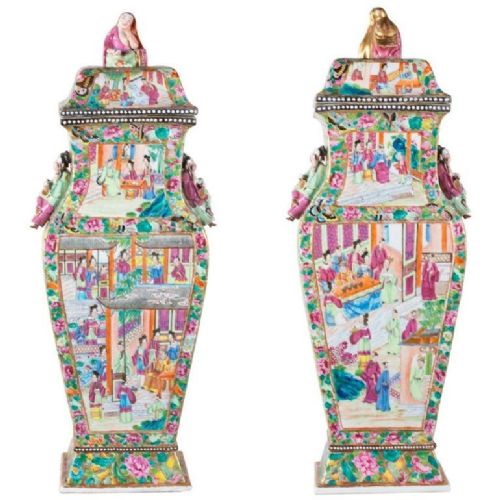
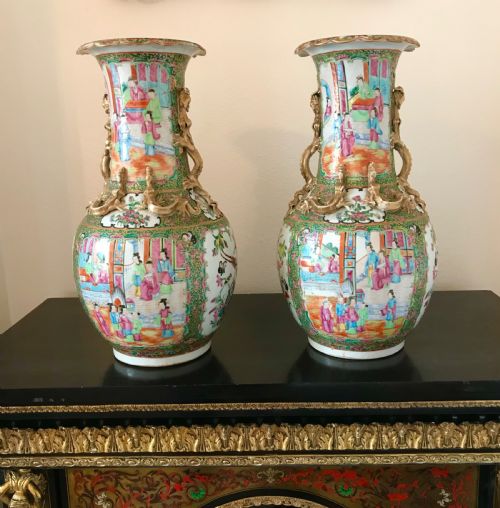
The selections range from massive floor-standing rose medallion lidded vases to smaller pot-pourri vessels and converted table lamps. Many incorporate traditional oriental forms alongside French rococo revival influences.
Makers and origins stretch from Jingdezhen and Canton workshops to European houses like Royal Worcester and Edme Samson. Each piece combines functional storage heritage with purely decorative display ambitions.
Materials and construction
These vessels are built from hard-paste or soft-paste porcelain, shaped on the wheel or cast in moulds before high-temperature firing. The ceramic body provides a dense, smooth white foundation for subsequent decoration.
Surface designs utilise polychrome enamels dominated by rose pinks, greens, and golds, often augmented with applied gilding or gold leaf. Certain European examples incorporate brass fittings, fabric components, or wooden bases.
Painters applied fine brushwork by hand, building up floral panels, figurative scenes, and intricate borders before a secondary low-temperature kiln firing to set the colours.
Pink Rose Porcelain Jar Retail Price Guide 2026
Typical asking prices for pink rose porcelain jar among the pieces listed under this phrase on Sellingantiques today, from the lower quarter to the upper quarter. They describe what is for sale here now, not the wider market.
The object forms recorded here range from modest ginger jars and lidded urns up to monumental vases measuring over ninety centimetres in height.
Judging the work
Quality rests in the precision and density of the hand-painted enamels, where crisp outlines and subtle colour shading elevate the visual impact. Heavy, clumsy brushwork or flat, unvaried pink tones indicate lesser workshop output.
The crispness of the porcelain throwing and the symmetry of lidded forms dictate structural merit. Superior pieces retain their original matching covers and undamaged gilt highlights without rubbing.
Royal Worcester·Frank Harper·Edme Samson·Jingdezhen
The Pink Rose Porcelain Jar Glossary
- Famille rose
- A palette of opaque enamel colours dominated by rose-pink, introduced to Chinese ceramics in the eighteenth century. It allowed artists to achieve delicate tonal gradations and naturalistic floral depictions.
- Rose medallion
- A specific style of nineteenth-century Canton porcelain featuring segmented panels of figures, birds, and flowers centred on pink medallions. These busy, colourful designs filled the entire surface of large jars and vases.
- Pot-pourri
- A lidded vessel designed with pierced sections to release the scent of dried flower petals and spices kept inside. They often appear as decorative porcelain urns from nineteenth-century European factories.
- Canton
- A major trading port in southern China where vast quantities of white porcelain blanks were painted and fired for export to Western markets. The resulting wares are noted for vibrant enamels and densely patterned borders.
- Gilding
- The application of gold leaf or powdered gold paint to ceramic rims, handles, and borders. On finer pieces, this metal embellishment was burnished to a soft shine.
Pink Rose Porcelain Jar: Frequently Asked Questions
Are these jars watertight?
Many of these vessels were created strictly for display or dry storage rather than holding water. Their historical use as pot-pourri containers, ginger receptacles, or decorative mantel pieces means unglazed interiors or base apertures can occur.
If you plan to use one for fresh flowers, inspect the interior glaze closely or utilise a discreet glass insert to protect the historic ceramic body from moisture damage.
How do I date a nineteenth-century jar?
Dating relies on examining the iron-red or underglaze blue marks on the base, the chemistry of the enamel colours, and the potting style. Nineteenth-century pieces often display thick porcelain bodies and vibrant Canton or rose medallion palettes.
Comparative analysis with documented factory wares from Jingdezhen or European makers helps narrow the decade of production when specific signatures are absent.
Can I convert a jar into a lamp?
Historic listings show that many of these jars were fitted as table lamps, sometimes utilising removable brass hardware that preserved the underlying ceramic. Such conversions range from period alterations to later twentieth-century adaptations.
When evaluating a lamp conversion, check whether the mounting hardware requires drilling through the porcelain body, as intact bases hold higher preference among purist collectors.
How should I clean porcelain enamel?
Maintenance requires only a gentle dusting with a soft, dry cloth to remove surface particles. Avoid chemical cleaners, abrasive sponges, or submersion in water, which can damage fragile overglaze enamels and antique gilding.
Keep these vessels away from direct sunlight to prevent the pink rose pigments and gold leaf accents from fading over extended periods of time.