




Pink Rose Medallion Vase
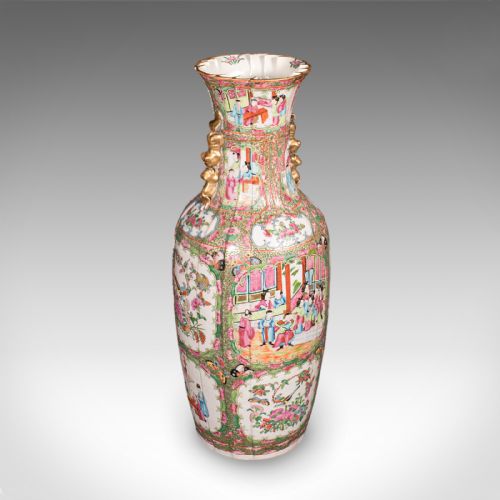
A pink rose medallion vase brings rich Cantonese porcelain, vibrant enamel panels and gilded detail straight into a room.
Pink Rose Medallion Vase
A pink rose medallion vase belongs to the distinct tradition of Chinese export porcelain made for Western markets during the nineteenth century. These striking vessels often emerge from the Qing dynasty and Victorian periods as grand centrepieces or large baluster forms.
Buyers seeking this phrase frequently encounter pieces adapted into table lamps alongside traditional lidded vases and substantial umbrella stands. The listings show heavy representation from nineteenth century Cantonese production, particularly dating around eighteen eighty.
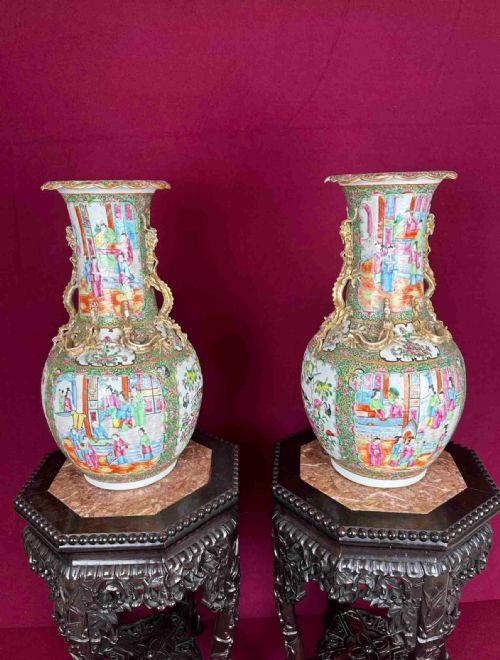
Most examples combine detailed figural scenes with abundant floral borders and birds, creating the characteristic medallion layout. They appear both as single monumental statements and matched pairs resting on wooden or brass stands.
Materials and Making
Potters shaped these vessels from fine porcelain before applying vibrant polychrome enamel colours by hand. Gilding and gold leaf accents frequently highlight the rims, handles and borders of the painted panels.
Skilled artisans divided the surface into distinct cartouches depicting court scenes surrounded by dense foliage and pink rose motifs. Later adaptations sometimes added electrical fittings or mounted the ceramic bodies onto timber and brass bases for domestic illumination.
Current listings feature nineteenth-century porcelain, enamel and gilt materials combined within Qing dynasty and Victorian styles.
Judging Quality
The precision and density of the hand-painted enamels dictate much of the visual success of the piece. Finer examples display crisp detail in the facial expressions of figural medallions and rich application of gilding.
Scale and proportion also define the superior items, especially among monumental baluster vases and matched pairs. The survival of original covers and the stability of any integrated stands influence the overall integrity of the object.
The Pink Rose Medallion Vase Glossary
- Canton porcelain
- Chinese export porcelain decorated in Guangzhou for Western trade. This ware is known for its colourful enamel palettes and narrative panels.
- Famille rose
- A major palette of Chinese ceramic glazes introduced in the Qing dynasty. It is defined by its characteristic opaque pink enamel derived from colloidal gold.
- Baluster vase
- A tall vessel form with a rounded body that tapers towards a narrow neck and flares at the rim. This shape provides a generous surface area for elaborate painted decoration.
- Enamel
- A vitreous composition fused to the ceramic surface through firing. It creates the brilliant, glossy colours seen across the medallions.
- Qing dynasty
- The final imperial dynasty of China, spanning from sixteen forty-four to nineteen twelve. Pieces from the later nineteenth century dominate this category.
Pink Rose Medallion Vase: Frequently Asked Questions
Are these vases always electrified as lamps?
Many surviving examples have been converted into table lamps over the years to suit modern interiors.
However, numerous pieces retain their original unblemished vase form or include removable lids.
How do I date a nineteenth century vase?
Dating relies on stylistic markers such as the intensity of the enamel colours and the typical Qing dynasty forms.
Comparative analysis with documented export pieces from around eighteen eighty helps refine the period.
Where were these pieces originally made?
They were produced in China, specifically in Guangzhou, for export to Western markets during the Victorian era.
This trade resulted in large quantities arriving in British and European homes.
Do these vases come with stands?
Several listed examples include fitted wooden or brass stands that elevate the ceramic body.
These additions were often utilised both in original display and during later lamp conversions.