
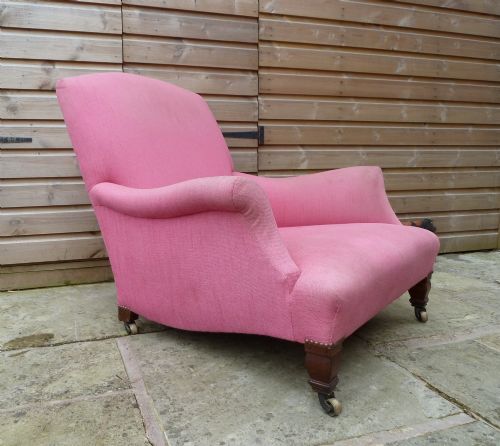

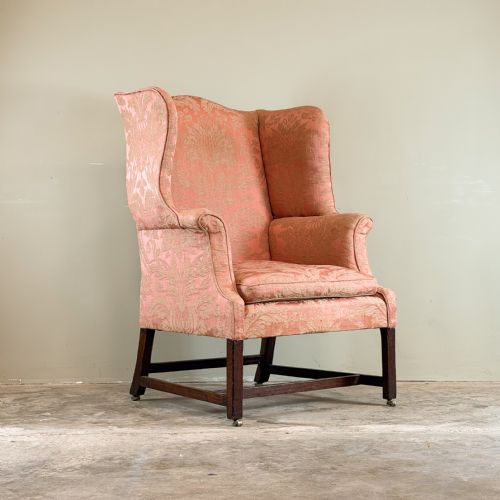
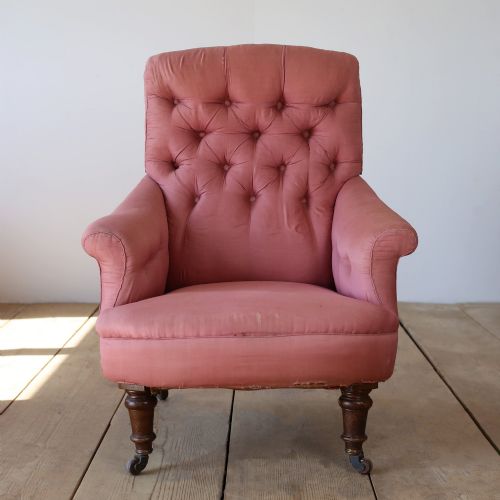
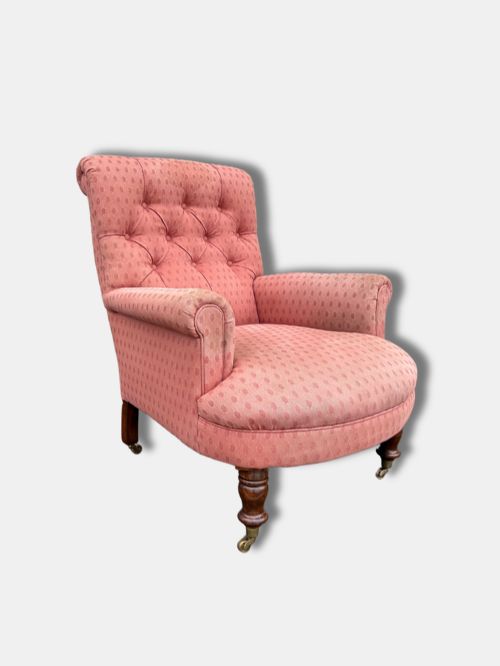
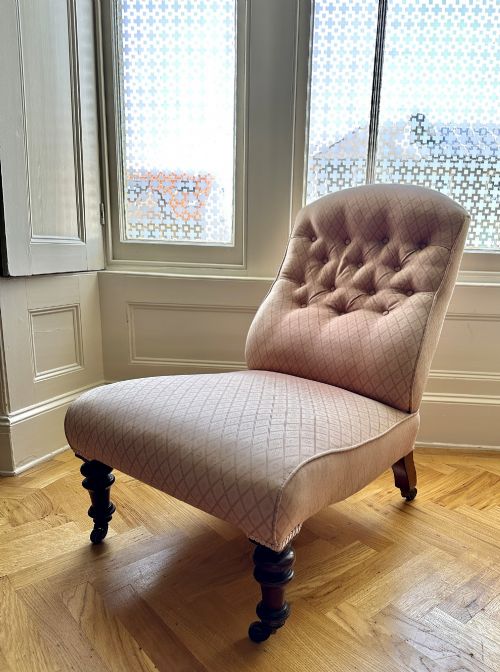


Pink Fireside Chair
A pink fireside chair brings warmth and traditional comfort to a room, offering deep upholstery and supportive seating.
Pink Fireside Chair
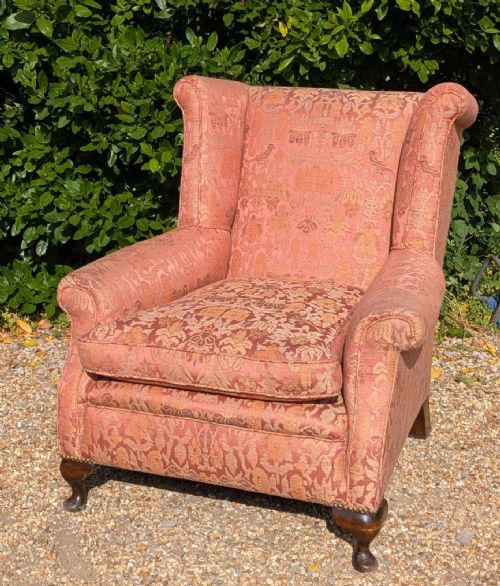
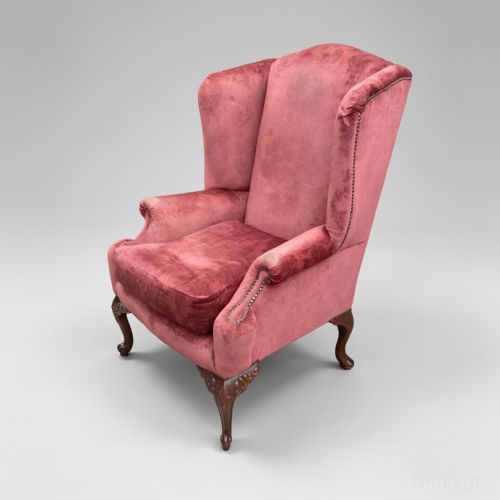
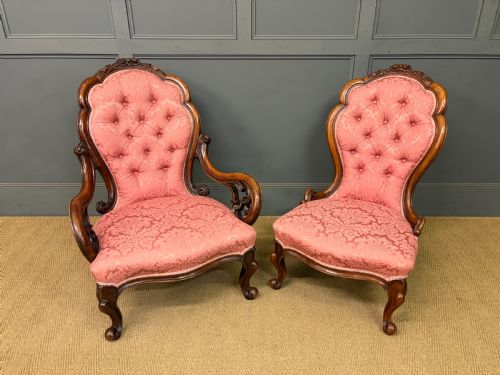
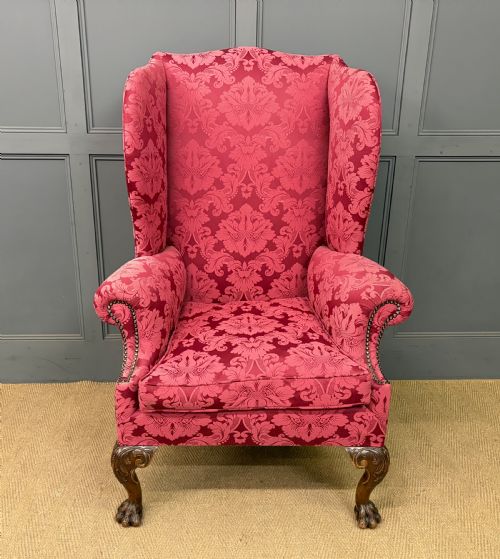
A pink fireside chair encompasses various comfortable seating forms designed for hearthside placement, frequently appearing in Victorian, Edwardian and early twentieth century guises. Buyers seeking a pink fireside chair encounter diverse traditional silhouettes ranging from high wingback armchairs to lower nursing and slipper chairs.
The selection includes pieces influenced by notable cabinet makers alongside classic English Country House designs. Frames often display traditional period characteristics such as buttoned upholstery and exposed mahogany, walnut or hardwood elements.
Materials and construction
Construction relies on sturdy hardwood frames made from mahogany or walnut, providing structural integrity for substantial upholstered bodies. Exposed wooden components frequently feature carved details, cabriole legs or brass castors.
Upholstery techniques involve traditional stuffing methods finished in durable textiles like velvet, damask and soft fabric. Button backs and feather fillings appear in many examples, contributing to deep padding and tactile comfort.
Some Victorian chairs hid iron frames inside their wooden structures to ensure extra strength by the hearth.
Evaluating craftsmanship and condition
Quality differences depend on the original framing timber and the precision of the joinery hidden beneath the upholstery. Finer examples retain robust internal webbing and supportive springing that maintain the intended posture of the seat.
The grade of the covering material and the delicacy of any exposed carved woodwork further distinguish standard production pieces from master workshop outputs. Original frames paired with sympathetic reupholstery preserve the integrity of these antique seats.
Howard and Sons·James Shoolbred·Gillows·Maple and Co
The Pink Fireside Chair Glossary
- Wingback
- An armchair with side panels attached to the back, designed to shield the occupant from draughts. These wings often curve downwards into the armrests.
- Nursing chair
- A low-seated Victorian chair originally designed for women to sit comfortably while tending to infants or nursing the sick.
- Slipper chair
- An upholstered bedroom chair characterised by its low seat and absence of arms, originally intended to assist with putting on footwear.
- Button back
- An upholstery style where depressions are formed in the padding by pulling buttons deep into the stuffing, creating a distinctive diamond pattern.
- Spoonback
- A chair back shaped like the bowl of a spoon, featuring a concave padded centre bordered by exposed timber popular in Victorian design.
Pink Fireside Chair: Frequently Asked Questions
What is a fireside chair?
A fireside chair is a comfortable upholstered seat traditionally positioned near a fireplace for warmth and relaxation. These chairs often feature high backs or protective wings to block draughts.
They appear in various period styles, offering supportive cushioning and robust wooden frames designed for daily use.
How do I identify a Victorian armchair?
Victorian armchairs typically display rich timber frames made of walnut or mahogany, often featuring curved lines, buttoned upholstery and turned legs. The overall scale tends to be substantial and generous.
Details like carved wooden flourishes or brass castors help distinguish pieces from this period compared to later twentieth-century seating.
What is an Edwardian wingback?
An Edwardian wingback chair is an upholstered seat produced during the early twentieth century, combining traditional high-backed forms with lighter proportions. These chairs often feature deep buttoning and subtle woodwork.
They reflect a continuation of Victorian comfort while adapting to slightly more relaxed domestic interiors of the period.
How should I care for velvet upholstery?
Velvet upholstery requires gentle brushing to maintain the pile and prevent flattening of the fabric fibres over time. Vacuuming with a soft attachment helps remove surface dust.
Professional cleaning is recommended for addressing deeper marks to preserve the texture and appearance of period textile coverings.