

Georgian Style Seating
Georgian style seating brings solid timber frames and classic proportions into modern rooms, offering enduring utility across dining chairs, armchairs, and stools.
Georgian Style Seating
Georgian style seating comprises dining chairs, armchairs, benches, and stools created across the eighteenth, nineteenth, and twentieth centuries. Buyers seeking these forms encounter period originals alongside later revivals from the Victorian and Edwardian eras.
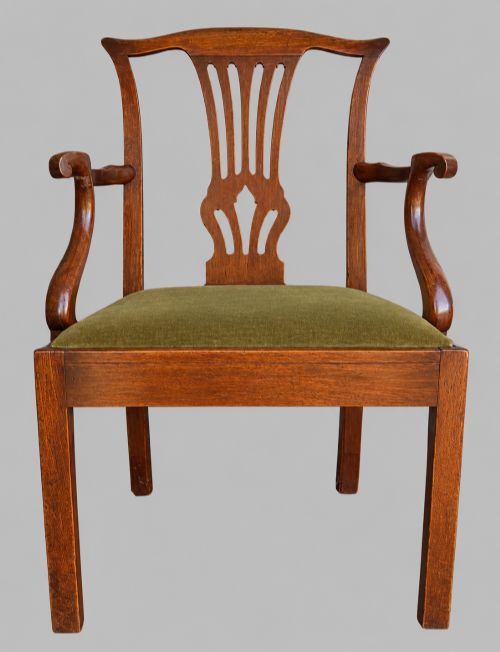
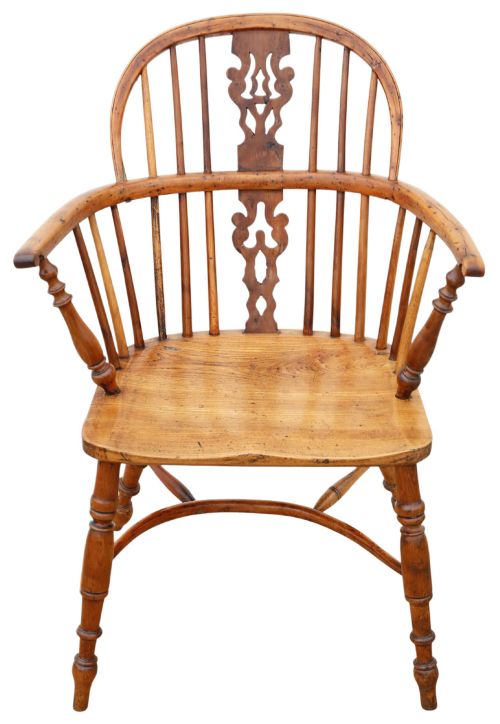
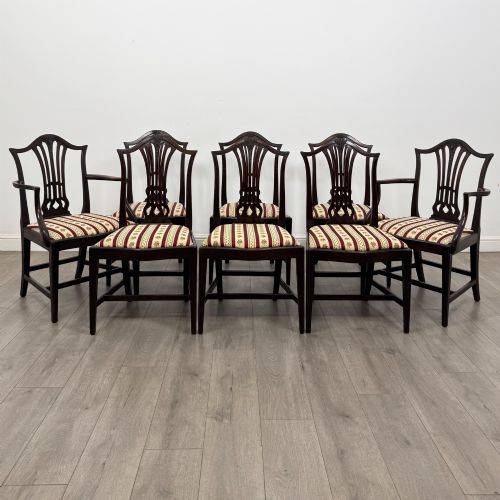
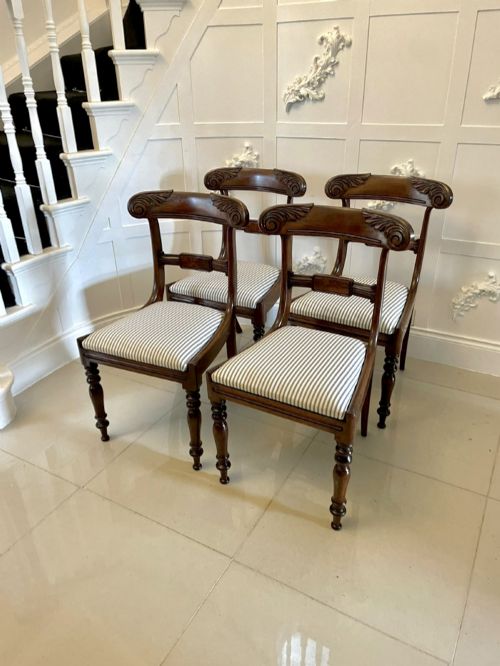
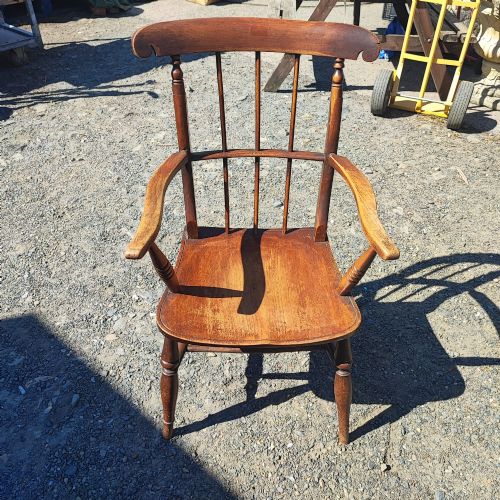
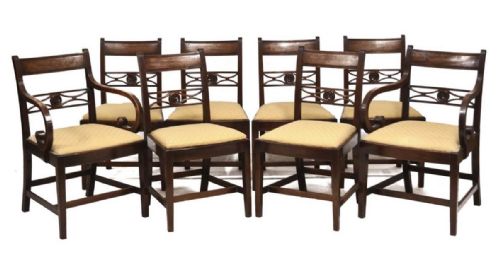
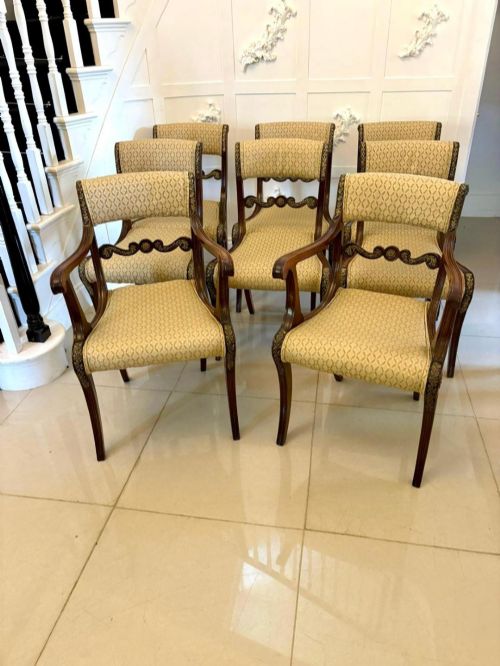
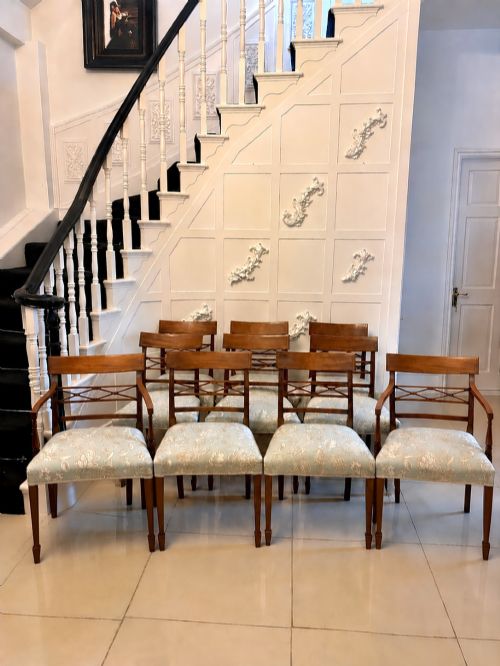
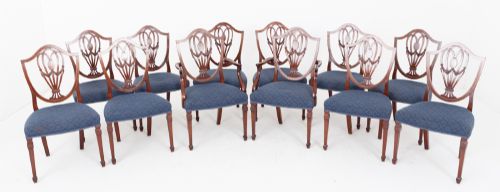
The selections on this page range from single desk chairs and pairs of library armchairs to matched sets of twelve dining chairs. Mahogany and walnut frame designs dominate, accompanied by country woods such as yew, elm, ash, and fruitwood.
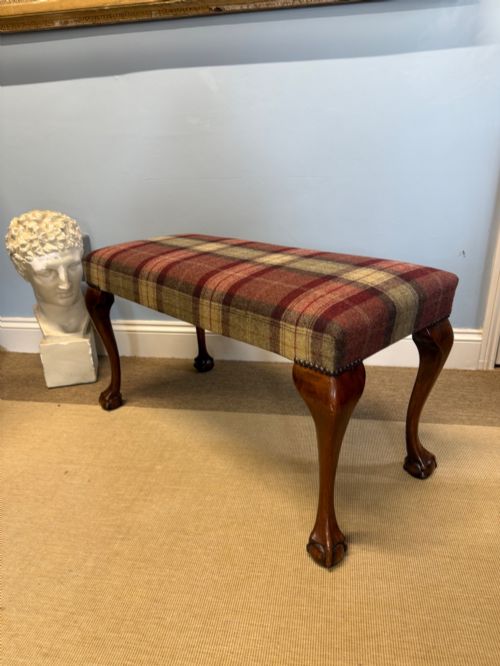
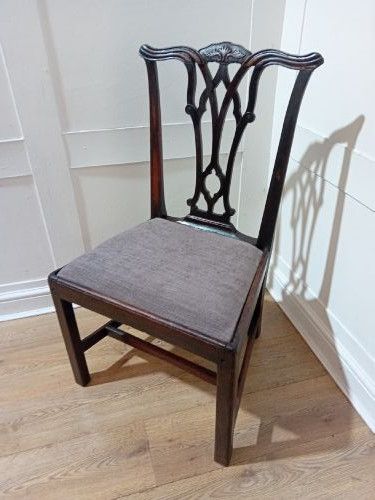
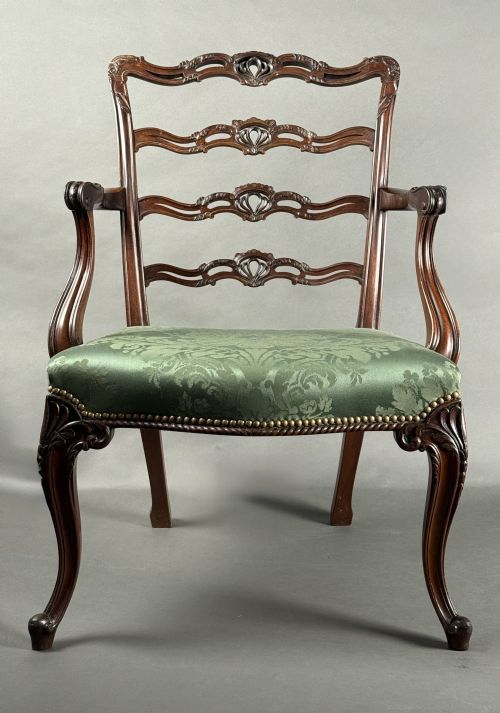
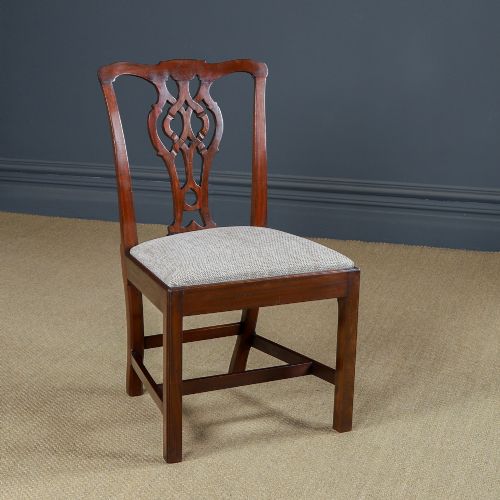
Forms follow traditional archetypes including Chippendale, Hepplewhite, Sheraton, and Windsor patterns. Dining chairs and elbow chairs form the largest share of what appears here, supported by occasional stools and benches.
Materials and construction methods
Cabinetmakers built these frames primarily in mahogany and walnut, using dense tropical hardwoods and temperate domestic timbers that tolerated complex carved details. Country variants utilised ash, elm, fruitwood, and yew for spindle backs and turned legs.
Joinery relied on mortise and tenon connections reinforced with corner blocks to handle the daily stress placed on dining and library seats. Carved splats, shield backs, and reeded legs received hand-shaped detailing using chisels and gouges.
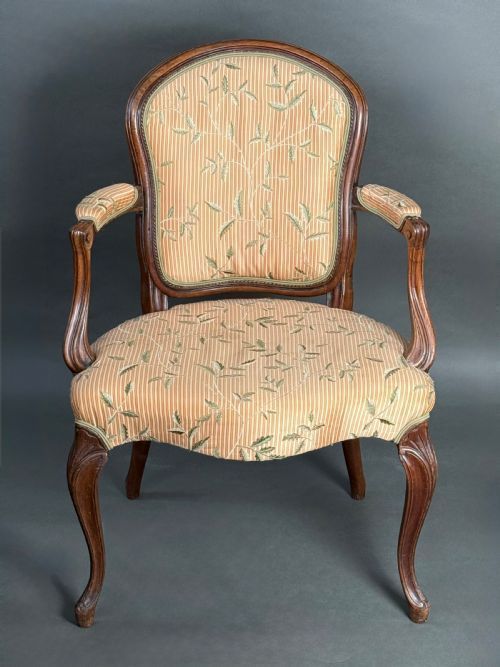
Upholstered versions incorporated drop-in pads or webbed seat foundations layered with traditional stuffing materials beneath outer coverings of leather, silk, fabric, or velvet.
Georgian Style Seating Retail Price Guide 2026
Typical asking prices for georgian style seating among the pieces listed under this phrase on Sellingantiques today, from the lower quarter to the upper quarter. They describe what is for sale here now, not the wider market.
Several armchairs arrive equipped with elbow rests wide enough to hold a moderately sized eighteenth-century pamphlet.
Factors determining quality
The calibre of timber selection dictates the strength and visual depth of a frame, with dense, evenly figured mahogany and walnut sitting above plainer stock. Crispness in hand-carved motifs, such as interlaced ribbon backs or fluted rails, separates standard production from superior work.
Structural integrity depends on the preservation of original joints and the retention of matching elements within large sets. Matched dining sets originating together command greater interest than assembled groups gathered from disparate sources.
Upholstery presentation and the retention of secondary timbers beneath seat foundations influence overall merit. Pieces retaining untouched surface patination hold distinct advantages over heavily refinished examples.
Whytock And Reid·Colefax And Fowler
The Georgian Style Seating Glossary
- Carver
- An armchair designed with elbow supports, traditionally placed at the head of a dining table.
- Shield Back
- A chair back shaped like a heraldic shield, popularized by eighteenth-century designers such as Hepplewhite.
- Splat
- The vertical wooden slat positioned in the centre of a chair back, often pierced and carved.
- Cross Stretcher
- An X-shaped wooden brace connecting the legs of a chair or stool to provide structural rigidity.
- Bar Back
- A horizontal wooden rail forming the upper portion of a chair back, common in nineteenth-century designs.
- Gainsborough Chair
- A wide, upholstered armchair with open padded arms and short legs, designed for library or desk use.
Georgian Style Seating: Frequently Asked Questions
How do I identify a true period piece?
Examine the construction methods, tool marks, and timber shrinkage visible beneath the frame and on interior joining surfaces.
Compare the timber density and wear patterns against known eighteenth and nineteenth-century manufacturing standards.
Can I mix different chair styles around a table?
Mixing individual side chairs with matching carvers at the table ends creates a traditional collected interior appearance.
Ensure seat heights align correctly to maintain comfortable dining ergonomics across varied forms.
How should I care for antique wood frames?
Keep wooden frames away from direct heat sources and dramatic humidity shifts to prevent timber splitting and joint failure.
Apply microcrystalline wax periodically to nourish the surface finish and protect the underlying patination.
What is the difference between a side chair and an elbow chair?
Side chairs lack armrests and function primarily as compact seating around dining tables or against walls.
Elbow chairs incorporate arm supports and provide broader dimensions suitable for desk work or table ends.