


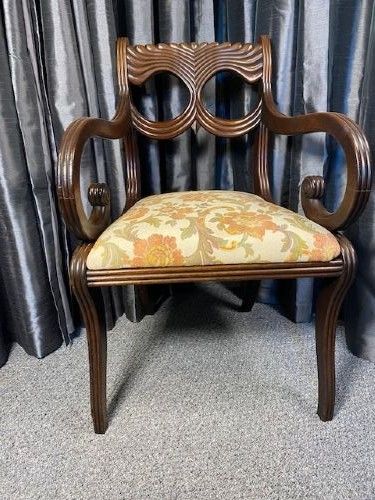
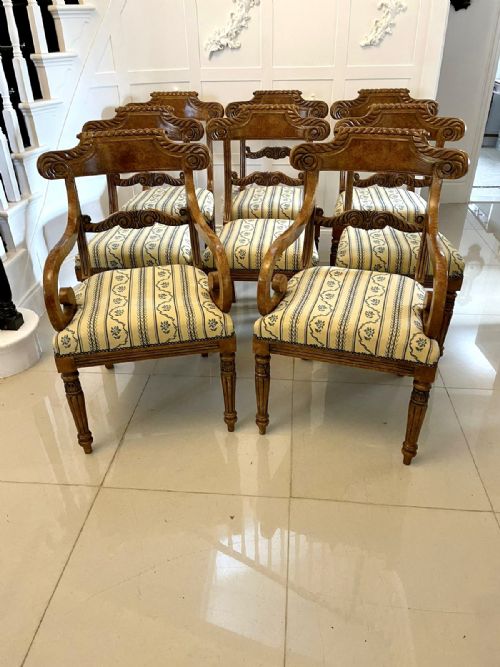


Regency Scroll Back Chairs
Regency scroll back chairs are quintessential British seating of the early nineteenth century, prized for their graceful curved frames and enduring utility.
Regency Scroll Back Chairs
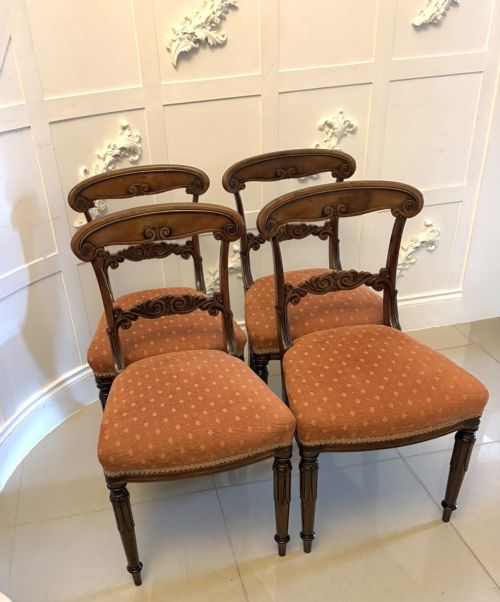
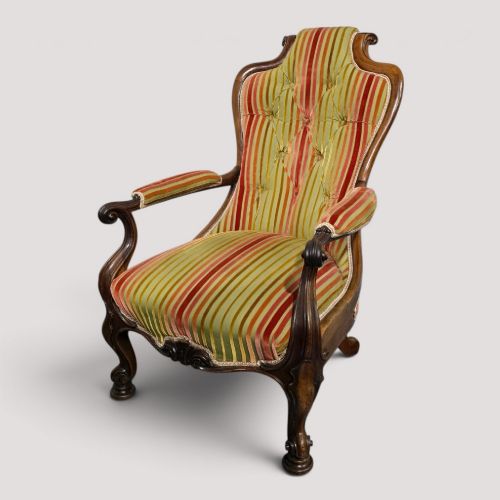
Regency scroll back chairs span formal dining sets, library armchairs, and hall seating originating from the nineteenth century and the Georgian period. Buyers seeking regency scroll back chairs will most frequently encounter mahogany and rosewood dining chairs alongside occasional armchairs.
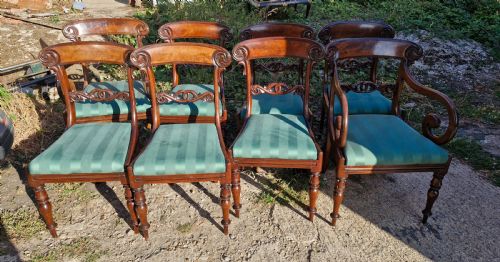
The inventory includes smaller sets of dining chairs, larger sets numbering up to ten pieces, pairs of armchairs, and single carver chairs. Forms range from simple hall chairs to metamorphic library chairs and bergere armchairs with sabre legs.
How they were made
Cabinet makers utilised dense hardwoods such as mahogany, rosewood, and oak, occasionally turning to decorative faux finishes like birds eye maple. Timber selection dictated the structural integrity and visual weight of the frame.
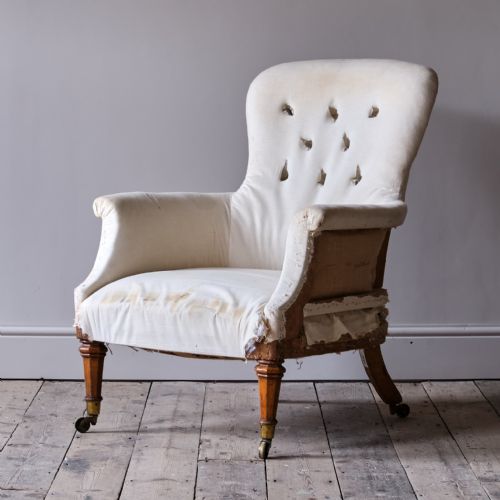
Upholstery involved traditional fabrics, textiles, and velvet drop-in seats supported by webbing and horsehair stuffing. Brass accents appeared on selected pieces for functional or decorative emphasis.
Dining chairs appear frequently as larger sets of eight or ten, while armchairs are often paired.
What varies in quality
The distinction between standard examples and the finest pieces lies in the crispness of the timber carving and the selection of figured veneers. Richly grained rosewood and well-figured mahogany elevate the visual presence of a chair.
Structural harmony and proportion separate modest seating from superior library chairs and matched dining sets. Original finish and timber stability further distinguish the top tier of survivors.
Gillows
The Regency Scroll Back Chairs Glossary
- Carver chair
- An armchair designed to match a set of dining chairs, often placed at the head of the table. These feature supportive armrests integrated into the back design.
- Bergere
- An enclosed upholstered armchair with a wooden frame, frequently featuring cane work panels. This French-inspired form provides deep comfort for library use.
- Sabre leg
- A concave curving leg that tapers toward the foot, typical of furniture from the Regency period. It imparts a sense of dynamic movement.
- Metamorphic
- Furniture engineered to transform into another functional object, such as a library armchair converting into a set of steps. These clever mechanisms display advanced period joinery.
- Drop-in seat
- A removable seat frame upholstered separately and dropped into a recess in the chair rails. This construction method simplifies recovering.
Regency Scroll Back Chairs: Frequently Asked Questions
How do I spot a true period chair?
Examine the timber species, joinery methods, and wear patterns underneath the seat frame. Period pieces exhibit traditional hand-cut joinery and mature patina consistent with nineteenth-century production.
Compare the proportions and carved details against documented examples from the Regency and William IV eras. True pieces maintain structural integrity derived from dense hardwoods like mahogany or rosewood.
Can I use these chairs every day?
These robust nineteenth-century chairs are built from solid hardwoods designed for daily use. Regular dining and sitting put minimal strain on sound frames.
Ensure joints remain tight and upholstery support is sound before heavy use. Periodic professional checks of the glue blocks and webbing will preserve their utility.
What is a library armchair?
A library armchair is a heavily padded seat designed for extended reading and comfort in a study. These often feature low arms and deep seats upholstered in velvet or textile.
Some variants include clever metamorphic designs that unfold into steps for reaching high bookshelves. They represent the more functional and luxurious side of Regency seating.