
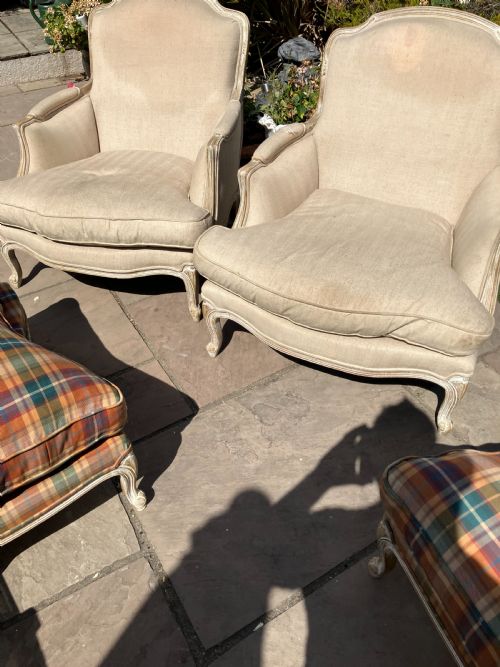

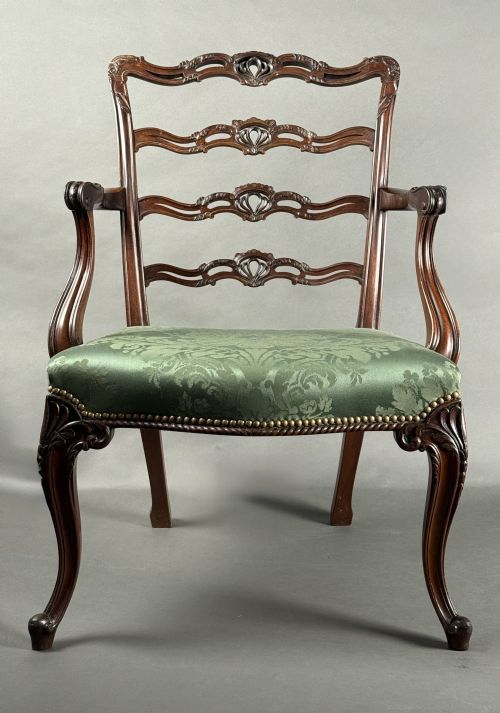
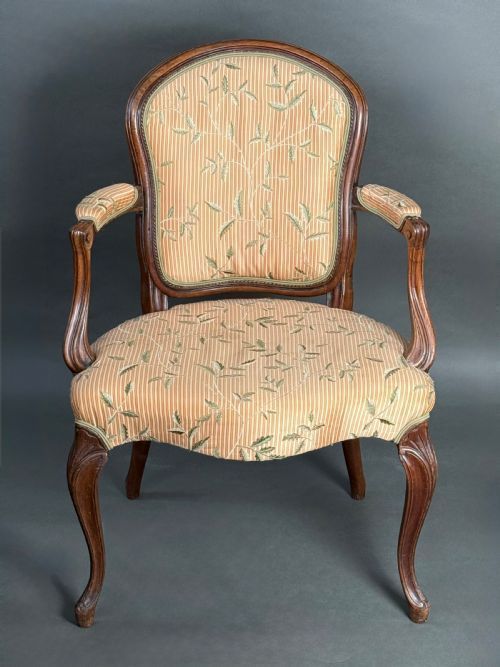
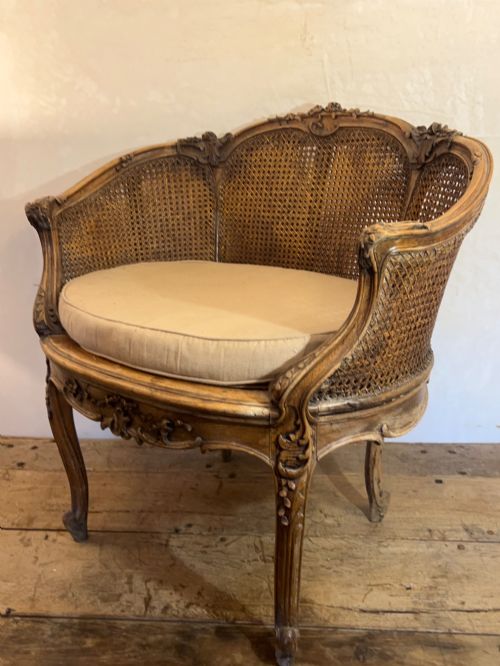
Carved Cabriole Leg Armchair
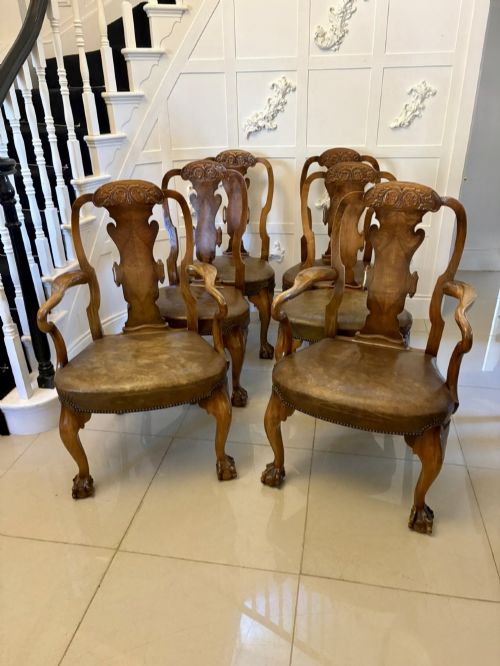
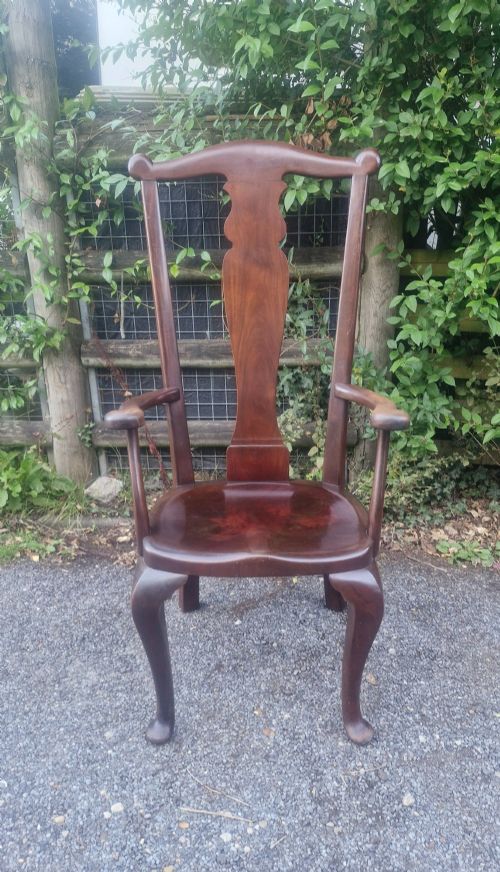
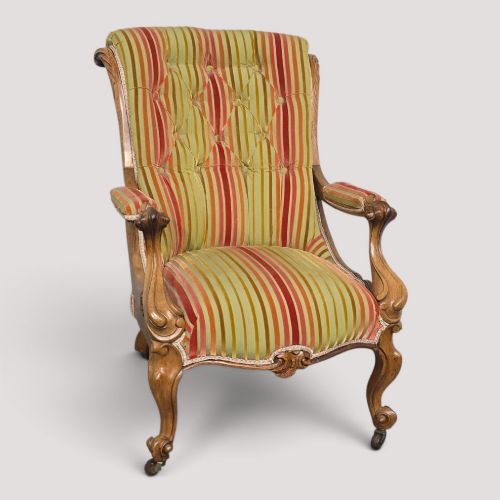
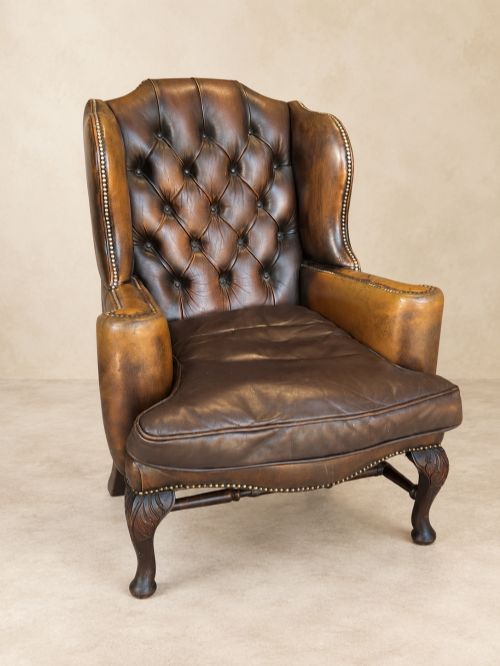
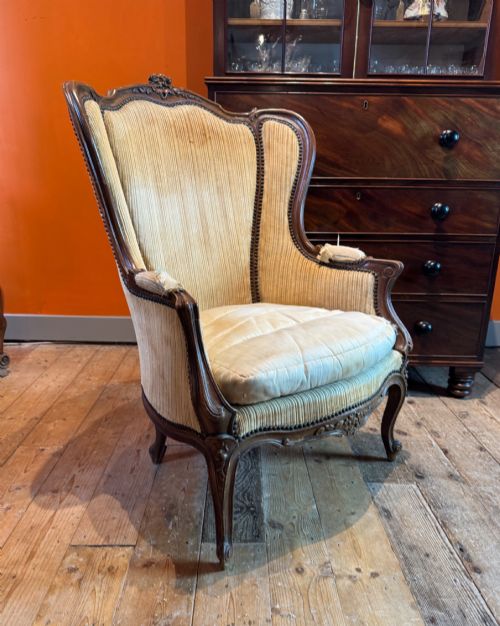
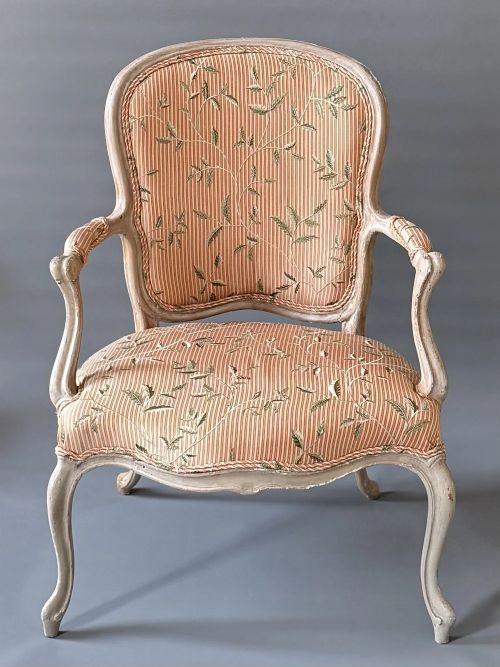
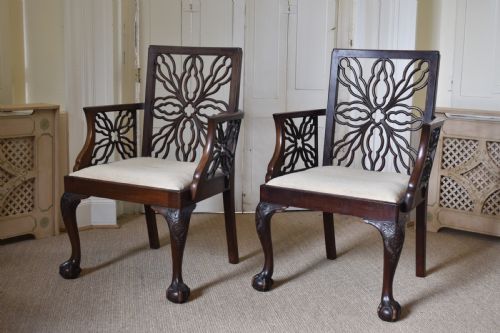
A carved cabriole leg armchair brings together robust timber frames and graceful, curved supports that ground a room with period character.
Carved Cabriole Leg Armchair
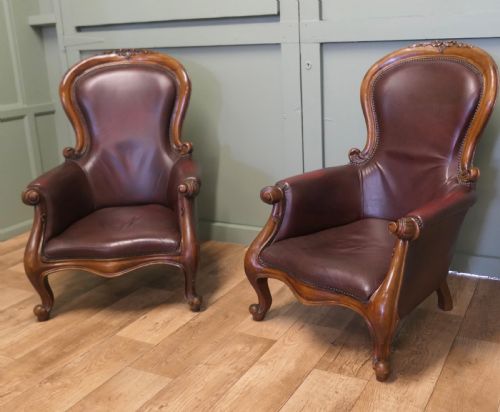
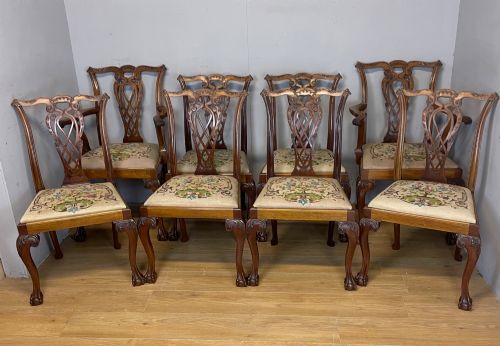
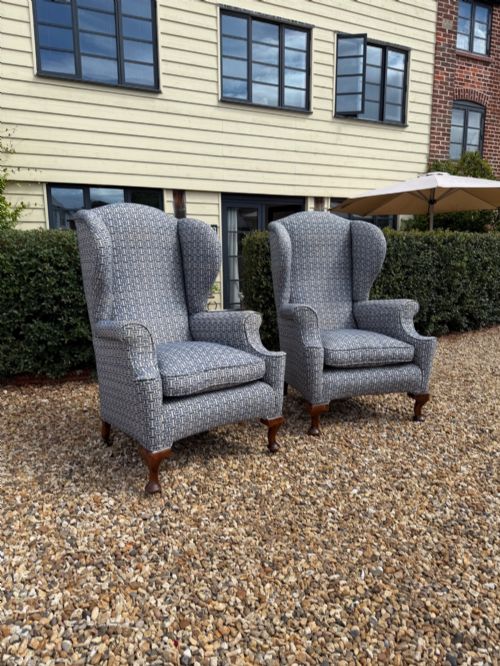
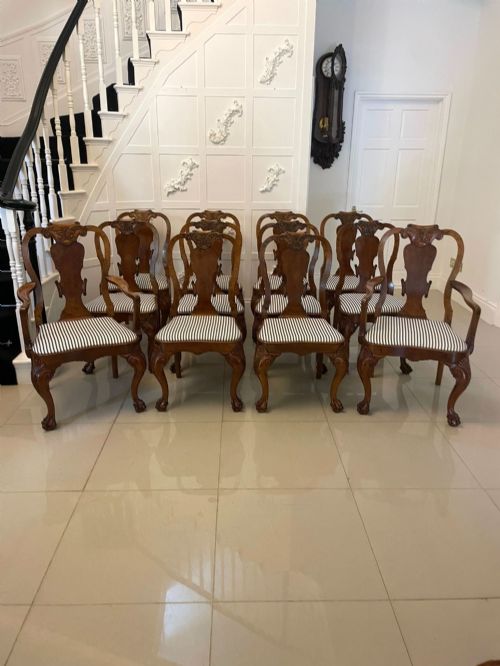
A carved cabriole leg armchair forms part of a diverse group of seating options, ranging from formal dining chairs and library armchairs to deep wingbacks and nursing chairs. When you search for a carved cabriole leg armchair, you encounter pieces spanning the eighteenth century through to the Victorian era and early twentieth-century revivals.
The evidence shows that these chairs frequently appear in walnut and mahogany, often styled in the Queen Anne, Louis XV, or Chippendale tradition. You are most likely to meet examples featuring scrolled feet, padded upholstery, and distinct woodwork that reflect the aesthetic tastes of their respective periods.
Makers and workshops across Britain and France produced these forms for parlours, libraries, and drawing rooms. The selection includes individual library chairs alongside larger sets intended for dining tables or formal salons.
Materials and construction methods
Frames rely primarily on dense hardwoods such as mahogany and walnut, selected for their structural stability and capacity to hold intricate hand-carved details along the knees and shoulders of the cabriole legs. Joinery employs traditional techniques to secure the legs and arm supports firmly to the seat rails.
Upholstery materials range from leather and velvet to printed textiles, silk, and specialised upholstery fabric, often feather filled for cushioning. Brass accents and decorative nailheads occasionally secure the fabric to the timber frame.
Feather fillings ensure that library chairs remain as inviting for an afternoon nap as they were centuries ago.
Factors that define the standard
The standard of a carved cabriole leg armchair depends heavily on the crispness and depth of the hand-carving on the knees and feet. Superior examples display fluid, well-proportioned curves where the timber grain follows the line of the cabriole shape without weakness.
Upholstery execution and frame rigidity also separate exceptional pieces from ordinary ones. Well-preserved internal webbing and high-grade covering materials, whether period leather or silk, maintain the structural integrity and visual proportion of the chair.
Warings·Whytock and Reid
The Carved Cabriole Leg Armchair Glossary
- Cabriole leg
- A furniture leg that curves out and down in a double S-shape, typically ending in a pad, claw and ball, or scroll foot. This form originates from ancient designs and gained prominence in eighteenth-century furniture.
- Wingback
- An armchair featuring side panels or wings attached to the arms and back to shield the sitter from draughts. These chairs often incorporate deep padding and leather or fabric upholstery.
- Spoonback
- A type of chair back curved to match the natural contours of the human spine, popular during the Victorian period. The wooden rim often surrounds an upholstered central panel.
- Library chair
- A sturdy, comfortable armchair designed for reading rooms and studies, frequently upholstered in leather or heavy fabric. These pieces often feature wide armrests and robust timber frames.
- Revival style
- A design movement that reinterprets historical aesthetics, such as Queen Anne or Chippendale, using the manufacturing methods of later centuries. These pieces emulate earlier proportions while utilising contemporary tools.
Carved Cabriole Leg Armchair: Frequently Asked Questions
What periods do these armchairs span?
The listings encompass items from the eighteenth century through the Victorian era and into the early twentieth century. Revival periods from the nineteenth century also replicate earlier eighteenth-century aesthetics.
Examine the secondary woods, tool marks, and upholstery style to help determine the exact era of manufacture.
Are these chairs suitable for daily use?
Many of these armchairs are structurally sound for regular seating, particularly sturdy mahogany and walnut library or wingback variants. Feather filling and robust frames provide enduring comfort.
Verify the internal webbing and joint stability before integrating an antique chair into daily living spaces.
What upholstery materials are common?
Common coverings include full leather, velvet, silk, and various printed upholstery fabrics. Many period pieces utilise traditional stuffing materials supported by webbing.
Some armchairs retain their original textile covers, while others have received professional reupholstery in sympathetic period styles.