
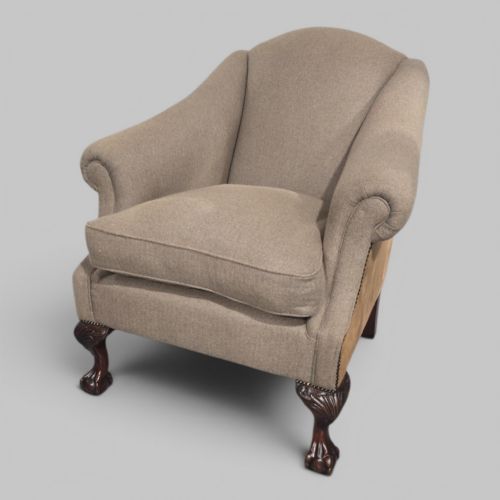


Cabriole Leg Easy Chair
A cabriole leg easy chair brings together period woodwork and generous upholstery, offering deep seating built for comfort.
Cabriole Leg Easy Chair
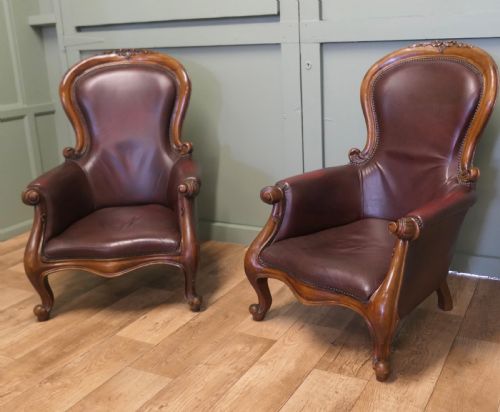
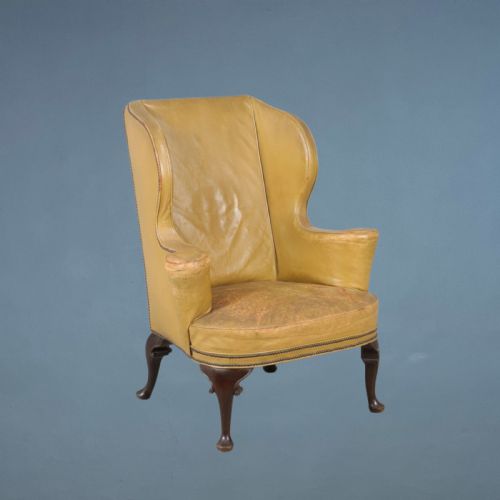
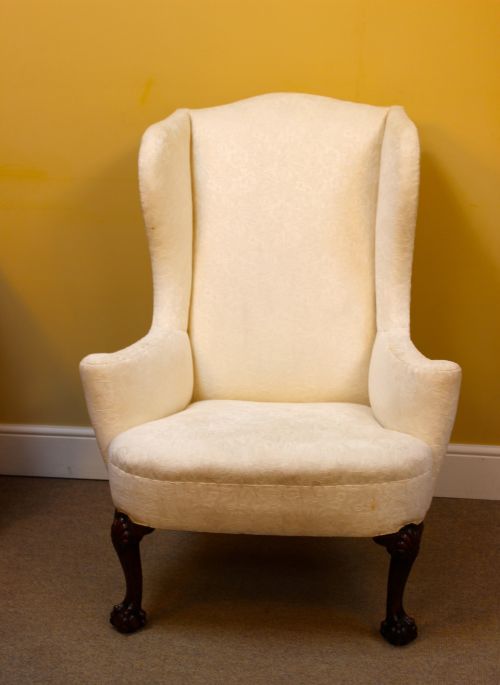
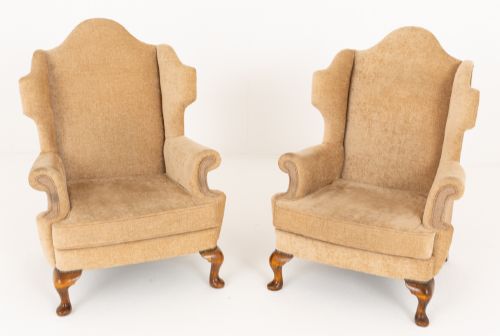
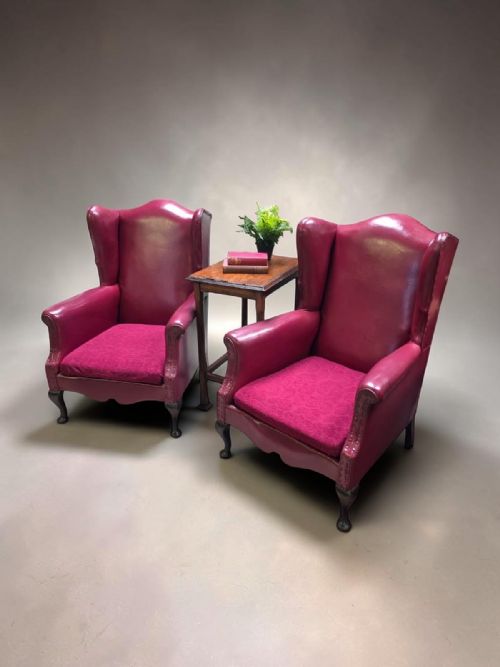
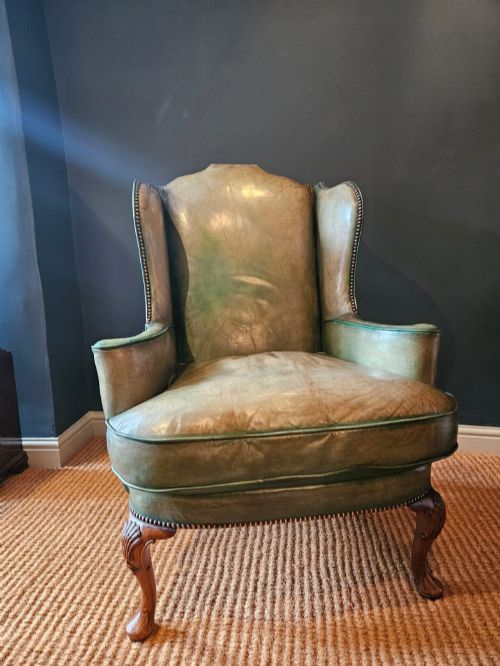
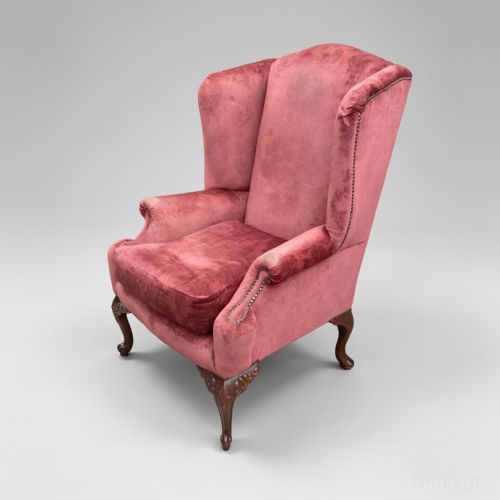
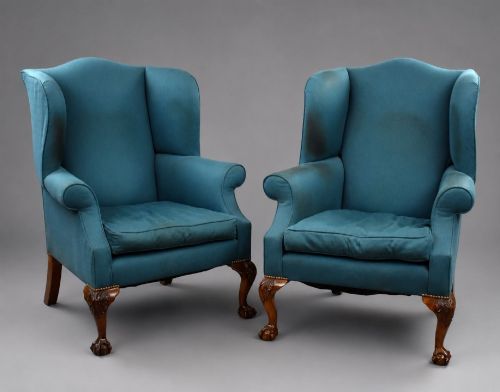
When you search for a cabriole leg easy chair, you encounter large upholstered seating designed for relaxation, most frequently taking the form of wing armchairs. These seats originate across multiple periods, with 19th-century interpretations and Georgian examples appearing alongside later revivals from the early 20th century.
The dominant configurations on this page include walnut and mahogany frames supporting fabric, leather, or velvet upholstery. Many pieces follow specific historical revivals, such as Queen Anne or Chippendale styles, featuring the signature curving supports that elevate the seat above the floor.
Materials and Construction
Cabinet makers constructed the visible frames primarily using hardwoods like walnut and mahogany, shaping the front supports into the characteristic double-curved leg. Workshops integrated brass elements and traditional joinery to ensure structural stability beneath the heavy textile coverings.
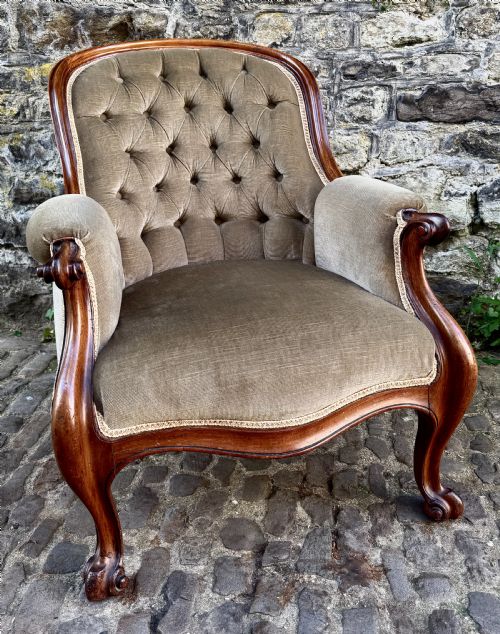
Upholstery techniques varied from period stuffing to modern calico stages, utilising materials such as leather, velvet, and various woven fabrics. Craftsmen often incorporated buttoned backs and carved details into the wooden framework surrounding the upholstered core.
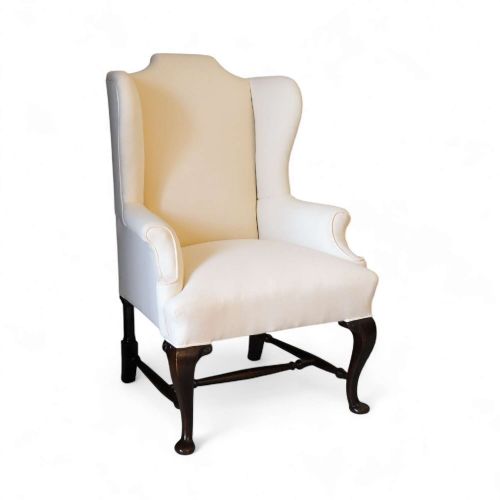
Several chairs arrive ready for identity crises, sitting quietly in plain calico waiting for someone to choose their permanent velvet coat.
Assessing Standard and Execution
The distinction between ordinary and superior pieces rests in the sharpness of the woodwork and the proportions of the wing framing. Finely carved examples display deliberate shaping along the knees and feet of the cabriole supports, rather than simple rounded profiles.
Overall balance and the integrity of the upholstered silhouette dictate the visual success of the chair. Pieces retaining well-defined scroll arms and harmonious scale demonstrate superior workshop origins compared to bulkier, less refined variants.
Whytock and Reid
The Cabriole Leg Easy Chair Glossary
- Cabriole leg
- A furniture support that curves out in a convex arc at the top and inward in a concave arc below, ending in a pad, claw, or scroll foot. This form derives from classical animal leg shapes.
- Wing armchair
- An upholstered seat with side panels designed to shield the occupant from drafts and retain heat from a fireplace. Early forms date to the late 17th century and persist through various revival periods.
- Spoon back
- A padded chair back hollowed to echo the contour of the human spine, commonly observed on Victorian upholstered seating. This shape provides anatomical support without rigid woodwork pressing against the sitter.
- Calico stage
- An intermediate state of upholstery where unbleached cotton covers the internal stuffing before the final decorative fabric is applied. It allows inspection of the foundational work.
- Scroll arm
- A curved wooden or upholstered arm terminal resembling a rolled scroll. This detail softens the transition from the armrest to the front support.
Cabriole Leg Easy Chair: Frequently Asked Questions
What is a cabriole leg easy chair?
A cabriole leg easy chair is a comfortable, upholstered seat featuring double-curved wooden supports. These pieces primarily manifest as wingback armchairs designed for domestic relaxation.
Examples span from the 18th century through various 19th-century periods and early 20th-century revival movements, combining substantial wooden frames with textile or leather coverings.
How were these armchairs used historically?
These armchairs served as principal seating in domestic parlours, libraries, and drawing rooms. Winged versions were placed near fireplaces to protect occupants from cold drafts.
Their generous proportions and padded surfaces provided comfort for reading, resting, or conversation during the Georgian and Victorian eras.
How do I distinguish 18th-century from revival pieces?
Distinguishing period pieces from later revivals requires examining the timber grain, tool marks, and construction joints. Eighteenth-century frames exhibit period-specific joining methods and natural patina.
Revival pieces from the Victorian era or the 1920s and 1930s often utilise older styles while displaying manufacturing techniques characteristic of their actual production date.
What upholstery materials are common?
Upholstery materials on these chairs include leather, velvet, and standard woven fabrics. Many listings feature pieces finished in calico, preparing them for final covering.
Earlier iterations and subsequent revivals both utilised durable textiles designed to withstand daily use while complementing the wooden framework.