





Pink Ceramic Statues
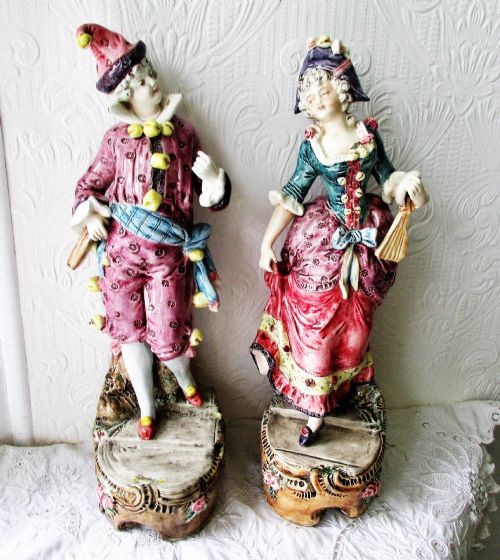
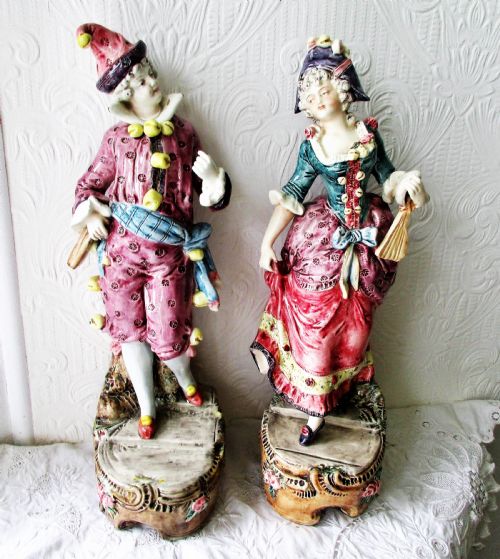
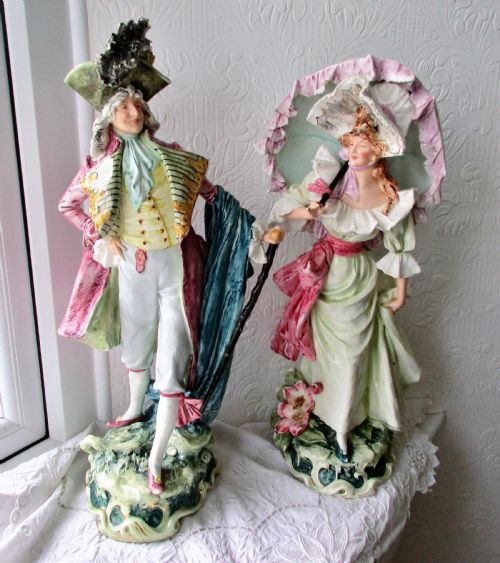
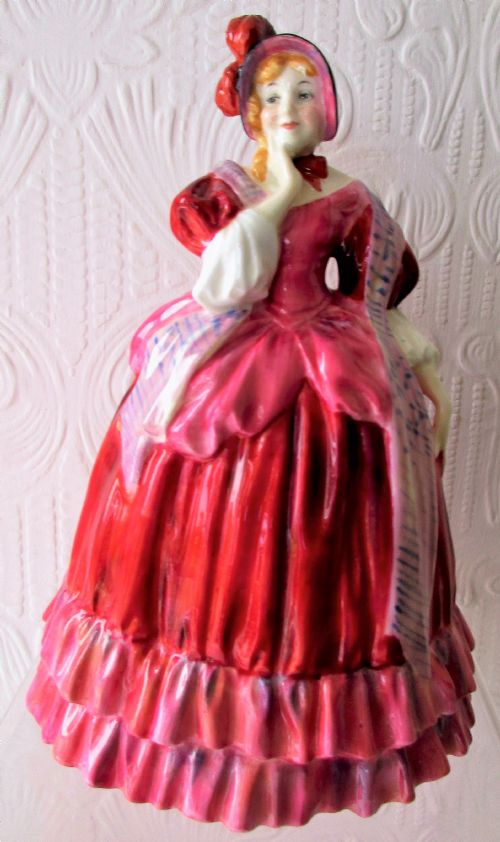
Pink ceramic statues bring character and craftsmanship into a room through moulded figures shaped across centuries.
Pink Ceramic Statues
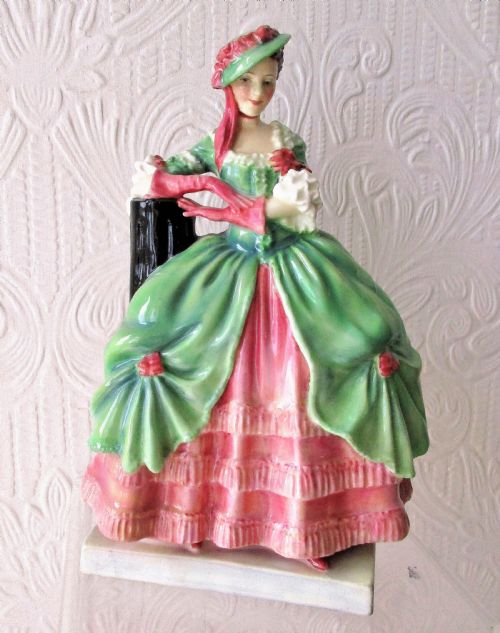
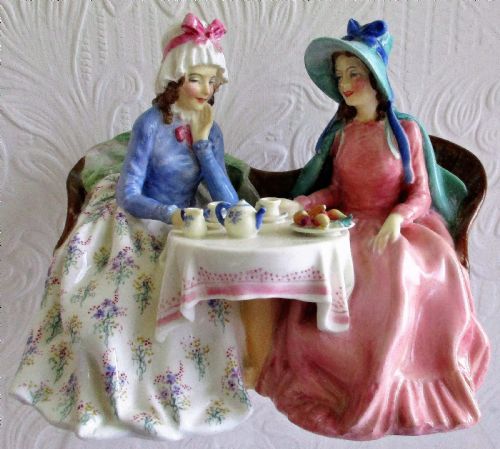
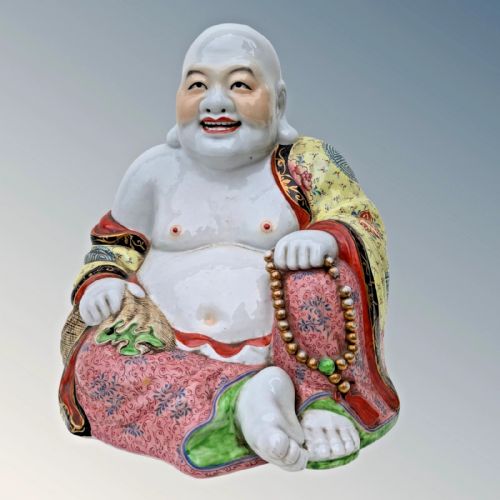
Pink ceramic statues encompass figurines, sculptural groups, and decorative figures produced in porcelain, earthenware, and bone china. Buyers exploring this category encounter pieces spanning from the eighteenth century through to the Art Deco era, with notable nineteenth-century examples and twentieth-century works.
The most common iterations on this page are Continental and English porcelain figures, including pairs of French earthenware figures and large Bohemian ceramic models. These range from classical maidens and allegorical representations to genre subjects such as water carriers, musicians, and historical characters.
Stylistically, the selection moves between Rococo Revival curves, Art Nouveau organic forms, and clean Art Deco geometries. Origin points span English potteries, French porcelain houses, German factories, and Chinese export kilns.
How they were made
Makers shaped these figures using porcelain, bone china, earthenware, and biscuit porcelain, often applying coloured glazes, enamel pigments, and accents of gold leaf. Biscuit porcelain provided an unglazed, matte finish resembling marble, whilst glazed earthenware and porcelain accepted rich surface painting.
Many of the more elaborate sculptures relied on multi-part moulds, where individual elements like limbs, garments, and accessories were cast separately and luted together before firing. Hand-modelled details, applied flowers, and intricate lace treatments required delicate manual skill prior to the kiln stage.
Listings incorporate items spanning the eighteenth century to the 1940s, utilising porcelain, earthenware, majolica, and bone china.
What varies in quality
The standard of modelling defines the upper tier of these sculptures, where facial expressions remain sharp and drapery falls with natural weight and movement. Softer contours and blurred details typically indicate worn moulds or hurried production runs.
Hand-painted precision and the subtlety of enamel work set finer examples apart from simpler trade pieces. The application of gold leaf and the crispness of the underlying ceramic body further distinguish studio output from mass production.
Royal Doulton·Royal Dux·Bourdois and Bloch·Vion et Baury·Chantilly·Eichwald·Derby·Dressel Kister and Cie·Sitzendorf·Volkstedt·Samson·Copeland
The Pink Ceramic Statues Glossary
- Biscuit Porcelain
- Unfired or once-fired porcelain left unglazed to produce a matte, tactile surface resembling marble. This finish became popular for nineteenth-century French figures.
- Bone China
- A type of porcelain strengthened by the addition of bone ash, allowing for thinner walls and a translucent appearance. English potteries utilised this body extensively for figures.
- Faience
- Earthenware decorated with opaque coloured glazes, typically tin-glazed. It forms the base of many antique French decorative figures.
- Enamel
- Vitreous pigments applied over the glaze and fired again to fix the colours. This technique created the distinct palette seen on historical figurines.
Pink Ceramic Statues: Frequently Asked Questions
What periods do these figures come from?
The selection includes pieces originating from the eighteenth, nineteenth, and early twentieth centuries. Victorian and Edwardian examples sit alongside earlier eighteenth-century works and later Art Deco designs.
Maker marks, paste characteristics, and stylistic traits help distinguish between these eras.
How were these figures displayed originally?
Many of these sculptures served as mantelpiece ornaments, cabinet display pieces, or large figural centrepieces for dining tables. Pairs were frequently positioned symmetrically on furniture.
Larger statues stood independently on pedestals or side tables in nineteenth-century interiors.
Are all these pieces made of porcelain?
Whilst porcelain and bone china are common, the category also includes earthenware, faience, and biscuit porcelain. Each material possesses different weight, translucency, and surface textures.
Glazed surfaces contrast with the matte appearance of biscuit porcelain and majolica.
How do I identify a reproduction?
Examining the base for period factory marks, impressed numbers, and the ageing of the ceramic body provides key clues. Hand-painted details and the wear patterns on the glaze help confirm age.
Older pieces display manufacturing characteristics specific to nineteenth-century and earlier kilns.