



Pine X Frame Table
These pine x frame tables bring sturdy country character and practical dining space into a room.
Pine X Frame Table
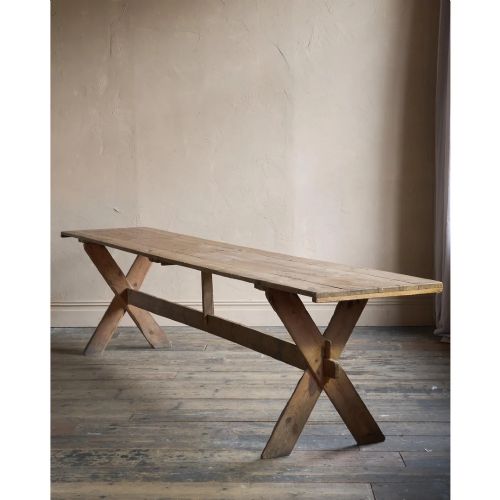
A pine x frame table is a utilitarian surface defined by its distinctive cross-leg trestle base and timber top, built for heavy daily use in taverns, kitchens and rural homes. You are most likely to encounter nineteenth century examples originating from English, Welsh and Swedish workshops, often styled as tavern or dining tables.
These pieces draw on vernacular and rustic country traditions where the intersecting wooden braces provide robust support without corner legs getting in the way of seating. The form ranges from long dining boards down to smaller side and writing tables, built to serve practical domestic and commercial needs.
The pieces listed on this page span several decades of regional craftsmanship, primarily rooted in the nineteenth century with occasional twentieth century interpretations. They frequently combine a sturdy pine top with supporting timber or painted frames, showing the marks of working environments.
How they were made
Construction relies on solid timber boards joined to form the tabletop, frequently supported by intersecting structural members locked into the base. Carpenters utilised durable softwoods like pine alongside oak and elm for added strength in high-stress joints.
Many examples reveal surface treatments such as original red or applied paint finishes over the wood, protecting the material and offering a distinct visual texture. Surfaces often show the natural grain, knots and wear of active daily service.
Some tables retain their original red tavern paint, ready for another century of tea spills and ink stains.
What varies in quality
The distinction between standard utility furniture and superior examples lies in the integrity of the timber selection and the retention of original surface treatments. Tables preserving early painted finishes or patinated timber tops demonstrate greater authenticity than those stripped down or heavily restored.
Proportion and structural balance also separate different grades of these pieces, with well-balanced cross frames offering both visual harmony and solid stability. The quality of the joinery in the trestle base determines how well the table stands up to continued use.
The Pine X Frame Table Glossary
- Trestle table
- A table consisting of a board supported by two or more upright frames. This design allows for uninterrupted seating space along the length of the top.
- Tavern table
- A robust utilitarian table traditionally found in public houses and rural meeting places. These pieces were built to withstand heavy daily use.
- Cleated ends
- Wooden battens fixed across the grain at the short ends of a table top. This method helps keep the boards flat and stable over time.
- Vernacular country
- Furniture styles rooted in local traditions and practical utility rather than formal academic design. These objects reflect the materials and needs of specific regions.
- Pitch pine
- A durable resinous softwood often used in heavier nineteenth century furniture. It provides a strong structural frame and distinctive grain patterns.
Pine X Frame Table: Frequently Asked Questions
What is a pine x frame table?
A pine x frame table is a traditional form of furniture featuring a wooden top supported by crossed legs in an X shape. This configuration provides sturdy structural backing while leaving ample legroom underneath.
These pieces typically date from the nineteenth century and were constructed for practical use in kitchens, taverns and dining rooms. They serve as functional surfaces that bring a rustic aesthetic to contemporary spaces.
Where were these tables made?
These tables originate from various rural and regional traditions across England, Wales and Sweden. Local carpenters built them to serve specific domestic or commercial functions.
Regional differences appear in the choice of secondary woods like oak or elm and in the application of traditional painted finishes. Each origin brings subtle variations in proportion and framing.
How do I style a pine x frame table?
The robust character of these tables suits both traditional country interiors and modern eclectic spaces. Pairing them with mismatched chairs or simple benches highlights their utilitarian origins.
Allowing the patinated wood and painted surfaces to remain visible lets the material character become a focal point in the room. They function effectively as everyday dining surfaces or large kitchen work tables.
How do I identify the period?
Dating relies on examining construction methods, tool marks and the condition of the timber. Nineteenth century examples often display hand-sawn board widths and traditional pegged joinery.
Surface characteristics such as original red paint or aged patination provide further clues to the age and working history of the piece. Comparing the proportions to documented regional forms helps narrow down the era.