


19th Century Pub Table
A 19th century pub table brings industrial strength and tavern character straight into a modern room, offering sturdy utility built for daily use.
19th Century Pub Table
A 19th century pub table represents robust commercial furniture designed for heavy public use in taverns and taprooms. The selection on this page centres heavily on tavern and pub forms, alongside related cast iron and wooden pieces from the Victorian era.
Origins span English and Welsh country workshops, utilising local timbers and straightforward construction methods suited to alehouses. These sturdy boards and iron frames carry the marks of decades of communal social life.
How they were made
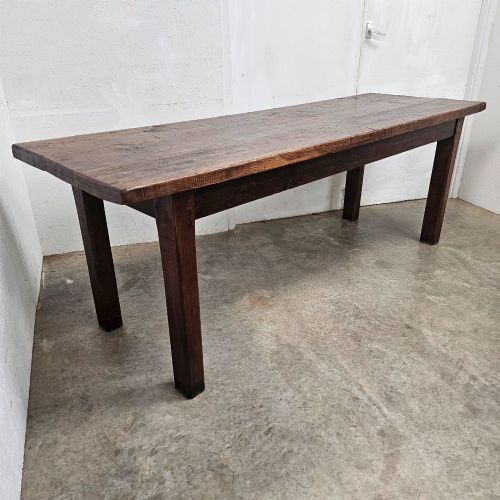
Makers utilised thick timber tops in oak, pine, and mahogany, paired frequently with heavy cast iron bases or robust wooden trestles. These materials provided the necessary weight and stability to withstand vigorous daily service in busy establishments.
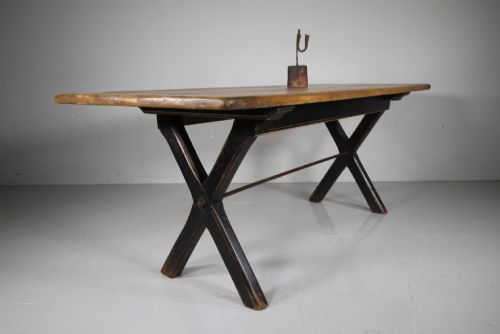
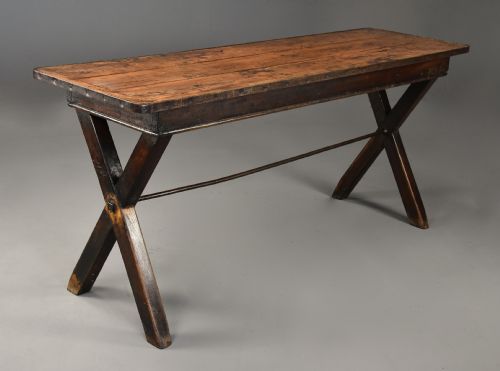
Metal components involved cast iron frames, sometimes featuring sculptural designs like lion motifs, combined with stone or wooden surfaces. Wooden structures relied on substantial stretchers and pegged joints to maintain rigidity under heavy loads.
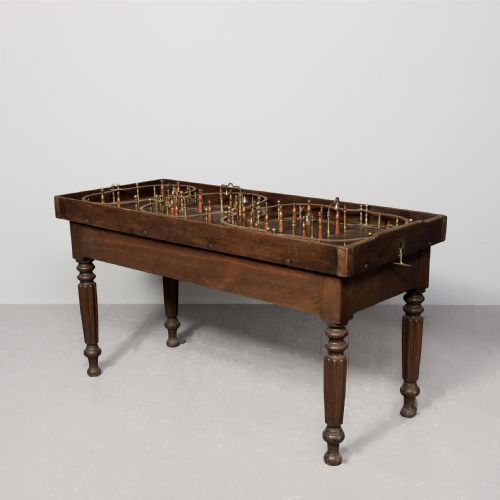
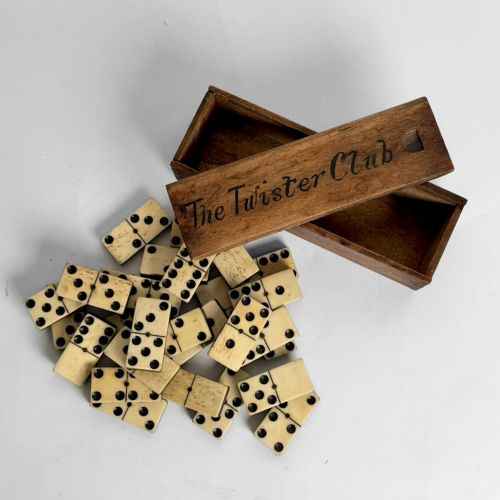
Some tables served patrons who enjoyed a quiet game of skittles or dominoes between pints.
What varies in quality
Quality rests upon the integrity of the original construction and the preservation of authentic surface patination. Pieces retaining their early paint surfaces or deep, untouched timber ageing command greater respect among collectors.
The balance between top and base determines the structural success of the piece, with heavier cast iron or well-joined timber trestles offering superior presence. Proportion and timber selection also divide standard utilitarian examples from finer vernacular items.
The 19th Century Pub Table Glossary
- Tavern table
- A sturdy commercial table designed for public houses, typically featuring a thick wooden top and robust structural framing. These pieces were built to withstand heavy daily use in taprooms.
- Patina
- The surface sheen and colour acquired by wood and metal through decades of handling, cleaning, and exposure. Good patina indicates age and honest usage.
- Trestle table
- A table construction where the top is supported by two or more vertical frames connected by a horizontal stretcher. This design maximises legroom for seated patrons.
- Vernacular country
- Furniture made by local craftsmen using regional traditions and readily available materials rather than following metropolitan fashion. Such pieces reflect distinct local styles.
- X frame
- A structural base formed by intersecting diagonal timbers or metal supports in the shape of an X. This configuration provides exceptional stability for heavy table tops.
19th Century Pub Table: Frequently Asked Questions
How were these tables used?
These tables served patrons in busy taprooms, inns, and pubs for eating, drinking, and playing games. Their heavy construction prevented tipping during lively social gatherings.
Over decades, they became central fixtures of public life, enduring constant spills, knocks, and heavy use. Many retain the robust qualities needed to survive such demanding environments.
Are cast iron bases original?
Many cast iron bases paired with wooden or marble tops are original commercial products from the Victorian period. Foundries produced durable metal frames specifically for hospitality environments.
These metal components offered superior stability compared to timber legs in damp or high-traffic settings. The combination of iron and wood defined much of late nineteenth-century commercial furniture.
How do I care for the timber?
Protect wooden surfaces by avoiding direct heat sources and excessive moisture. Regular dusting and occasional waxing help preserve the historic finish without stripping character.
Treat the surface gently to maintain the accumulated patina that shows the piece's age. Harsh chemical cleaners will damage the historic finish.
Where were they made?
These tables originated in local workshops across England and Wales, using regional timbers like oak and pine. Iron components typically came from industrial foundries supplying the hospitality trade.
Makers focused on utility and strength rather than delicate ornamentation, ensuring the furniture endured generations of service.