
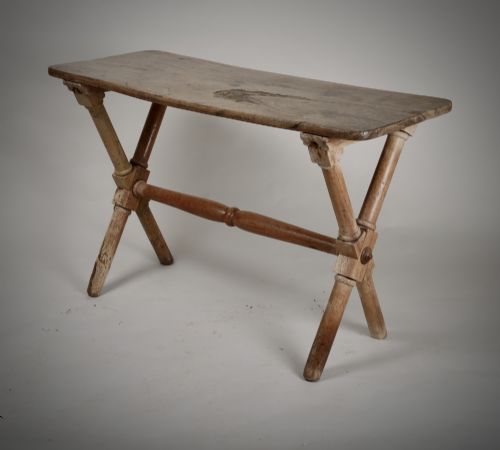


Rustic X Frame Desk
A rustic x frame desk provides sturdy utilitarian charm, pairing practical timber surfaces with braced trestle supports for an enduring workspace.
Rustic X Frame Desk
Buyers seeking a rustic x frame desk encounter robust timber furniture rooted in vernacular country traditions, frequently drawing on tavern and trestle forms. These pieces bridge domestic utility and workshop practicality, offering substantial character through their cross-braced architecture.
The selections available here span the eighteenth and nineteenth centuries, encompassing English and French provincial iterations alongside Victorian interpretations. While traditional tables served communal dining or tavern service, their structural geometry translates naturally into functional writing surfaces.
How they were made
Construction relies on solid domestic timbers such as pine, oak, elm, and ash, selected for strength and worked with straightforward joinery. Cross-braced frames provide lateral stability without requiring heavy aprons, keeping the design visually light yet structurally rigid.
Surface finishes range from scrubbed natural wood and polished walnut to surviving layers of original red paint, reflecting working environments. Metal elements occasionally appear, including brass components that accent the timber frames.
What varies in quality
Quality rests in the harmony of proportion between the heavy timber top and the precision of the intersecting stretchers. Tighter joinery and thoughtful timber selection distinguish superior provincial carpentry from more utilitarian workshop output.
The integrity of surviving surfaces dictates distinction, whether through an undisturbed patinated grain or genuine historic pigment that has aged organically over generations.
The Rustic X Frame Desk Glossary
- Trestle table
- A table comprising a horizontal top supported by two or more upright legs connected by a longitudinal beam or cross-bracing. This form allows maximum legroom along the length of the furniture.
- Vernacular country
- Furniture made by regional craftsmen using local materials to satisfy domestic needs rather than following metropolitan fashion. These objects prioritize utility and direct structural honesty.
- Tavern table
- A heavy-topped wooden table historically utilised in public houses and domestic kitchens for dining or drinking. Their robust build ensures they withstand heavy daily use.
- Cross base
- A structural support system where members intersect in an X shape to distribute weight evenly. It provides exceptional rigidity to tables and desks.
Rustic X Frame Desk: Frequently Asked Questions
How do I date these tables?
Dating relies on examining the timber species, tool marks, joinery methods, and the degree of wear accumulated over generations. Eighteenth and nineteenth-century examples often display hand-sawn boards and pegged joints distinct from later machinery-made items.
Surviving finishes, such as early red paint or oxidized natural patinas, further help anchor a piece within the Victorian era or earlier Georgian periods.
Where were these pieces made?
These pieces originate from various regions across England and France, reflecting local rural workshop traditions. English regional pieces frequently utilise native pine, elm, and oak, while French provincial examples showcase walnut and scrubbed fruitwoods.
Each region adapted the basic trestle and cross-frame concept to suit local domestic habits and available timber supplies.
How do I care for antique timber?
Maintain antique wooden surfaces by keeping them away from direct heat sources and sudden humidity fluctuations that can cause timber to split. Regular dusting with a soft, dry cloth preserves the natural patina without stripping historical wax layers.
Avoid modern chemical polishes that build up residue and instead rely on traditional beeswax sparingly when the wood appears dry.