
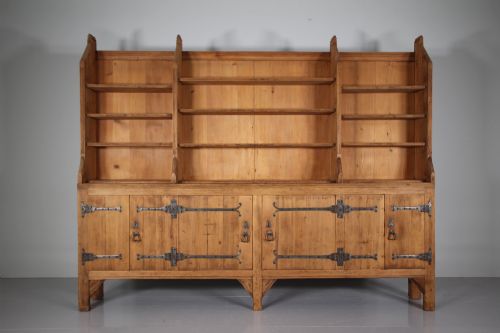
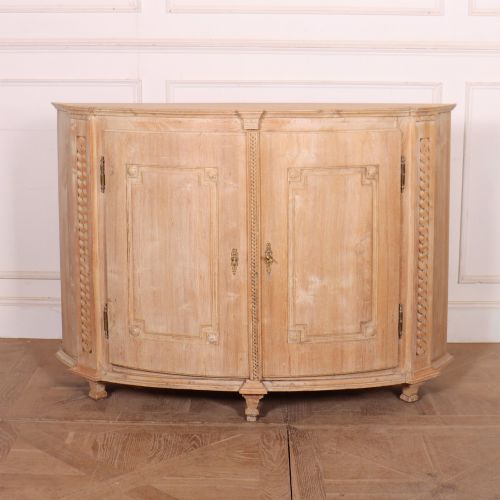
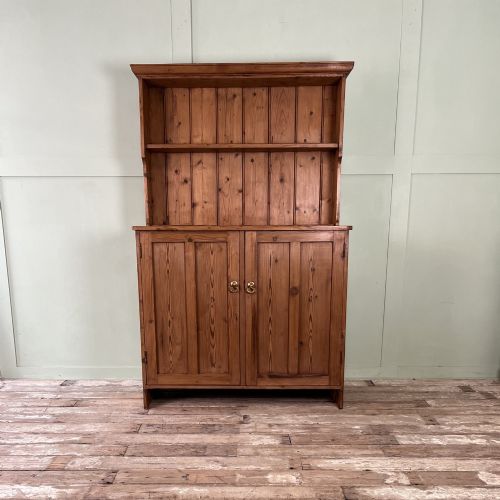
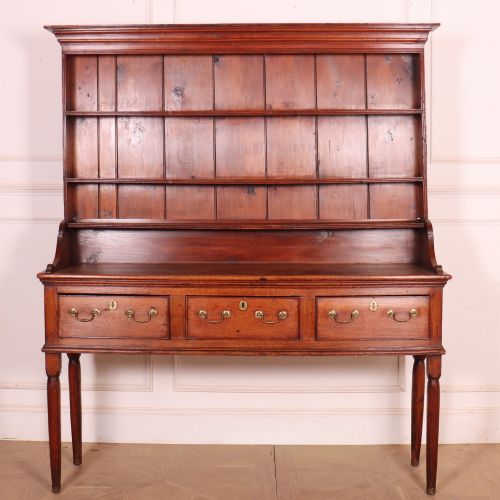
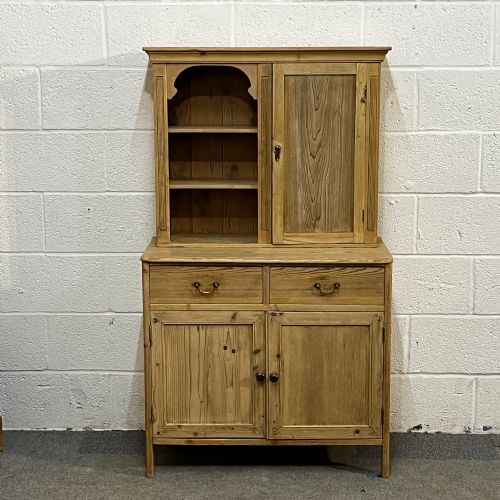
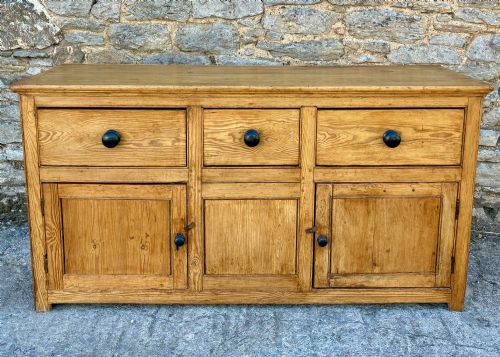
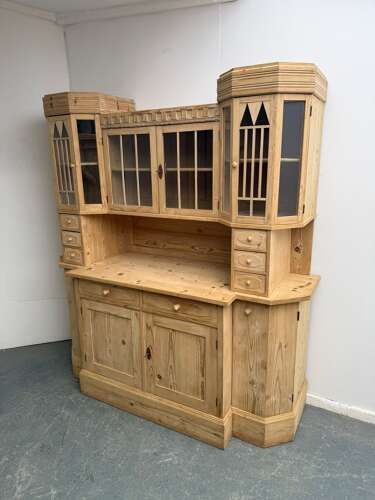
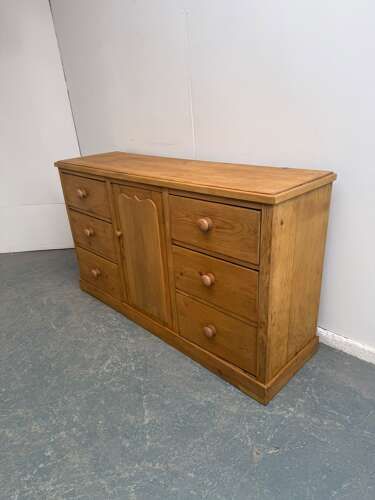
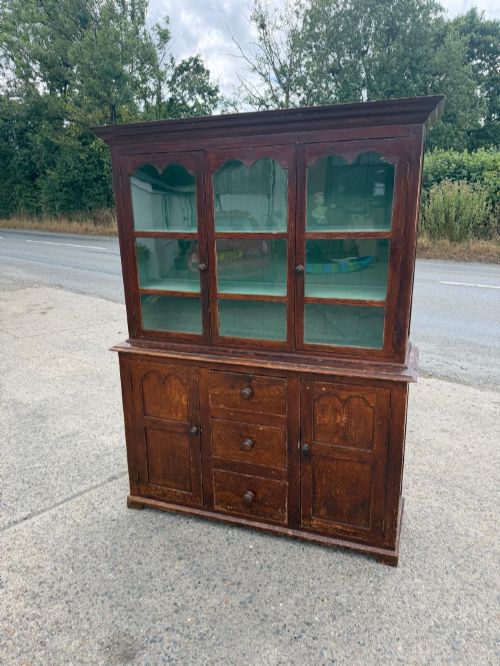
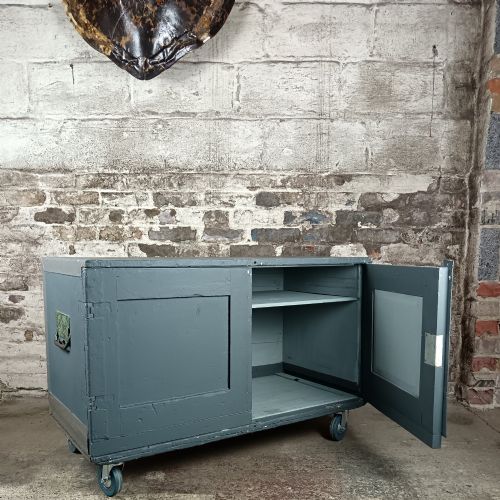
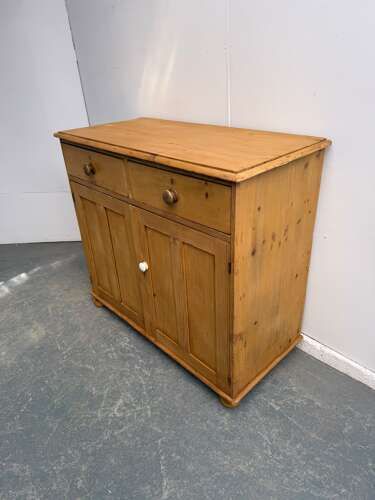
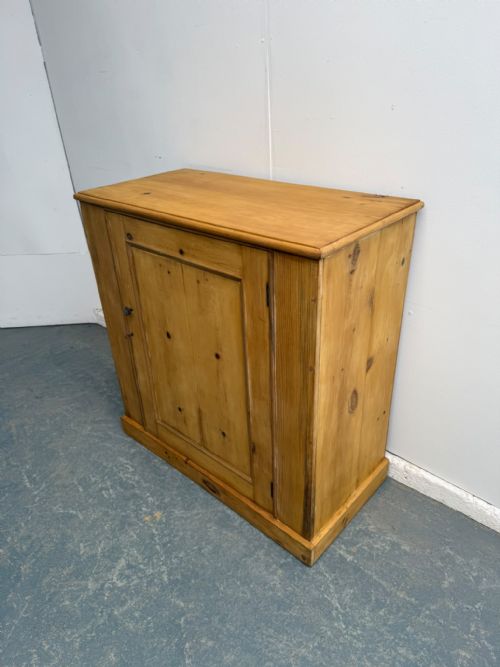
Pine Sideboard Cabinet
A pine sideboard cabinet brings honest utility and warmth to a room, offering practical storage through time-worn timber.
Pine Sideboard Cabinet
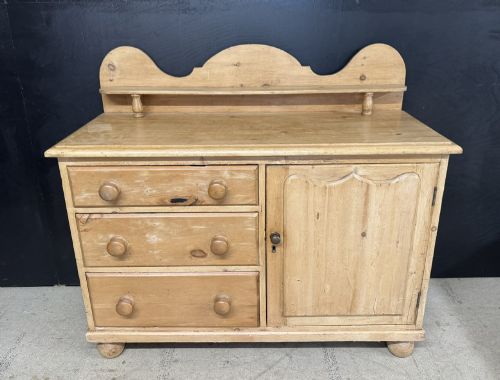
A pine sideboard cabinet encompasses sturdy storage furniture built from softwood, often taking the form of dresser bases, cupboards, and chiffoniers. When you search for a pine sideboard cabinet, you encounter vernacular furniture shaped by regional traditions across Britain, France, Scandinavia, and Hungary.
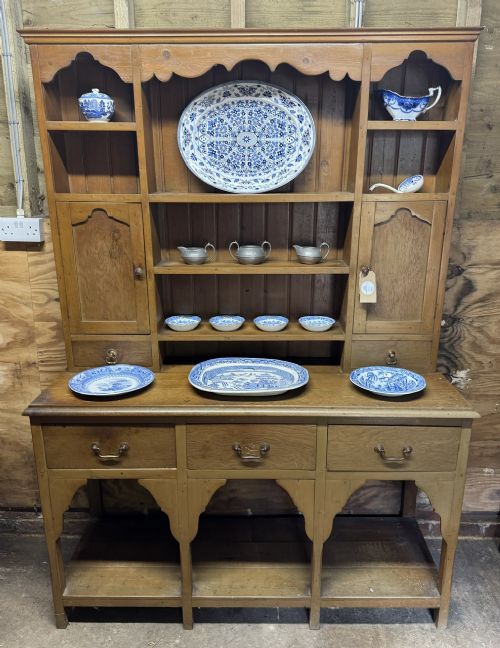
Victorian and nineteenth-century examples dominate the selections, alongside earlier Georgian pieces and later items from the opening decades of the twentieth century. These units serve multiple domestic functions, functioning as kitchen dressers, hall cupboards, and low wide storage cabinets.
How they were made
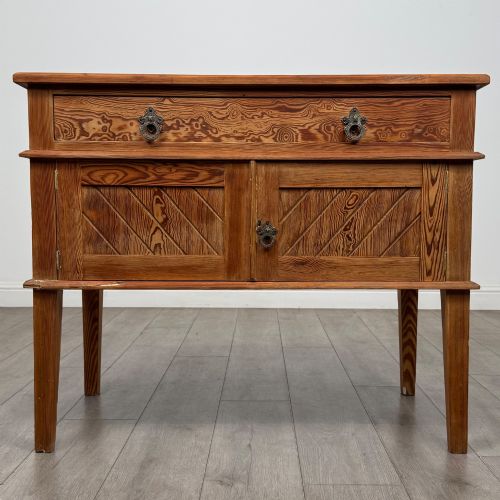
Construction relies predominantly on solid pine timbers, sometimes utilising pitch pine, complemented by functional hardware in brass and iron. Surfaces frequently show original paint finishes or waxed treatments that preserve the grain and patination built up over generations.
Joinery methods reflect traditional workshop practices of the eighteenth and nineteenth centuries, producing robust carcasses designed for heavy daily use. Glazed doors, ceramic fittings, and glass elements appear on upper display sections and specialised storage cabinets.
What varies in quality
Quality rests upon the integrity of the timber, the retention of original surface treatments such as historic paint or mellow wax, and the proportion of the carcass. Pieces retaining their untouched patination and original hardware command greater appreciation among collectors than heavily altered examples.
The sophistication of regional joinery and regional stylistic details, from faux bamboo turnings to hand-carved floral motifs, distinguishes standard utility pieces from finer country workshop productions.
The Pine Sideboard Cabinet Glossary
- Dresser base
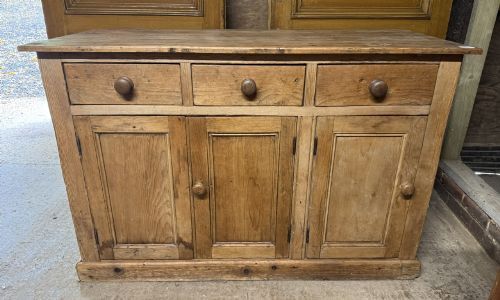
- The lower section of a kitchen dresser, typically featuring a combination of drawers and cupboards beneath a flat top. This form often serves independently as a sideboard.
- Patina
- The surface sheen and colour acquired by wood and paint through age, handling, and wear. It forms a key indicator of authenticity.
- Pitch pine
- A dense, resinous variety of pine timber known for its prominent grain pattern and durability. It was frequently utilised in nineteenth-century cabinet making.
- Chiffonier
- A compact sideboard or low cabinet equipped with drawers and doors, popular during the Regency and Victorian periods. These pieces often incorporate a raised shelf or back.
- Confiturier
- A traditional French jam cupboard designed with compact proportions, single doors, and internal shelving. These items originate from provincial rural kitchens.
Pine Sideboard Cabinet: Frequently Asked Questions
How do I date a pine cupboard?
Dating relies on examining construction methods, tool marks, and hardware types used within the carcass. Joinery details and timber characteristics align specific pieces with Georgian, Victorian, or later eras.
Surface treatments also provide clues, as original paint or early wax finishes reflect the prevailing decorative preferences of the period in which the cabinet was built.
What is the difference between a dresser base and a sideboard?
A dresser base originates from a kitchen dresser and usually offers deep storage drawers alongside cupboards designed for culinary utensils and provisions. Sideboards traditionally served dining rooms for the presentation of food and storage of tableware.
In modern usage, both forms function similarly as low storage cabinets, though dresser bases often display heavier proportions and more utilitarian country construction.
Should I wax or paint my pine cabinet?
Preserving original paint or historic wax finishes maintains the historical integrity and visual character of the piece. Interventions should respect the existing patination built up over decades of use.
Unfinished or stripped timber can be treated with traditional soft wax to nourish the wood and enhance its natural colour without masking the grain.
Where were these cupboards originally used?
These cabinets served utilitarian roles across domestic spaces, primarily in kitchens, sculleries, and pantries for storing provisions and kitchenware. Hall cupboards and chiffoniers provided storage in entranceways and living rooms.
Regional variations reflect local domestic habits across English, Welsh, French, Scandinavian, and Hungarian rural households.