

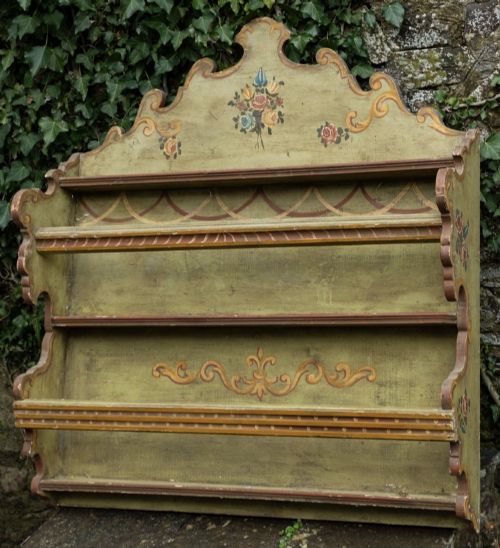


Pine Plate Rack
These pine plate rack pieces offer practical wall storage and traditional kitchen display, grounding domestic spaces with period character.
Identifying your pine plate rack
A pine plate rack is a functional wall-mounted shelving unit or upper dresser section designed to display and dry ceramics upright. Buyers seek these pieces to bring rustic warmth and historical utility to modern kitchens or dining spaces.
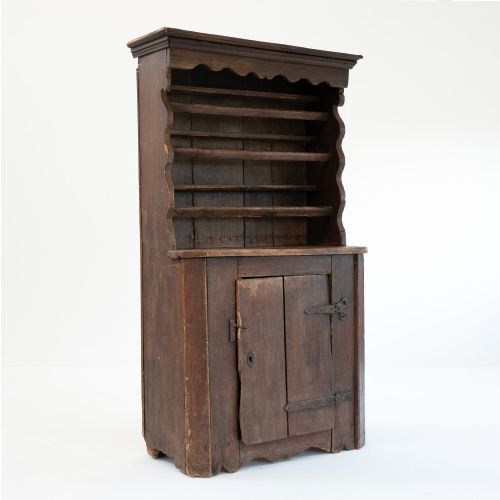
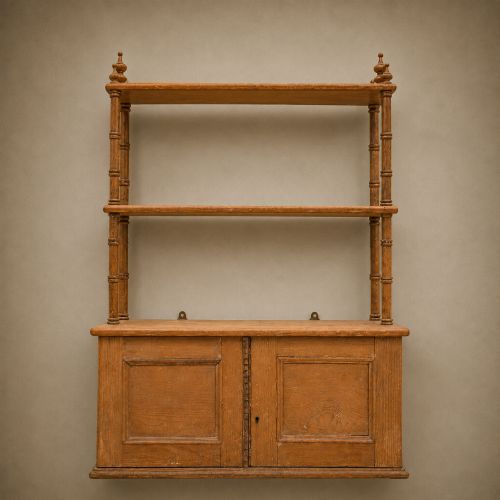
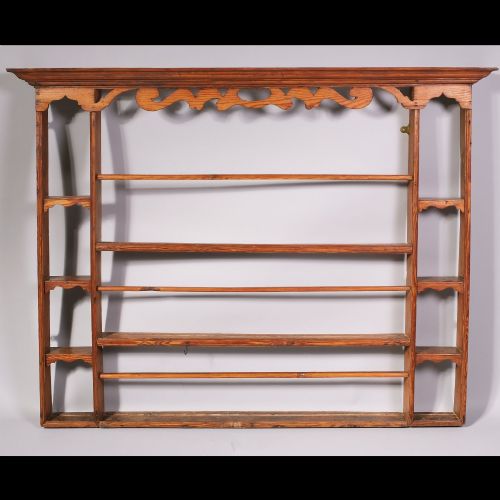
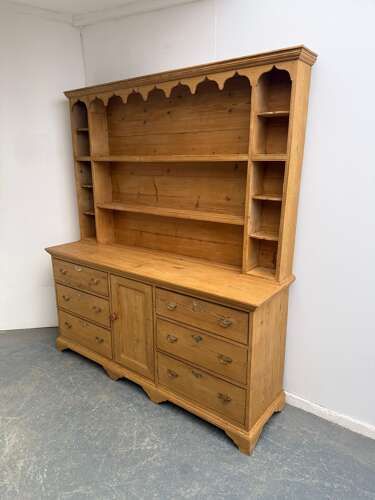
The inventory on this page spans the eighteenth and nineteenth centuries, taking forms such as wall-hanging delft racks, spice drawer combinations, and the upper sections of Welsh and country dressers. Georgian and Victorian examples dominate, offering both unpainted waxed surfaces and painted finishes.
Regional variations appear across the collection, including English and South Wales origins that highlight local domestic craftsmanship. Whether mounted alone or seated upon a base dresser, each unit preserves a direct link to historic farmhouse cooking spaces.
Materials and construction
Makers built these pieces primarily from solid pine, often utilising waxed or painted finishes to protect the softwood from kitchen moisture. Selected examples incorporate brass elements or secondary timbers like beech and oak.
Joinery techniques reflect traditional country craftsmanship, utilising pegged joints, dovetailed drawer boxes, and applied fretwork for decorative detail. Surfaces show the marks of hand-tooling and long use under layers of historic paint or wax.
Retail Price Guide 2026
Typical UK retail prices for pine plate rack, calculated from the Sellingantiques database of over a million retail prices indexed since 2003. This retail price guide relies exclusively on Sellingantiques data; no external sources or auction records are used, so the figures do not describe the wider market.
Many surviving racks still bear the faint crescent-shaped grease marks left by centuries of resting heavy Sunday roast platters.
Judging quality and character
Quality rests in the survival of original surfaces, whether that is a rich patinated wax or early historic paint. Finer examples retain delicate fretwork, integrated spice drawers, or unusually generous proportions.
Structural integrity sets apart superior items, particularly in the strength of the plate-holding slats and the stability of the hanging boards. Pieces that retain their original brass fixings or companion dresser bases command stronger presence.
The Pine Plate Rack Glossary
- Delft rack
- A wall-mounted wooden shelving unit specifically designed for displaying tin-glazed earthenware and plates. These racks use narrow shelves and protective front retaining rails or grooves.
- Fretwork
- Decorative openwork carved into wood boards using a fine saw. It appears on quality country pieces to ornament the frieze or side supports.
- Waxed pine
- Timber treated with beeswax to nourish the wood and create a soft, warm sheen. This finish develops a deeper patina through handling and age.
- Welsh dresser
- A large kitchen sideboard featuring open plate shelves mounted above a base of drawers and cupboards. The regional style is celebrated for its balanced proportions and practical display capacity.
Frequently Asked Questions
How do I hang a heavy pine plate rack safely?
Wall-mounted plate racks require secure fixing directly into masonry or deep stud work using heavy-duty brackets. Because loaded ceramic plates add substantial weight, professional installation ensures the piece supports the burden safely.
Distribute the weight evenly across the shelves when loading your ceramics. Lighter decorative plates work best on top tiers, leaving deeper base grooves for heavier platters.
Are these racks suitable for modern kitchens?
These pine plate racks integrate smoothly into contemporary spaces by providing accessible vertical storage and rustic contrast. They free up cupboard space while keeping everyday ceramics on display.
Ensure your kitchen wall has adequate clearance above worktops before mounting. The natural wood grain warms minimalist interiors and anchors eclectic room schemes.
How do I clean and maintain waxed pine?
Maintain waxed pine surfaces by dusting regularly with a soft, dry cloth to prevent grime buildup. Avoid using wet sponges or harsh chemical sprays, which strip the protective wax.
Apply a traditional beeswax polish once or twice a year to maintain the moisture and rich sheen of the timber. Buff gently with a clean cloth after application for a lasting finish.
How can I tell a Georgian rack from a Victorian one?
Georgian pine plate racks often feature hand-cut fretwork, pegged joinery, and simpler proportions intended for smaller country cottages. They frequently exhibit an earlier, softer grain structure under historic wax.
Victorian examples tend toward larger dimensions, sometimes incorporating accessory drawers, beech elements, or more robust hanging rails. Their construction reflects the industrial expansion and changing kitchen designs of the later nineteenth century.