



Pine Potboard Dresser
A pine potboard dresser brings honest vernacular joinery and generous low-level display space straight into a modern country kitchen.
Pine Potboard Dresser
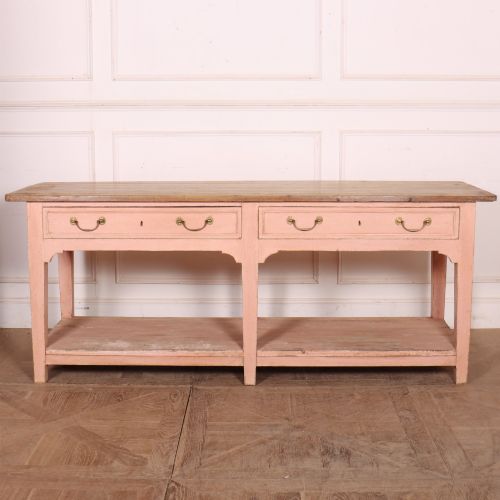
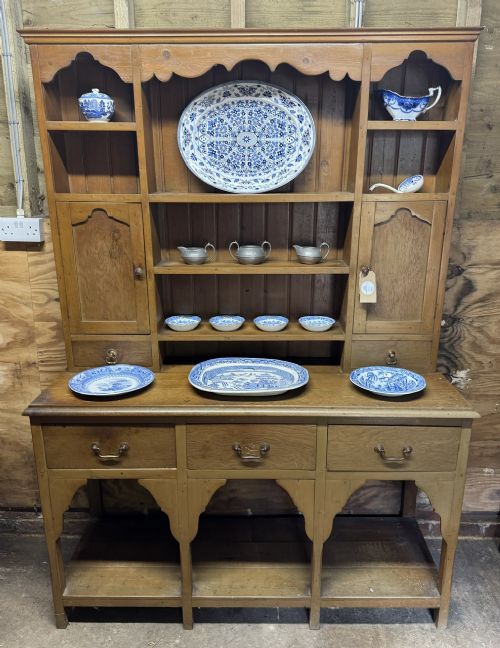
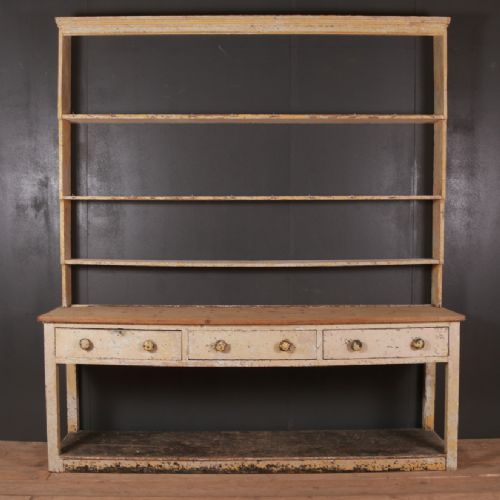
A pine potboard dresser is a traditional domestic storage piece defined by its open lower shelf, known as a potboard, set just above the floor between the legs. The listings on this page span the eighteenth and nineteenth centuries, with English and Welsh regional examples appearing most frequently.
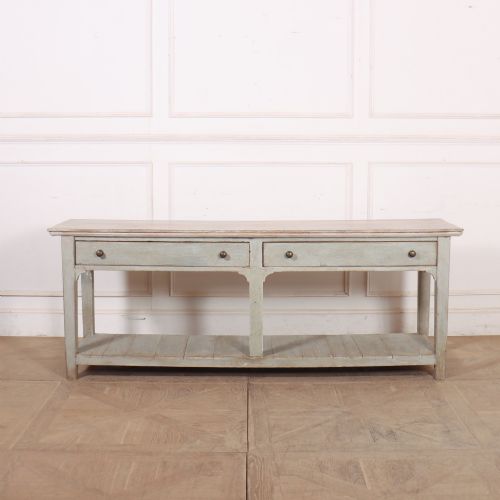
Buyers will encounter both complete dressers featuring plate racks and lower dresser bases serving as independent sideboards or serving tables. The construction reflects vernacular traditions, utilising local timber and straightforward joinery suited to farmhouse interiors.
Regional variations include Welsh country forms and English farmhouse pieces, often carrying centuries of domestic use in their surfaces. These items remain practical storage furniture for kitchens and dining rooms, offering substantial timber surfaces and open shelving.
How they were made
Makers constructed these pieces primarily from solid pine, often augmented with brass hardware for drawer pulls and handles. Joinery methods relied on sturdy pegged frames and robust boards designed to withstand heavy daily use in busy domestic settings.
Many surviving examples show historic painted finishes, original paint, or treated timber surfaces that have aged naturally over generations. The lower potboard was integrated directly into the leg structure to provide stable ground-level storage for heavy pots and pans.
Pine Potboard Dresser Retail Price Guide 2026
Typical asking prices for pine potboard dresser among the pieces listed under this phrase on Sellingantiques today, from the lower quarter to the upper quarter. They describe what is for sale here now, not the wider market.
Floor-level potboards were originally built low enough to catch stray rolling turnips.
What varies in quality
The distinction between standard utility pieces and finer examples rests upon the integrity of the original timber and the retention of early painted surfaces. Pieces that preserve their original patina and uncompromised structural joinery demonstrate superior historic character.
Proportion and regional carpentry traits also dictate distinction, with certain Welsh and English provincial pieces exhibiting more deliberate moulding and balanced drawer arrangements. The presence of untouched brass fittings and honest wear rather than aggressive modern restoration elevates a piece.
The Pine Potboard Dresser Glossary
- Potboard
- The low open shelf positioned near the floor between the legs of a dresser, originally intended for storing heavy pots. This defining feature separates these pieces from standard sideboards.
- Dresser Base
- The lower half of a traditional kitchen dresser, functioning as a standalone sideboard or serving table without an upper plate rack. These pieces provide a wide timber top and generous drawer storage.
- Vernacular
- Architecture and furniture built by local craftsmen using regional materials and traditional methods, rather than following formal academic architectural styles. This approach creates honest, functional domestic objects.
- Patina
- The surface sheen and colour developed over decades and centuries through handling, polishing, waxing, and exposure to light. A well-preserved surface records the age and history of the timber.
- Welsh Vernacular
- A distinct regional style of furniture making originating in Wales, characterised by sturdy proportions and practical adaptations for rural country homes. These pieces often feature specific local timber selections.
Pine Potboard Dresser: Frequently Asked Questions
What is a potboard dresser?
A potboard dresser is a traditional kitchen storage unit featuring an open board at the very bottom, close to the floor, designed for heavy cookware. It combines drawer storage with surface space.
Most surviving examples date from the eighteenth and nineteenth centuries, originating from English and Welsh country workshops.
How do I care for antique pine?
Keep antique pine furniture away from direct heat sources and sudden temperature changes to prevent the timber from splitting or warping. Dust gently with a dry cloth and apply natural wax sparingly.
Avoid modern silicone polishes, which can build up and soften historic finishes or original paint over time.
Are these pieces English or Welsh?
The inventory includes both English farmhouse pieces and Welsh vernacular examples, often identified by regional construction traits and proportions. South Wales and various English counties produced distinctive local variants.
Examining the construction methods and timber characteristics usually helps determine the likely geographic origin.
Can I use a dresser base as a sideboard?
A dresser base functions exceptionally well as a sideboard or serving table in modern dining rooms, hallways, and kitchens. The low potboard offers convenient storage for baskets, books, or large ceramics.
Their substantial timber tops provide practical surface area for serving food or displaying decorative objects.