



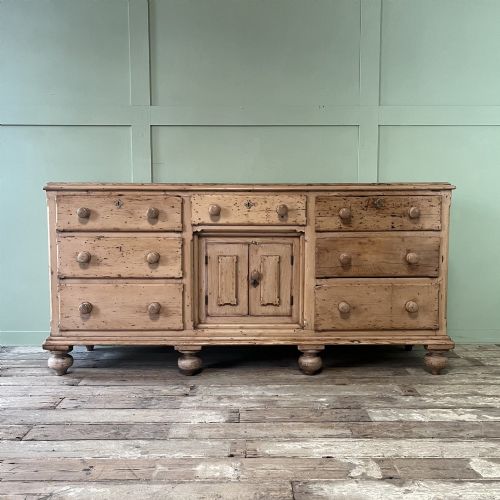

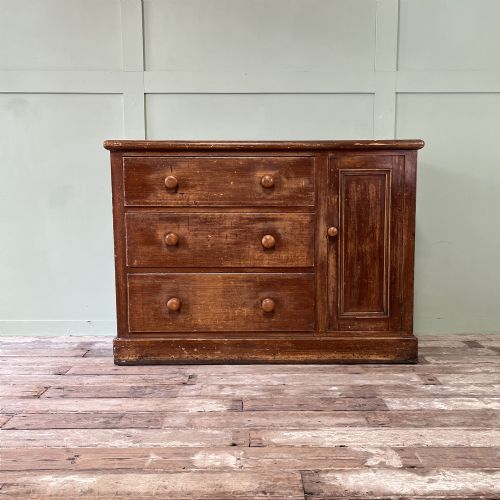

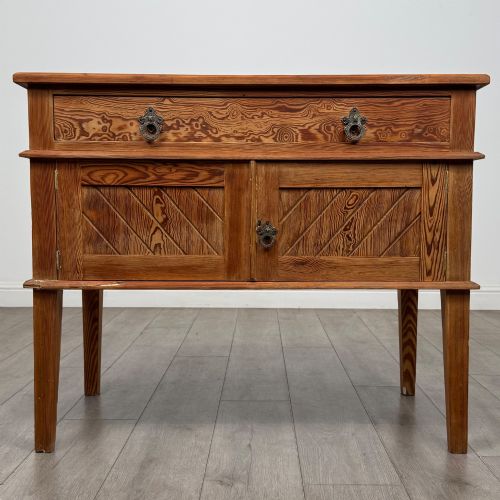
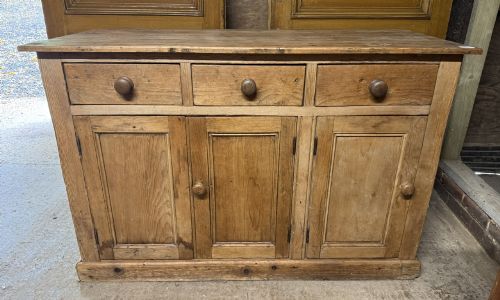

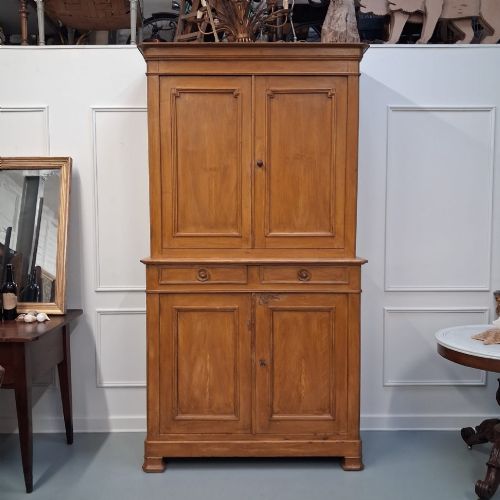
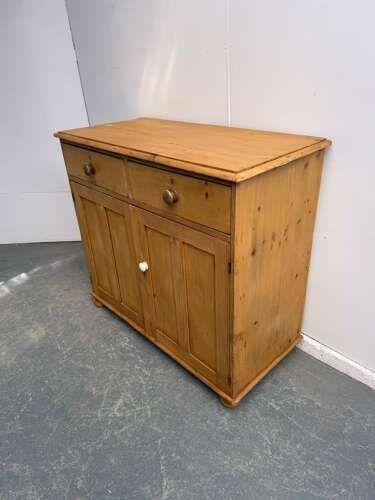
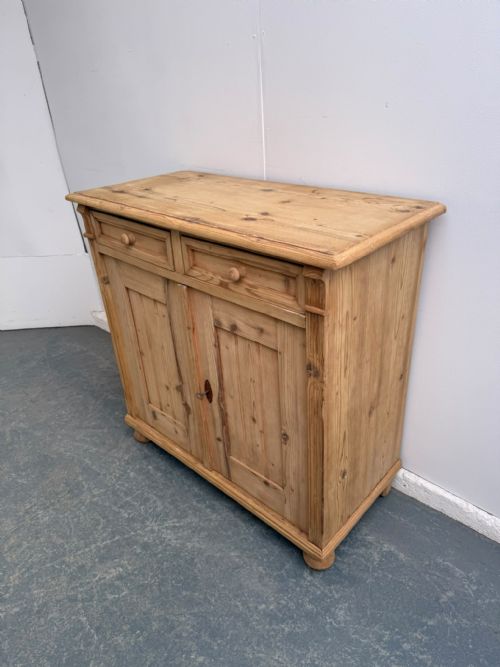
Pine Cupboard Dresser Base
A pine cupboard dresser base provides robust rustic storage with a low profile, offering practical kitchen utility and historical character.
Pine Cupboard Dresser Base
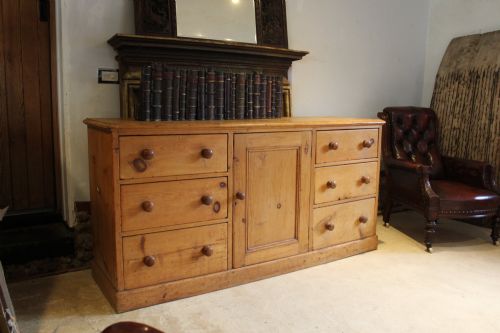
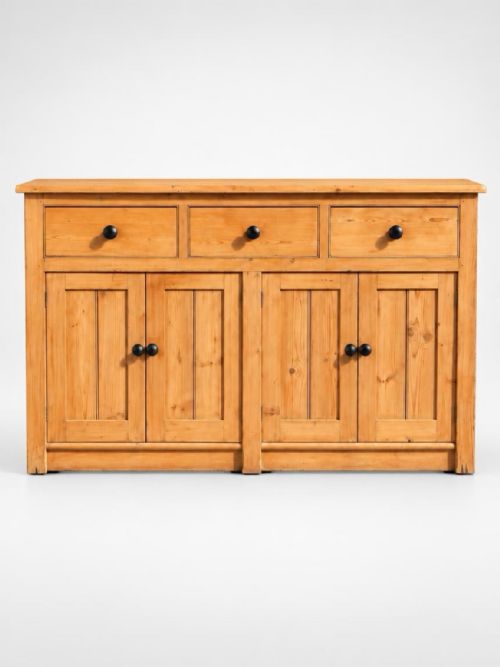
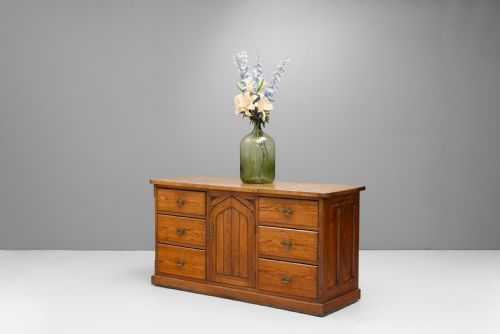
A pine cupboard dresser base is a heavy low storage unit combining drawers and cupboards, originating primarily from the Georgian and Victorian periods. These pieces serve as functional utility furniture for kitchens, larders and country houses, offering a flat working surface above enclosed storage compartments.
The versions most common on this page are nineteenth-century English and Welsh examples, alongside continental pieces from France, Hungary and Scandinavia. They appear in waxed wood finishes or retain original paint, ranging from smaller two-door formats to large multi-drawer kitchen furniture.
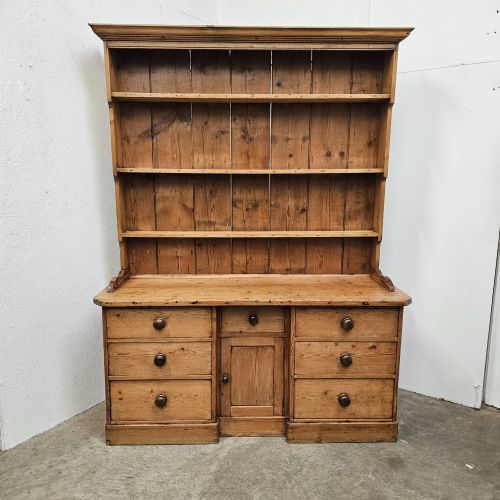
Makers designed these items for everyday domestic use, meaning construction focuses on practical storage rather than delicate display. The form bridges the gap between sideboards and traditional kitchen dressers that originally featured plate racks above.
How they were made
Carpenters constructed these cupboards predominantly from solid pine, utilising heavy timber boards for the main body, tabletops and internal shelving. Workshops often incorporated secondary woods for drawer linings and back panels, selecting materials based on local availability.
Hardware details typically include brass handles or iron fittings to secure doors and drawers. Surface treatments range from clear wax applications that highlight the natural grain to historic painted finishes, sometimes applied over multiple decorative layers.
Pine Cupboard Dresser Base Retail Price Guide 2026
Typical asking prices for pine cupboard dresser base among the pieces listed under this phrase on Sellingantiques today, from the lower quarter to the upper quarter. They describe what is for sale here now, not the wider market.
Listings feature pine cupboard dresser bases spanning the Georgian and Victorian eras, alongside Edwardian and early twentieth-century examples.
What varies in quality
The distinction between ordinary utility items and superior examples lies in the integrity of the timber and the retention of original surfaces. Pieces with undisturbed original paint or deep patinated wax finishes command greater appreciation among collectors than those stripped down to raw wood.
Structural heft and proportion define the upper tier of these pieces, alongside thoughtful joinery details such as dovetail drawers and panelled doors. Original hardware, bread slides and fitted internal shelving contribute further to the distinction of a superior base.
The Pine Cupboard Dresser Base Glossary
- Dresser base
- The lower portion of a kitchen dresser, consisting of a flat top surface above cupboards and drawers, used independently as a sideboard.
- Bread slide
- A pull-out wooden shelf integrated into the cabinetry, historically used for cooling baked loaves or preparing food.
- Housekeeper cupboard
- A large storage cabinet with internal shelving and doors, designed for linens, dry goods and household provisions.
- Waxed pine
- Timber finished with protective wax polish that deepens the colour and preserves the grain over decades of use.
- Original paint
- Surface pigment applied during the period of manufacture that has survived without modern repainting or chemical stripping.
Pine Cupboard Dresser Base: Frequently Asked Questions
What is a pine cupboard dresser base used for?
These pieces function as practical storage units in modern kitchens, dining rooms or hallways. They provide a sturdy top surface alongside enclosed cupboard and drawer space for tableware, linens and household items.
The deep proportions and flat tops make them suitable as sideboards or serving stations. Their robust construction allows them to endure daily domestic use while displaying natural wood or painted character.
How do I tell a Georgian base from a Victorian one?
Georgian examples display simpler, more restrained proportions and construction methods typical of the eighteenth century. They often feature hand-cut dovetails and older timber patination.
Victorian pieces frequently present heavier cornices, varied handle styles and sometimes more ornate detailing or larger proportions. Regional variations across England, Wales and Scotland further distinguish the construction style.
Should I keep original paint or strip to wood?
Retaining original paint preserves the historical integrity and surface texture accumulated over generations. Collectors generally value untouched historical finishes above stripped surfaces.
Waxed finishes highlight the natural grain of the pine if the paint is later or damaged. Consider the existing condition and visual harmony with your interior before altering the surface.
How do I care for antique pine furniture?
Maintain waxed pine surfaces by applying natural beeswax periodically to nourish the dry timber and protect against moisture. Avoid placing antique wood near direct heat sources or strong sunlight.
Clean painted surfaces gently with a dry or barely damp cloth without harsh chemical detergents. Handle drawers and doors with care to preserve historic joints and fittings.