
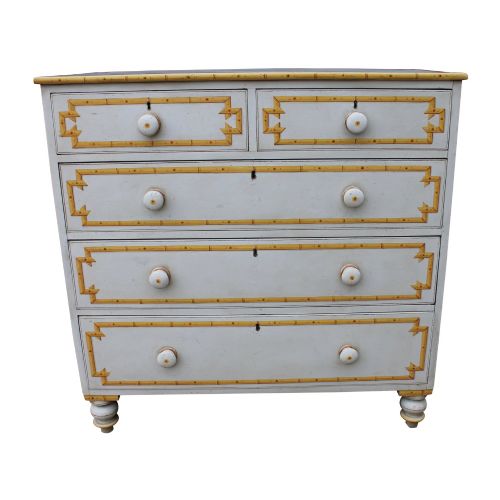

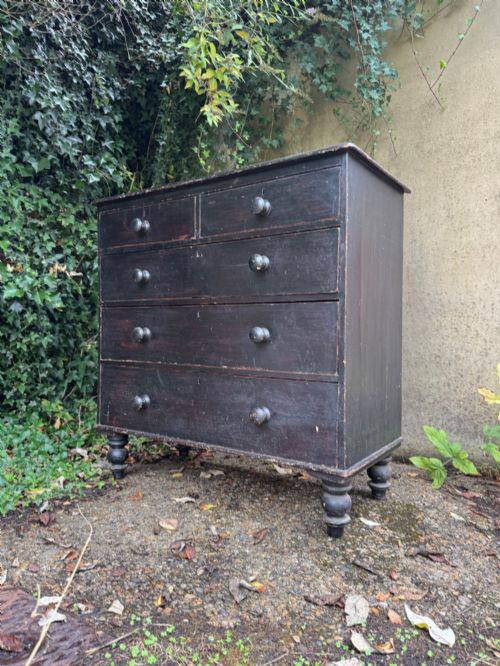
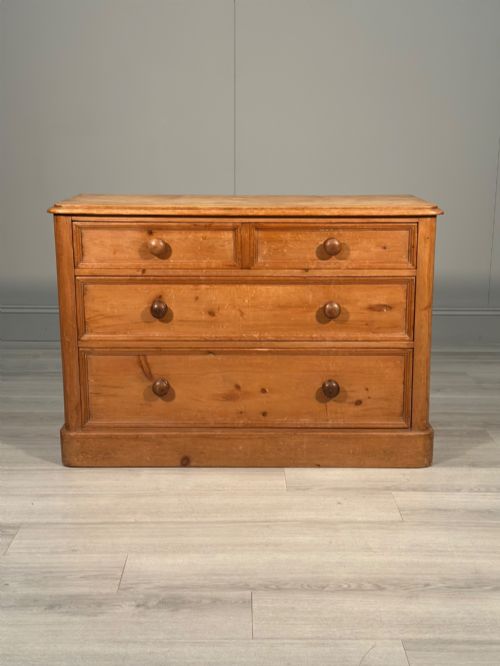
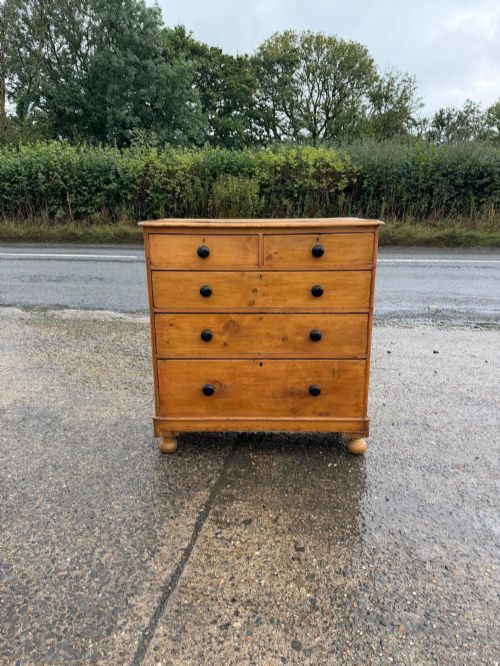
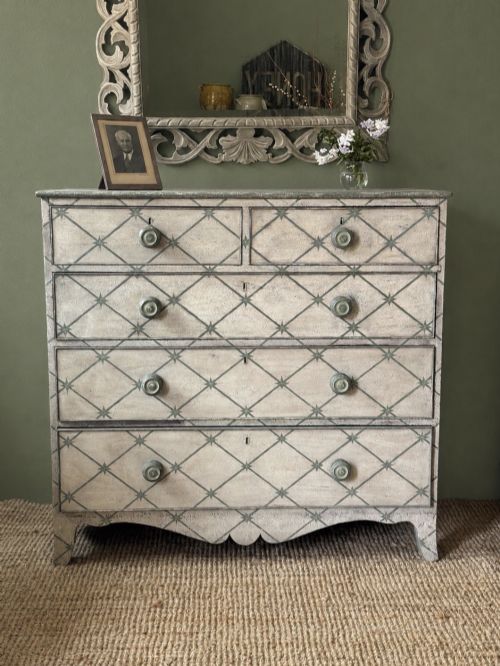
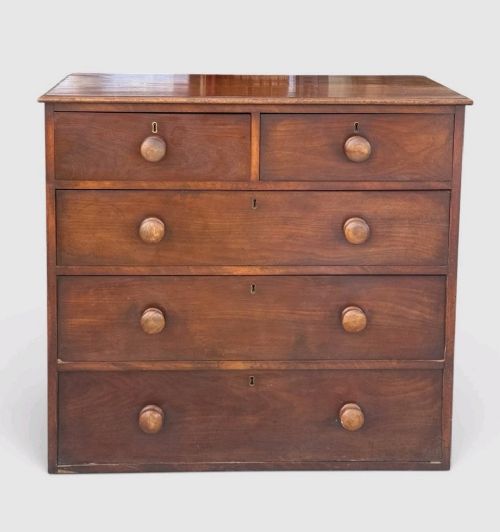
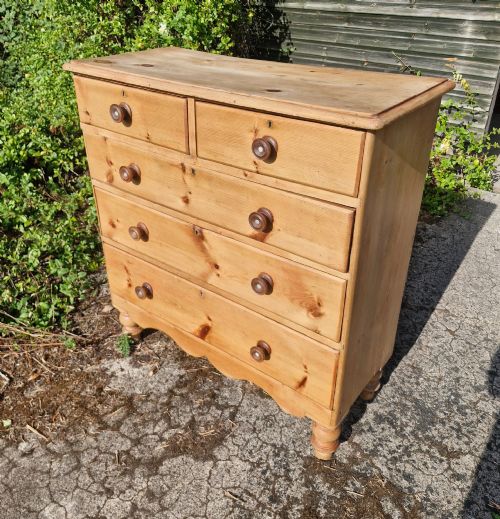
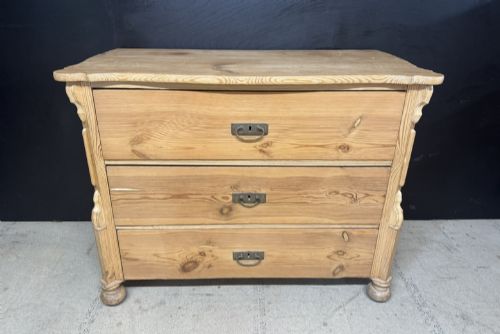
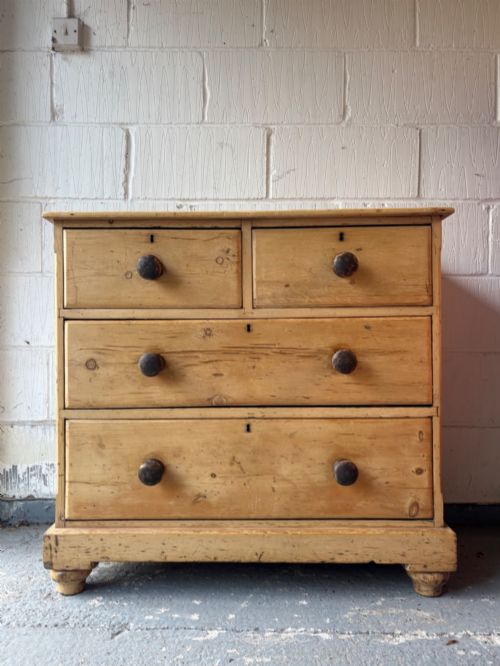
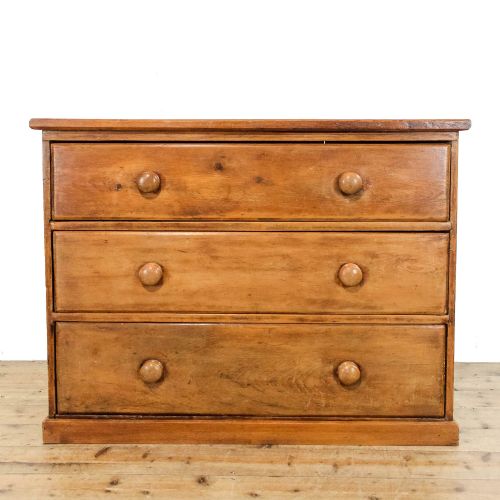
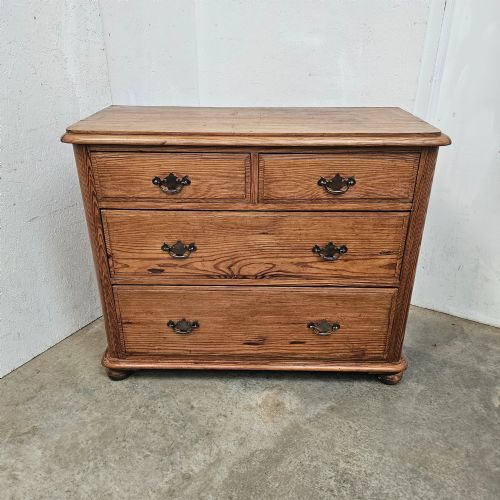
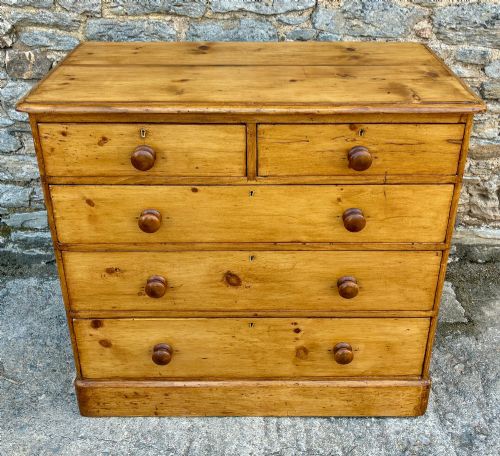
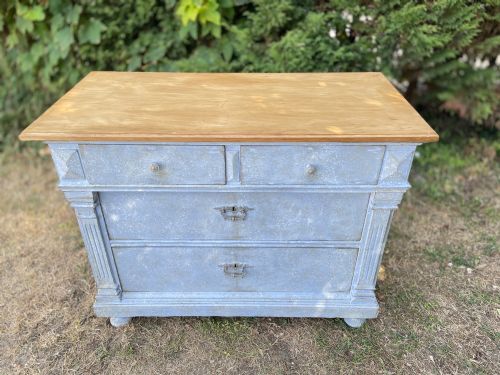
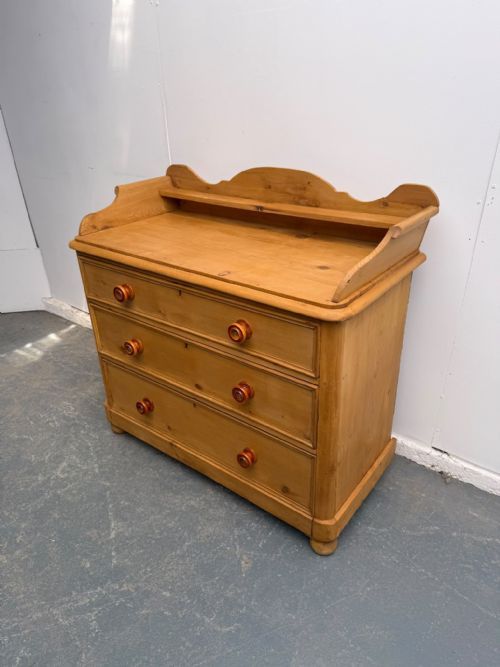
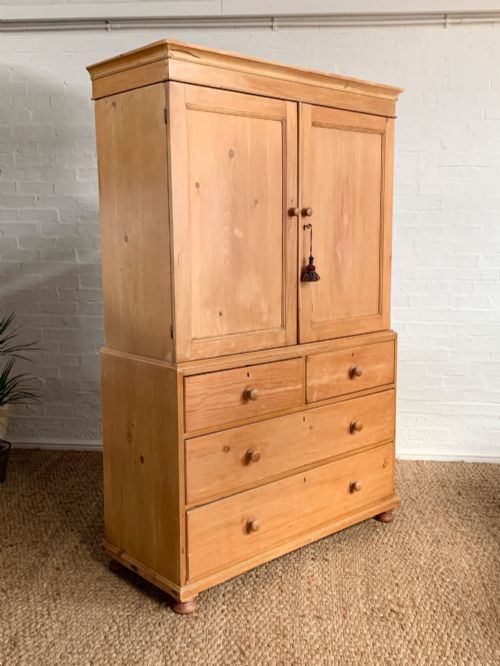
Pine Bedroom Dresser
A pine bedroom dresser provides sturdy storage, and the examples gathered here range from stripped Victorian forms to painted country pieces.
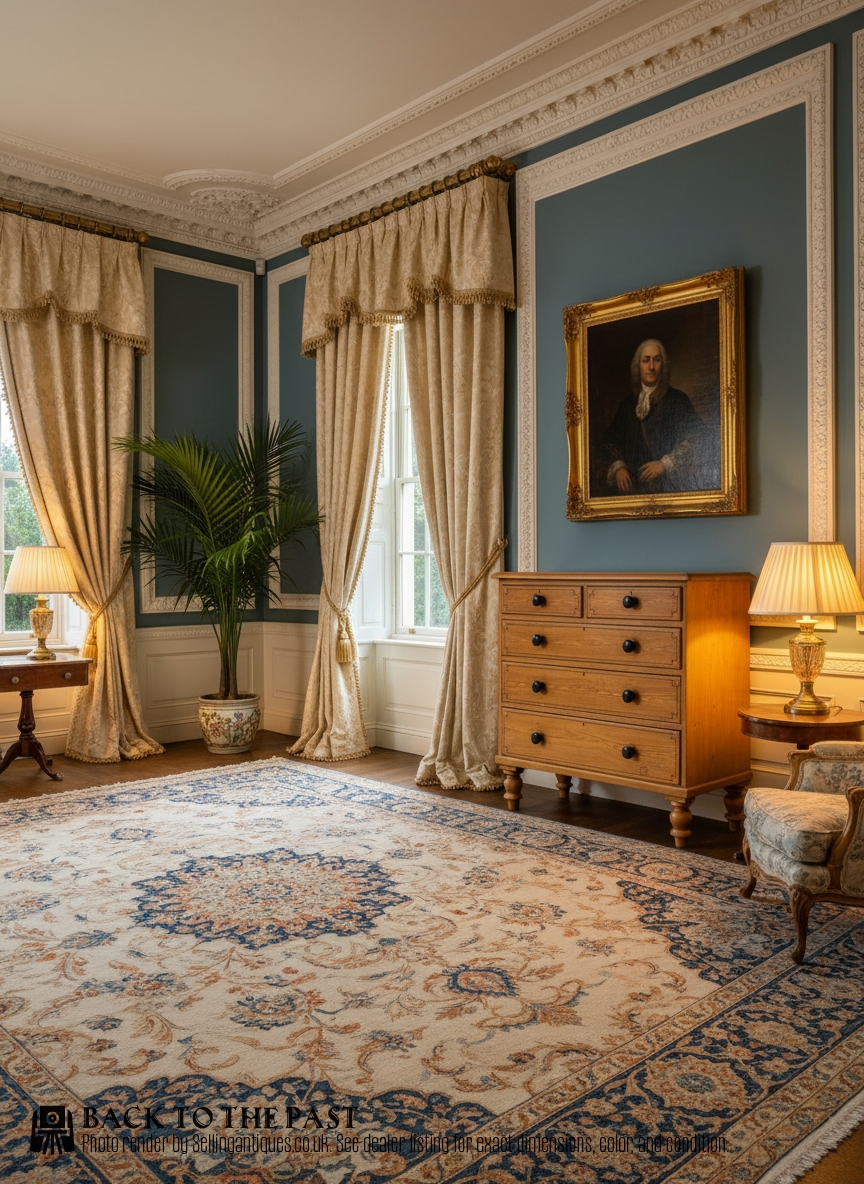
Pine Bedroom Dresser
A pine bedroom dresser primarily takes the form of a chest of drawers, often configured with two smaller drawers above three larger ones, though washstands and dressers with linen presses also appear. These pieces serve practical storage needs in sleeping quarters.
The pieces on this page span several periods, with the majority originating in the nineteenth century, including Victorian, Edwardian, Regency, and Georgian eras. Regional examples reflect English, French Gustavian, Swedish, Irish, and Hungarian traditions.
Buyers encounter variations such as scrubbed pine, waxed finishes, and painted surfaces, alongside specific styles like Aesthetic Movement and rustic country designs.
Distinctions in quality
Quality rests upon the preservation of original finishes, such as early paint layers or traditional wax patination, versus later stripping or repainting. Better examples retain their original brass or iron hardware and structural integrity.
Construction details distinguish the pieces, from simple country craftsmanship to sophisticated styling like Aesthetic Movement designs or French Gustavian commodes.
Listings feature Victorian, Edwardian, Regency, and Georgian periods, using pine, pitch pine, brass, iron, and paint.
Howard and Sons
The Pine Bedroom Dresser Glossary
- Pine
- A softwood timber widely utilised for domestic furniture due to its workability and availability. It takes paint and wax finishes readily.
- Pitch pine
- A durable, resinous pine variety known for its pronounced grain pattern and strength. It appears frequently in nineteenth-century storage furniture.
- Faux bamboo
- A decorative turning technique on wood that mimics the jointed stems of bamboo. This style gained popularity during the nineteenth century.
- Scrubbed pine
- A finish achieved by vigorous cleaning that removes old polish or paint to reveal the pale wood beneath. This treatment leaves a clean, matt surface.
Pine Bedroom Dresser: Frequently Asked Questions
How do I date a pine chest?
Dating relies on construction methods, timber choice, and stylistic cues recorded across the Victorian, Edwardian, and Georgian periods. Hardware styles and finish types also offer chronological markers.
Items from the nineteenth century often display hand-cut dovetails and specific drawer configurations that help narrow down their decade of origin.
What is the difference between waxed and painted pine?
Waxed pine highlights the natural grain and colour of the timber through traditional polishing methods. Painted pine preserves historic decorative schemes, often in original colours.
Both finishes appear frequently across regional European and English pieces from the nineteenth century.
Where were these dressers made?
The pieces originate from various workshops across England, Ireland, Sweden, France, and Hungary. Each region imparted local stylistic preferences to the furniture.
French pieces often reflect Gustavian or Louis XVI influences, while Swedish and Hungarian examples showcase distinct painted traditions.
How should I care for waxed pine furniture?
Maintenance involves applying traditional furniture wax periodically to nourish the wood and maintain its soft sheen. Avoiding direct sunlight and excessive heat protects the historic finish.
Gentle dusting with a dry cloth keeps the surface clean without stripping the patination built up over decades.