


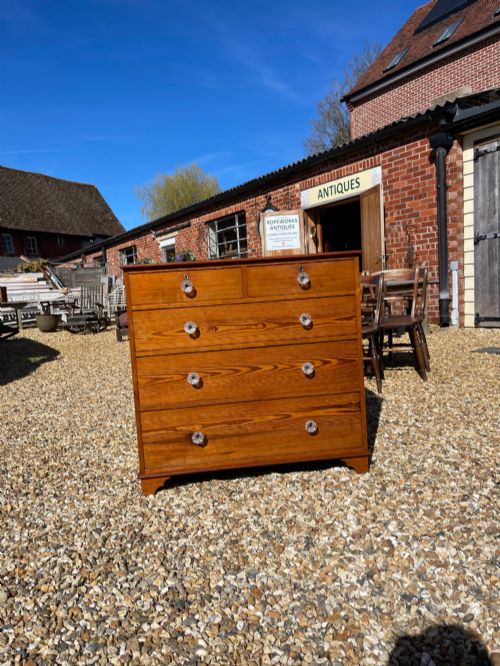

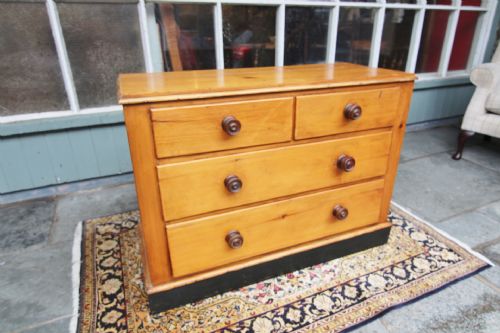


Warm Pine Chest Drawers
These warm pine chest drawers deliver honest, practical timber storage shaped by Victorian, Edwardian, and Georgian country hands.
Warm Pine Chest Drawers
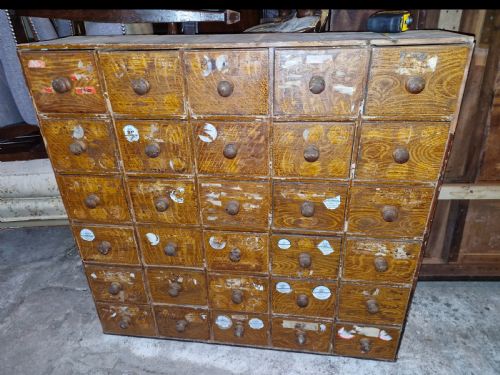
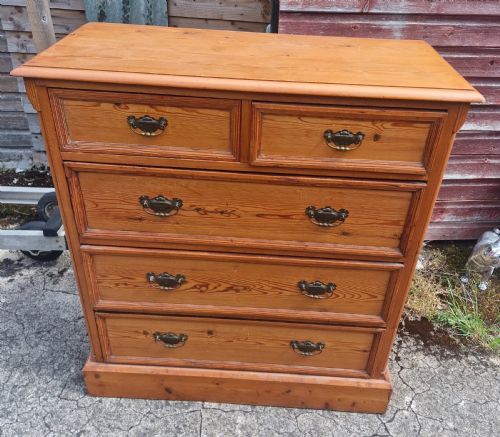
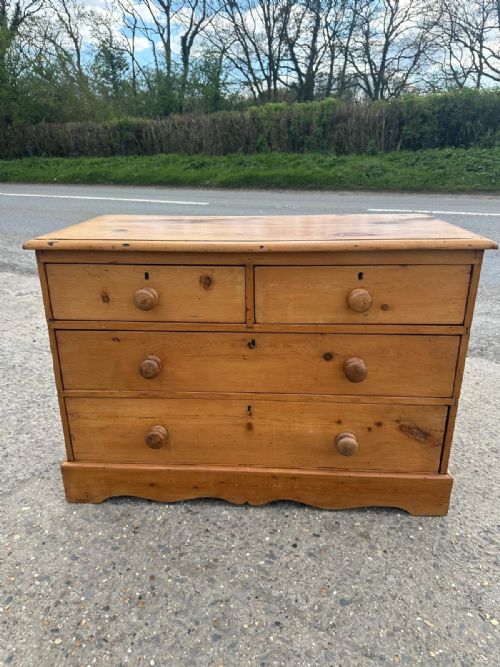
A warm pine chest drawers provides robust utility through straightforward timber construction originating in Victorian, Edwardian, and Georgian periods. Buyers searching for warm pine chest drawers encounter domestic storage forms ranging from full-sized two-over-three configurations to compact bedside units and banks of small drawers.
Country workshops produced many of these pieces with specific regional variations, including shaped bases and scumbled or painted finishes. Maritime contexts also appear through pitch pine examples connected to ships like the SS Orontes.
Miniature chests and specimen cabinets represent smaller expressions of the same utilitarian craft. The primary version met on this page is the standard domestic chest in waxed or painted pine.
How they were made
Makers utilised solid pine, Oregon pine, and pitch pine joined with brass hardware and metal fittings. Surfaces received wax treatments, historical paint layers, or simulated wood grain effects.
Construction methods relied on traditional joinery suitable for domestic furniture and specialised cabinetry like multi-drawer collectors units. Wood selection emphasised durable softwoods capable of taking wax finishes and decorative paint.
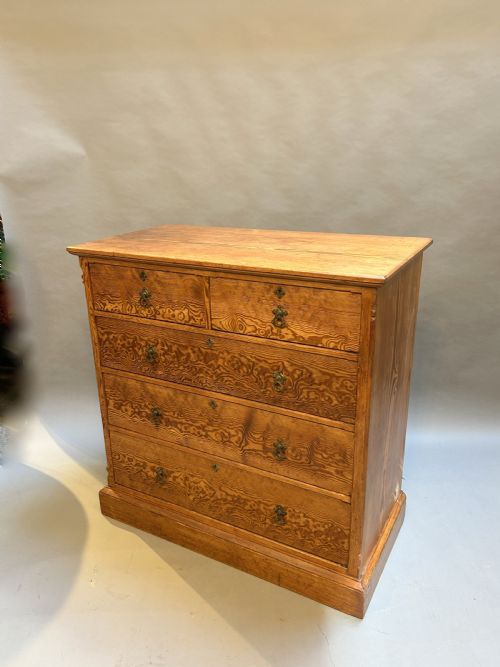
One exceptional pitch pine chest spent its working life aboard the SS Orontes before retiring to dry land.
What varies in quality
Construction integrity separates standard domestic pieces from specialised workshop output such as multi-drawer collectors cabinets. The precision of the drawer fit and the preservation of original painted or waxed surfaces dictate the standing of an individual piece.
Proportion and scale influence the desirability of smaller forms, such as miniature chests and bedside units. Material selection also plays a part, distinguishing standard pine from figured pitch pine or specialised maritime timbers.
J.T. Crockett
The Warm Pine Chest Drawers Glossary
- Pitch pine
- A dense, resinous softwood with a prominent grain pattern often utilised in maritime and heavy-duty cabinetry. It offers greater weight and durability than standard softwoods.
- Scumbled
- A decorative painting technique involving layers of translucent glaze dragged or brushed over a base coat to imitate finer hardwoods or create patterned textures. This finish appears on period country pieces.
- Bank of drawers
- A multi-compartment storage form featuring numerous shallow drawers arranged vertically or horizontally, commonly utilised for specimens or collections. These units showcase specialised workshop construction.
- Mule chest
- A storage form combining a blanket chest base with one or more lower drawers. It bridges the gap between traditional trunk storage and modern drawer configurations.
Warm Pine Chest Drawers: Frequently Asked Questions
How do I date a pine chest?
Dating relies on stylistic clues, construction methods, and hardware choices spanning the Georgian, Victorian, and Edwardian periods. Regional country pieces often retain distinct vernacular traits from their era of production.
Examining the drawer joints, backboards, and surface finishes helps narrow down the decade of manufacture. Material variations like the use of pitch pine also point towards specific late nineteenth or early twentieth-century contexts.
What is Oregon pine?
Oregon pine refers to timber sourced from North America that gained favour in British cabinet making during the Victorian era. It provides a stable, straight-grained surface for large furniture.
This material often displays a clean, uniform grain compared to native British softwoods. Its strength made it suitable for substantial chests of drawers.
Were these painted originally?
Many country pieces received surface treatments including paint, scumbling, or simulated wood grain effects to alter their appearance. Workshop practices varied according to regional taste and domestic requirements.
Painted finishes protected the softwood underneath while decorative scumbling added visual depth. Over time, these coatings developed patinas unique to their history.
How do I care for waxed pine?
Waxed pine surfaces require periodic maintenance with traditional beeswax to nourish the timber and preserve the finish. Avoid placing these pieces in direct sunlight or near heat sources to prevent the wood from drying out.
Regular dusting with a soft cloth keeps the wax layer intact. Gentle cleaning maintains the warm tone characteristic of these antique chests.