


Pine Church Settle
These pine church settle pieces bring honest rustic character and architectural presence to an interior.
Pine Church Settle
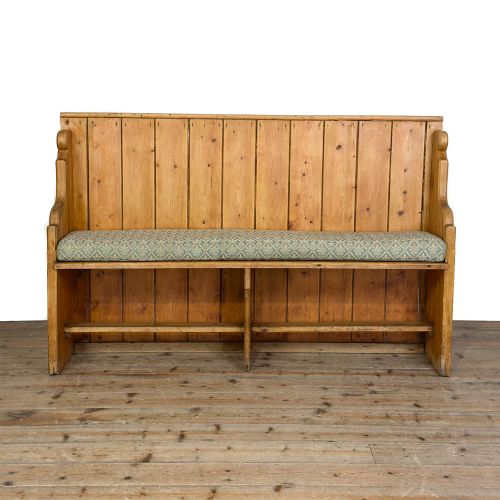
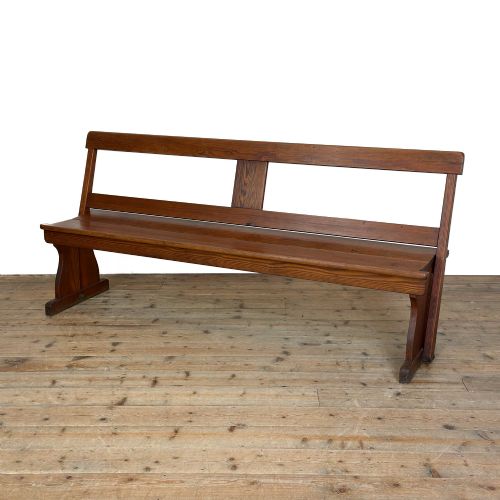
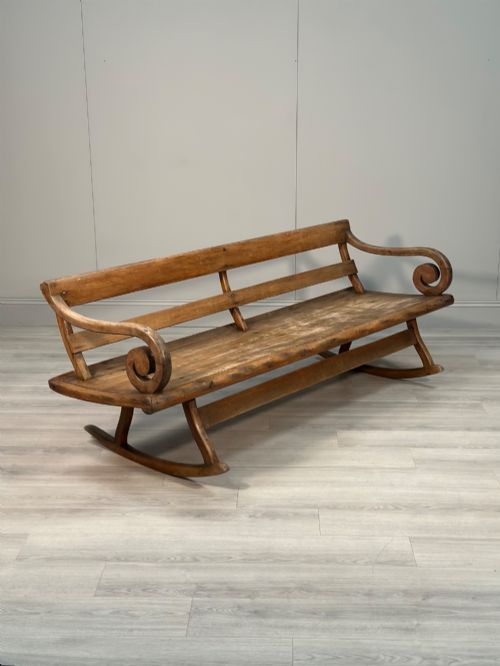
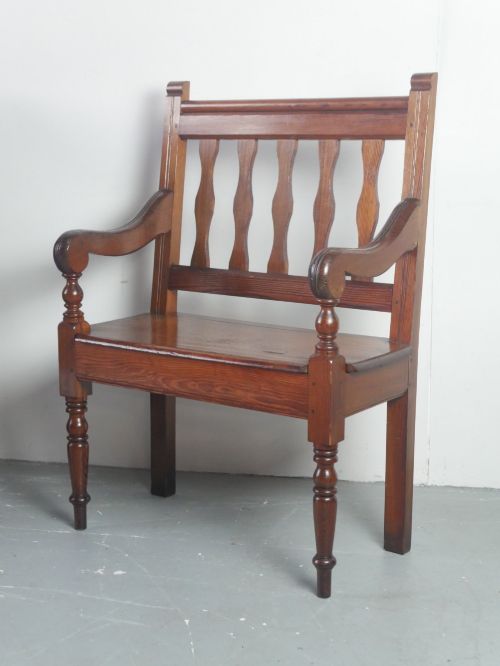
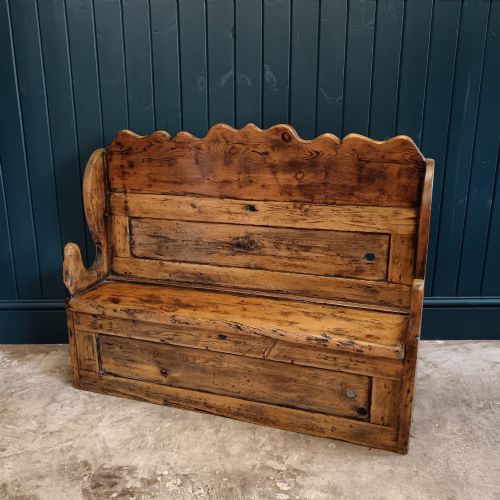
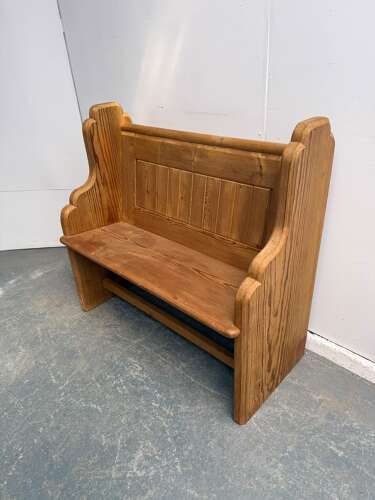
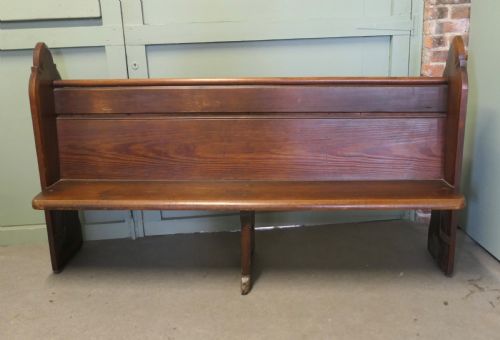
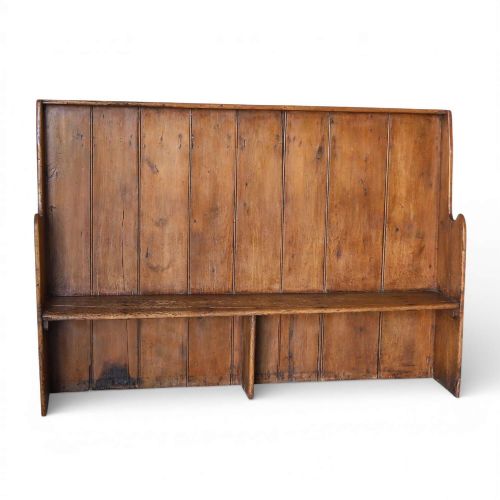
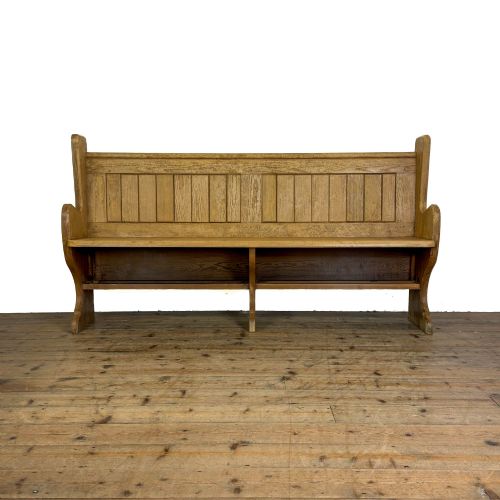
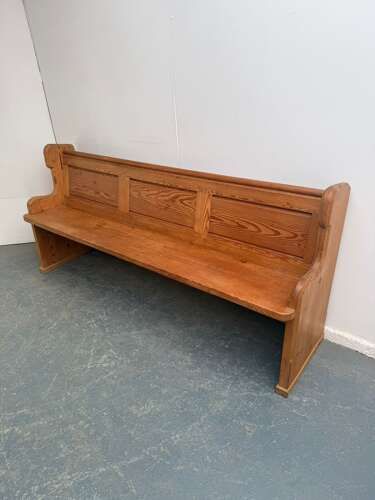
A pine church settle is a solid wooden bench designed for communal seating in chapels, churches, and public houses. The selections on this page span the nineteenth century into the early twentieth century, taking forms such as high-back settles, chapel pews, and tavern benches.
Makers produced these functional seats using native and pitch timbers, often adopting regional variations like English country, Victorian Gothic, and Arts and Crafts styles. Buyers encounter both unpainted waxed timber and original painted surfaces originating from Britain, France, Scandinavia, and Eastern Europe.
Materials and construction
Carpenters constructed these benches predominantly from solid pine and pitch pine, occasionally incorporating elm and walnut for structural contrast or seating planks. Joinery relied on sturdy pegged mortise and tenon joints designed to withstand heavy daily use in ecclesiastical and tavern settings.
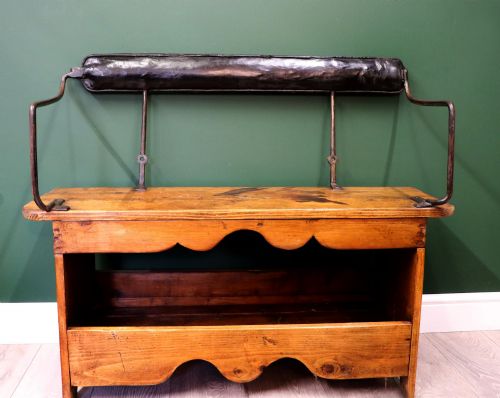
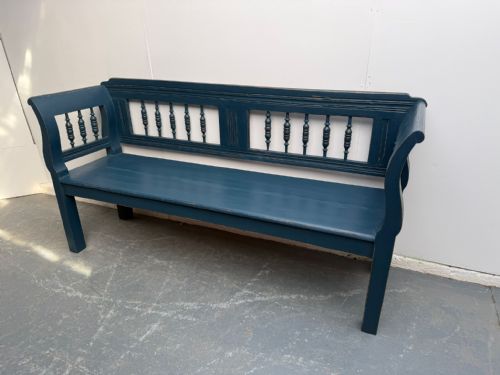
Surface treatments range from simple wax finishes that highlight the natural grain and honey brown patina of the wood to original layers of blue or decorative paint. Some pieces feature specialised adaptations, such as flip-over mechanisms or high protective backs meant to block draughts.
The listings show pieces constructed from pine, pitch pine, and elm, spanning the nineteenth century through the Edwardian period in various regional styles.
What defines quality in these pieces
Quality rests in the integrity of the timber, the depth of the patination, and the retention of original surface treatments like historic paint or warm wax. Pieces displaying honest wear and robust original joinery command greater appreciation than those with excessive modern alterations.
Proportion and architectural detail also separate standard examples from finer items. High backs, Gothic tracery, clever mechanical elements like flip-over seats, and documented provenance elevate the standing of a bench.
The Pine Church Settle Glossary
- Settle
- A wooden bench with a high back, solid wooden arms, and often a storage box beneath the seat. They were traditionally placed near firesides to block cold draughts.
- Pew
- A long wooden bench used for seating congregations in churches and chapels. Many surviving examples share construction traits with domestic settles.
- Patina
- The surface appearance developed through age, use, and waxing. A rich patina shows the history of the timber.
- Gothic
- An architectural and decorative style revival popular during the Victorian era. It utilises pointed arches, tracery, and vertical emphasis.
Pine Church Settle: Frequently Asked Questions
Where did church settles originate?
These benches were built by local carpenters and regional workshops for ecclesiastical and public use across Britain and continental Europe.
They served congregations in rural chapels, parish churches, and village inns where durable seating was essential.
How do I style a pine settle at home?
A high-back bench works well in a hallway, kitchen, or boot room where it provides practical seating and a strong architectural anchor.
Pair the piece with simple textiles or leave the timber exposed to highlight the natural grain and historic patina.
What is the difference between a settle and a pew?
A settle traditionally incorporates solid sides and a high panelled back designed to keep out cold draughts in domestic or tavern rooms.
A pew is generally an open church bench meant for rows of seating, though the terms often overlap in antique listings.
How should I care for waxed pine furniture?
Maintain the finish by applying a quality beeswax periodically and buffing it gently with a soft cloth to nourish the wood.
Keep the bench away from direct heat sources and strong sunlight to prevent the timber from drying out or splitting.