


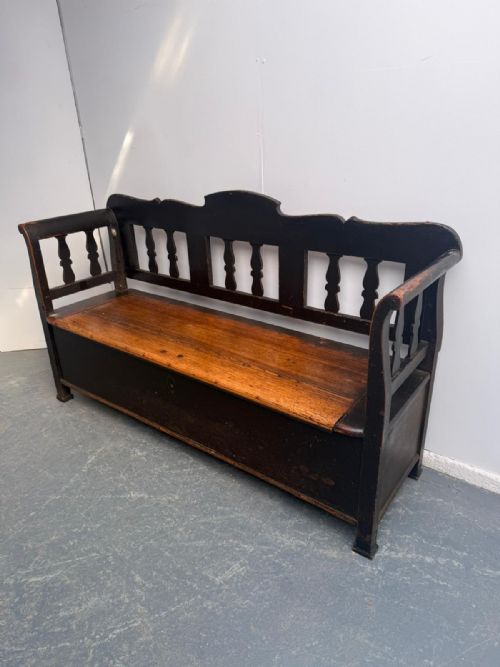
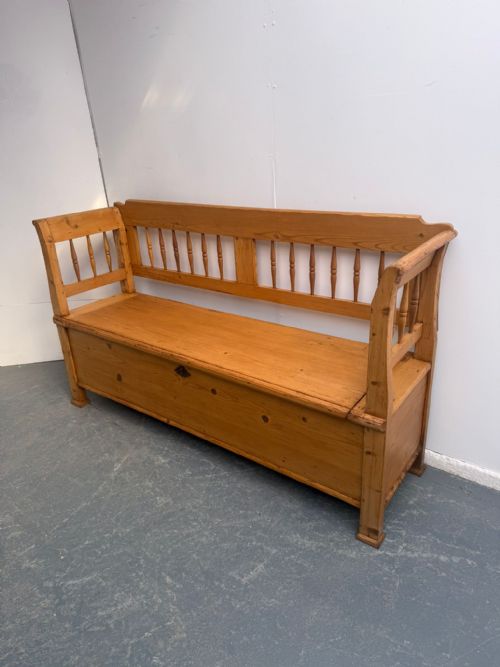
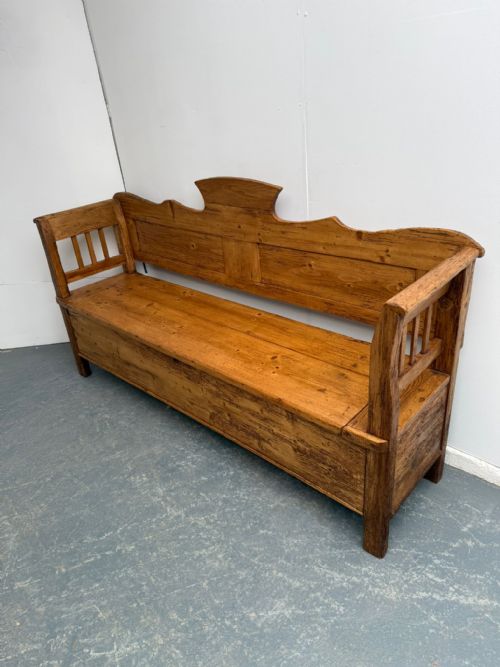
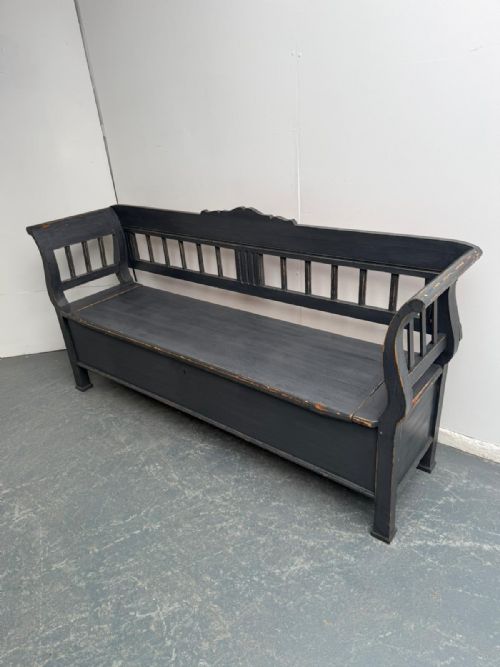



Pine Box Bench
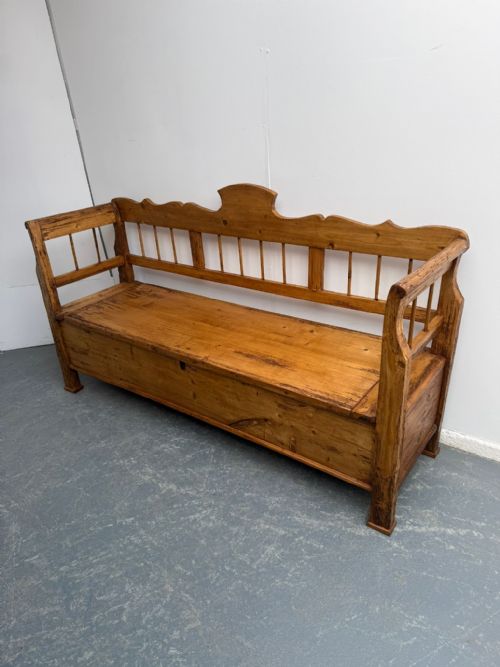
A pine box bench offers dual utility as a seat and a storage chest, rooted in centuries of domestic provincial craft.
Pine Box Bench
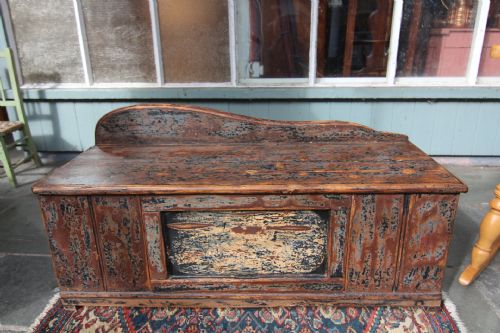
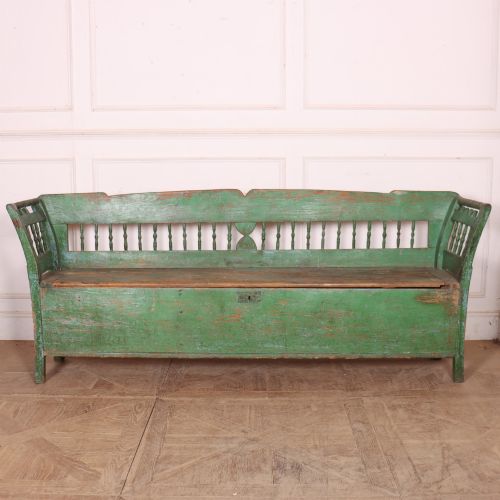
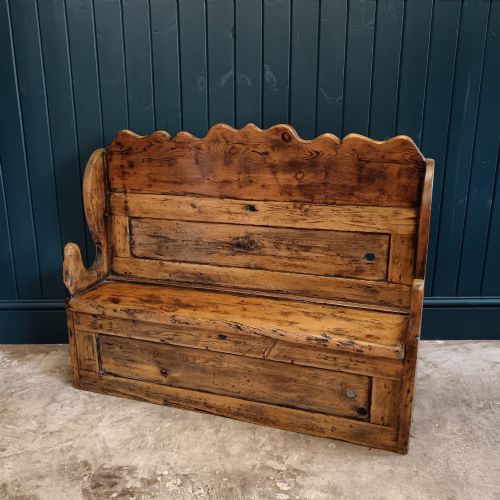
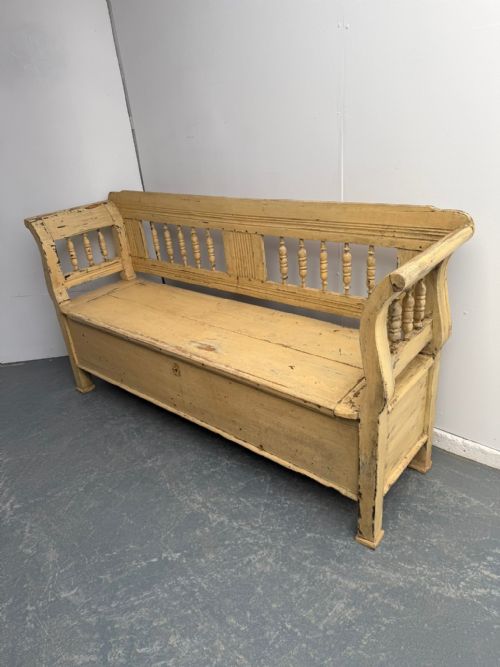
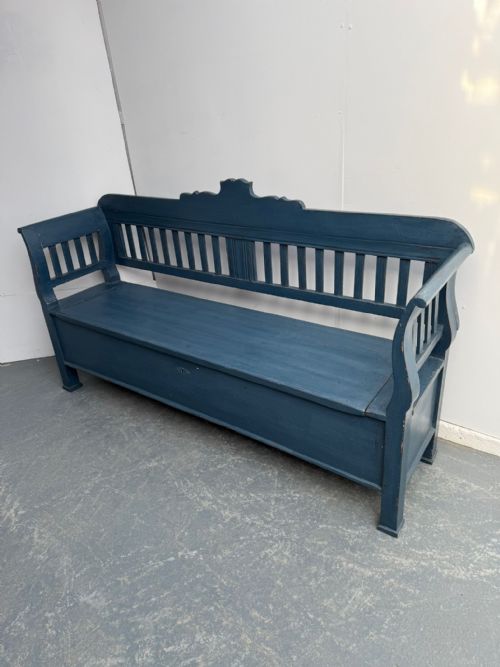
A pine box bench combines a seating bench with an integrated lower storage compartment accessed beneath the lift-up seat. Buyers searching for a pine box bench will encounter variations ranging from English country settles to Hungarian folk art box settles and Scandinavian country pieces.
The listings show forms spanning the Georgian period and the Victorian era, alongside specific regional types like Swedish storage benches and Welsh settle benches. These items served practical roles in hallways, farmhouses, and vernacular interiors where floor space required multi-functional furniture.
Materials and Construction
Construction relies primarily on pine and elm, assembled to bear weight while enclosing large timber storage cavities beneath the seat. Iron hardware such as hinges and locks frequently secures the box lids on these vernacular pieces.
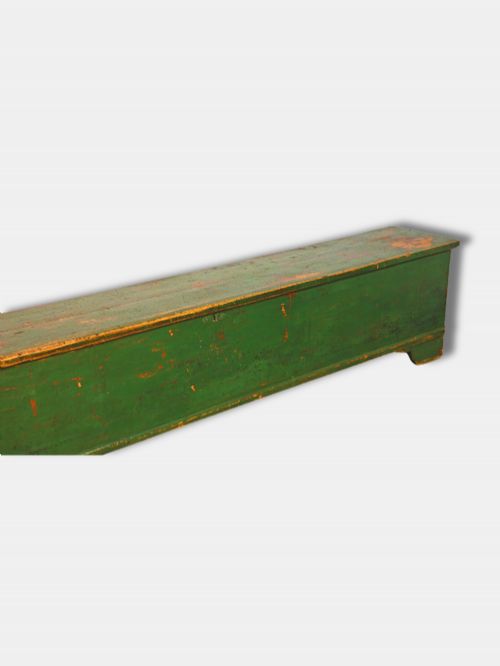
Surfaces are finished in several ways, recorded in the evidence as original painted finishes in grey, black, cream, blue, and green, alongside waxed treatments and polychrome or folk art decoration.
Pine Box Bench Retail Price Guide 2026
Typical asking prices for pine box bench among the pieces listed under this phrase on Sellingantiques today, from the lower quarter to the upper quarter. They describe what is for sale here now, not the wider market.
Some Hungarian box settles preserve vibrant folk art paint schemes that survived generations of farm kitchen life.
Assessing the Pieces
Quality separates pieces by the survival of their original painted surfaces versus stripped or later pine finishes. Retaining the authentic early paint layer, whether a Swedish Gustavian grey or a Hungarian folk application, defines the desirability of the piece.
Structural integrity of the underseat box, original iron fittings, and timber patination distinguish standard workshop items from exceptional vernacular examples.
The Pine Box Bench Glossary
- Settle
- A wooden bench with a high back, solid arms, and often a box base beneath the seat. It provided shelter from drafts in older homes.
- Box Settle
- A specific form of settle featuring an enclosed storage chest built directly under the seat. Lift-up lids grant access to the interior.
- Gustavian
- A Swedish neoclassical style popular in the late eighteenth and nineteenth centuries, characterised by pale painted finishes and restrained classical details.
- Polychrome
- Painted in multiple colours. This technique appears on folk art pieces from regions like Hungary.
- Patination
- The surface alteration of timber and paint through age, use, and exposure to wax or cleaning over decades.
Pine Box Bench: Frequently Asked Questions
Where did people use box benches?
These benches sat in hallways, kitchens, and farmhouse living areas where seating and blanket or coat storage were both required.
The enclosed box kept textiles away from drafts and dust while providing a sturdy seat near a hearth or entryway.
How do I care for painted pine?
Dust surfaces gently with a dry or slightly damp cloth, avoiding modern chemical polishes that can lift historic paint layers.
Waxed pine surfaces benefit from occasional traditional beeswax application to nourish the timber without harming the finish.
Are all box benches English?
The inventory demonstrates diverse origins, including Hungarian folk art pieces, Swedish Gustavian examples, and Dutch chests alongside English and Welsh settles.
Regional differences appear in the joinery, proportions, and painted decorative schemes characteristic of each country.
How is the storage accessed?
The seat panel acts as a hinged lid that lifts upward to reveal the internal timber box cavity.
Original iron hinges or strapwork often secure this lid to the main frame of the bench.