



Pierced Rim Porcelain Plates
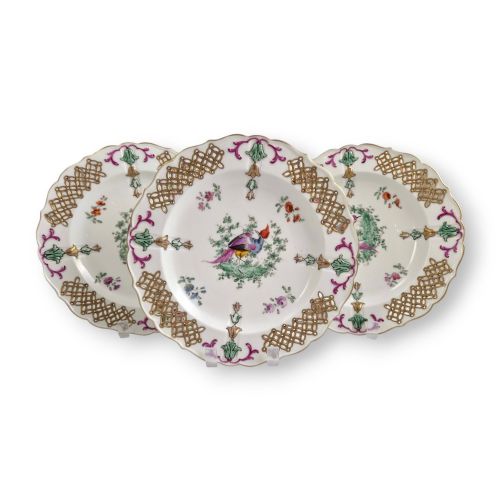
Pierced rim porcelain plates bring intricate openwork framing and hand-painted artistry to a room, offering a tactile focal point for any table or display.
Pierced Rim Porcelain Plates
When searching for pierced rim porcelain plates, collectors encounter fine cabinet and decorative plates featuring intricate reticulated or pierced borders. These items span various historic periods including the eighteenth century, nineteenth century, and Victorian eras.
The selections on this page showcase diverse forms ranging from cabinet plates and chargers to basketweave designs and oval plates. Makers and factories of note include Samson, Minton, Meissen, Furstenberg, Vienna, Royal Worcester, and Coalport.
Stylistic influences vary significantly, taking inspiration from the Rococo Revival, Aesthetic Movement, Japanese Imari, and Neoclassical traditions. Pieces frequently incorporate hand-painted scenes, exotic birds, and figures such as Bacchus and Ariadne.
Materials and manufacture
These pieces are fashioned from high-fired ceramic porcelain, finished with smooth glazes and detailed enamel painting. Artisans utilised delicate piercing techniques while the clay was still soft to create openwork rims before firing.
Decoration is further enhanced through the application of gold leaf and gilding to accentuate raised borders and motifs. Factories employed specialised marks, such as crossed swords, to identify their porcelain output.
Pierced Rim Porcelain Plates Retail Price Guide 2026
Typical asking prices for pierced rim porcelain plates among the pieces listed under this phrase on Sellingantiques today, from the lower quarter to the upper quarter. They describe what is for sale here now, not the wider market.
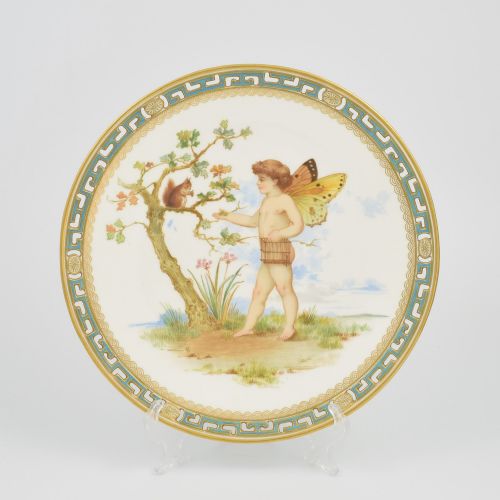
Squirrels and fairies make an unexpected appearance amongst the classical deities on these fine ceramic rims.
Judging quality
Quality in these plates rests upon the crispness of the reticulated piercing and the precision of the hand-painted enamels. Finer examples display meticulous brushwork in figurative scenes and bird motifs, alongside clean, well-defined glaze finishes.
The presence of distinguished factory marks and attribution to notable artists elevates a piece. The integration of delicate gilding and gold leaf without blurring into the surrounding porcelain marks the work of premier European potteries.
Samson·Minton·Meissen·Furstenberg·Vienna·Royal Worcester·Coalport
The Pierced Rim Porcelain Plates Glossary
- Pierced rim
- A border design featuring cut-out sections formed in the clay before firing. This technique creates a lace-like openwork pattern around the edge of the plate.
- Reticulated
- An alternative term for openwork or net-like decoration. It describes the geometric or floral lattice patterns cut through the porcelain.
- Cabinet plate
- A decorative plate intended for display in a cabinet rather than for dining use. These pieces usually feature elaborate artistic scenes and fine gilding.
- Gilding
- The application of gold leaf or powdered gold to the surface of porcelain. It highlights rims, handles, and painted details.
- Enamel
- Vitreous coloured glass fused to the porcelain surface during firing. It provides the vibrant palette used for hand-painted birds, flowers, and figures.
Pierced Rim Porcelain Plates: Frequently Asked Questions
How were pierced rim porcelain plates used?
These items were predominantly created as decorative cabinet plates for display in formal rooms rather than for everyday dining. Wealthy households showcased them on walls, sideboards, or within glass cabinets to highlight their artistic merit.
Some exceptional pieces served as presentation items or exhibition pieces, such as those prepared for international expositions. Their intricate pierced rims made them too delicate for practical service.
What is the difference between pierced and reticulated?
The terms are often used interchangeably by collectors to describe openwork ceramics. Pierced generally refers to holes cut individually into the wet clay, while reticulated suggests an interlocking net pattern.
Both methods required considerable skill from the ceramicist to prevent warping during the high-temperature kiln firing process.
How do I identify the period of a plate?
Dating relies heavily upon factory backstamps, painted signatures, and stylistic cues. Eighteenth-century pieces often display hand-painted motifs with distinct paste characteristics, whereas Victorian examples frequently incorporate transfer printing alongside enamel work.
Stylistic movements like the Aesthetic Movement or Rococo Revival provide a reliable window into the manufacturing decade.
How should I care for antique porcelain plates?
Antique porcelain requires gentle handling, ideally keeping them away from direct sunlight to preserve the vibrant enamel colours. Dust them softly with a dry, lint-free cloth rather than using water or cleaning solutions.
If displaying on plate stands, ensure the mount is secure and padded to protect the delicate glazed edges and gilding.