
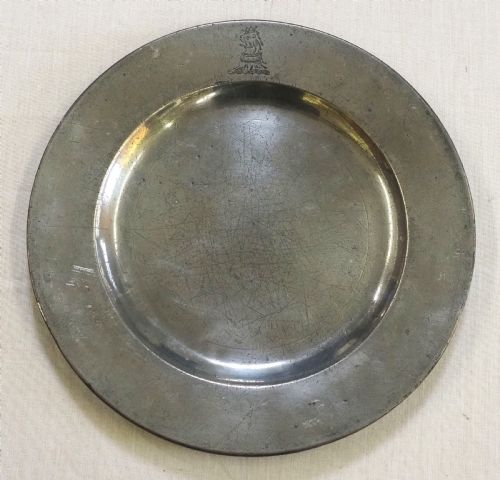
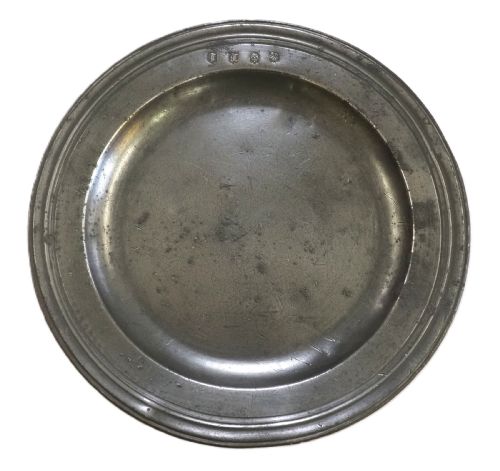


Pewter Wall Display Dish
These pewter wall display dish pieces are heavy metal chargers and plates carrying centuries of English heraldry and domestic service.
Pewter Wall Display Dish
A pewter wall display dish is a broad metal plate or charger intended originally for dining and later hung for display. When searching for a pewter wall display dish, buyers encounter large chargers, broad rim plates, and commemorative items spanning the seventeenth and eighteenth centuries.
The pieces on this page include plain rim plates, triple reeded edges, and large Chargers and Platters up to twenty inches across. English pieces dominate, alongside Louis XVI and Marie Antoinette commemorative plates.
These items range from the Charles II period through the reigns of William and Mary into Georgian times. They bridge the gap between functional household metalwork and decorative wall art.
Materials and construction
Every pewter wall display dish is cast from pewter, an alloy primarily of tin combined with lead or copper to give it malleability and weight. Makers shaped these alloys using metalworking techniques suited to heavy domestic metal.
Some large chargers show clear evidence of being hammered all over by hand to harden the metal and create a distinct surface texture. Edge details such as triple reeded borders are cast or turned onto the rims to add rigidity and decoration.
The listings span from the mid-seventeenth century through the Georgian era, utilising pewter as the sole material for all plates and chargers.
Assessing quality and character
Quality in a pewter wall display dish rests upon the crispness of the original casting and the presence of makers' marks or ownership crests. Pieces bearing engraved family crests, such as the lion crest or the Skrymshire family crest, carry distinct provenance that elevates their interest.
The weight and balance of a large charger, combined with the survival of early surface tooling like all-over hammering, separate standard plates from exceptional survival pieces. Maker attribution to known pewterers adds a definitive layer of historical importance.
James Spackman·John Tubb·Lawrence Dyer·Thomas Powell·Nehemiah Cloudesley
The Pewter Wall Display Dish Glossary
- Charger
- A large broad-rimmed plate, typically measuring twenty inches or more across, used originally for serving meat at grand tables. Later, these substantial pieces were hung on walls for display.
- Triple reeded
- A rim style featuring three parallel raised concentric rings moulded into the pewter. This profile strengthens the plate edge and defines late seventeenth-century English metalwork.
- Broad rim
- An exceptionally wide flat border surrounding the central well of a dish. This expansive surface often hosted engraved family crests or coats of arms.
- Pewter
- A durable metal alloy composed largely of tin, traditionally mixed with copper or lead. It takes a soft, dull grey patina over centuries of exposure.
- Commemorative plate
- A vessel cast to mark a specific historical event or personage, such as the Louis XVI and Marie Antoinette plates found in this collection.
Pewter Wall Display Dish: Frequently Asked Questions
How do I hang a heavy pewter dish on the wall?
Heavy chargers require secure wall fixings and properly fitted wire or brass spring hangers that support the entire base rim without pinching the metal.
Because antique pewter is soft, avoid any mounting hardware that applies direct screw pressure into the alloy itself.
Can I use these antique dishes for serving food?
Historical pewter often contains lead, making these eighteenth and seventeenth-century pieces unsuitable for serving acidic foods or modern daily dining.
They function best as decorative wall pieces or dry display objects rather than active tableware.
How do I clean antique pewter safely?
Old pewter relies on a deep, dark oxidation known as patina for its historic character and should only be dusted gently with a dry cloth.
Harsh metal polishes strip away centuries of surface skin and destroy the visual integrity of the metal.
How do I tell seventeenth-century pewter from eighteenth-century pieces?
Seventeenth-century chargers frequently feature wider rims, such as broad rim or triple reeded styles, alongside heavy overall hand hammering.
Eighteenth-century examples often shift toward simpler plain rim plates and lighter domestic forms.
What do family crests on pewter mean?
Engraved crests or coats of arms indicate the original aristocratic or gentry household that owned the commission.
These personalisations link individual dishes to specific historical families and verify their elite domestic origins.