


Pewter Ale Jug
These pewter ale jug examples are substantial tavern vessels formed to serve drinks, offering collectors tangible links to historic drinking customs.
Pewter Ale Jug
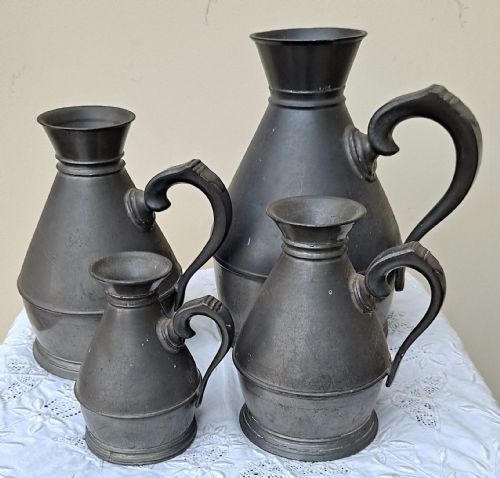
A pewter ale jug is a practical vessel designed for holding and pouring beer in domestic and public settings. The items seen here span the Georgian and Victorian periods, alongside specific regional forms such as Scottish Tappit Hens and Irish Haystack measures.
Most examples take the form of heavy metal tankards, spouted spires, or capacity measures marked with VR ciphers. Buyers typically encounter English, Irish, Scottish, and Jersey pieces fashioned for tavern and public house use.
How they were made
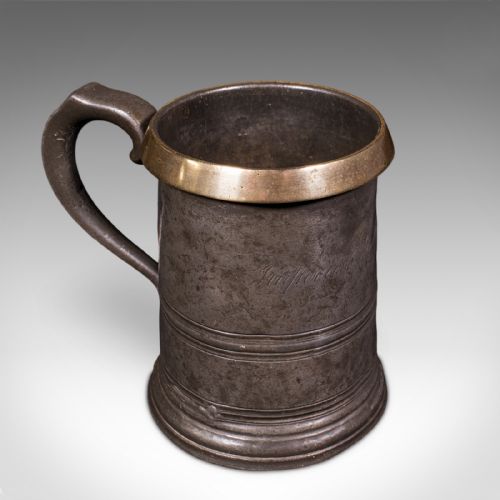
Makers shaped these vessels primarily from metal alloy, utilising pewter alongside supporting elements of brass and copper on specific fixtures. Some related drinking vessels utilise tin-glazed earthenware and silver plate across the wider selection.
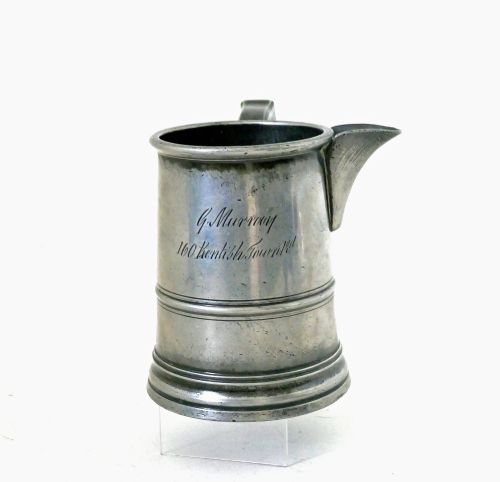
Craftsmen built these containers to withstand daily tavern service, employing durable casting and soldering techniques. Engraving often decorates the bodies, recording names, locations such as Kentish Town Road, or public house titles like the Three Pigeons.
Listings feature metalware and ceramic drinkware spanning the Georgian and Victorian eras, including brass, copper, and tin-glazed earthenware alongside pewter.
What varies in quality
Quality rests in the crispness of surviving touchmarks, capacity stamps, and the integrity of the metal walls. Thicker gauge metal and well-balanced spouts separate robust everyday tavern gear from finer display examples.
The presence of crisp original engraving, maker ciphers, and untouched surface patination elevate individual pieces. Sets showing matching stamps or unified provincial styles command greater attention from serious collectors.
G. Murrouy
The Pewter Ale Jug Glossary
- Pewter
- A durable metal alloy composed chiefly of tin, historically mixed with lead, copper, or bismuth. It provides the heavy, tactile body characteristic of these vessels.
- Tappit Hen
- A traditional Scottish capacity measure and jug style featuring a distinctive lid and knob. These pieces often carry specific regional capacities like the Scots Pint.
- Haystack measure
- An Irish provincial pewter measure shape notable for its bulbous lower body tapering towards the rim. Sets of these often appear from the Victorian era.
- Spouted spire flagon
- A tall vessel form topped with a vertical lid feature and a pouring spout. They serve liquid capacities in domestic or public house environments.
- Old Sheffield Plate
- A fused composite material combining a thin layer of silver over a copper base. It appears on finer Georgian drinking vessels within this metalware tradition.
Pewter Ale Jug: Frequently Asked Questions
What is a pewter ale jug?
A pewter ale jug is a historic metal container built to hold and serve beer in domestic settings or public houses. They range from simple lidded tankards to large multi-quart measures.
These pieces reflect centuries of tavern culture, carrying capacity stamps, tavern names, and civic touchmarks that record their original operational use.
How were these jugs used?
Publicans and households utilised these vessels to draw, transport, and pour ale at the table or tavern bar. Large examples held gallons for bulk serving, while smaller noggin and quart sizes served individual drinkers.
Their heavy construction ensured they survived the rigours of daily public house service without tipping or leaking.
How do I date an old pewter jug?
Dating relies on stylistic forms, touchmarks, maker stamps, and reigning monarch ciphers stamped into the metal. Georgian and Victorian examples display distinct handle shapes, lid designs, and body proportions.
Engraved inscriptions naming specific public houses or owners also help narrow down the period of manufacture.
How do I clean antique pewter?
Antique pewter requires minimal intervention to preserve its historic surface patination and soft grey oxidation. Gentle washing in warm soapy water with a soft cloth removes accumulated dust.
Harsh metal polishes and abrasive cleaners should be avoided because they strip away age-related surfaces and obscure maker marks.