



English Pewter Jug
An English pewter jug holds the weight of centuries in its heavy metal walls, offering a tactile link to old taverns and domestic hearths.
English Pewter Jug
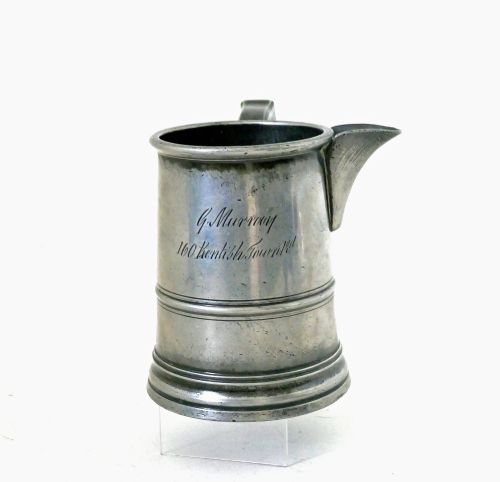
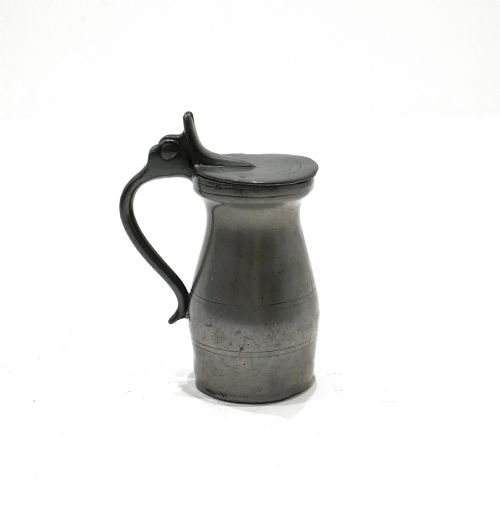
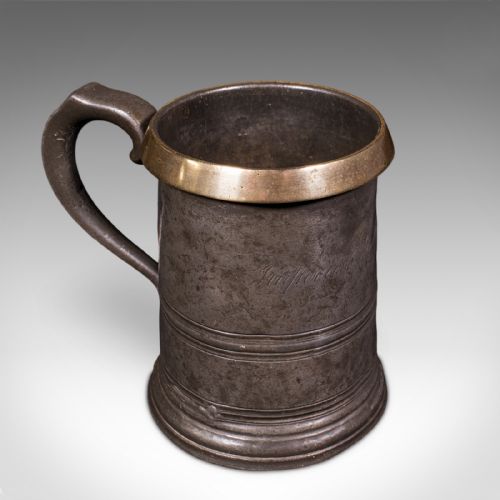
When you search for an english pewter jug, you encounter functional vessels spanning the eighteenth and nineteenth centuries, alongside Victorian and Arts and Crafts examples. These pieces encompass public house tankards, spirit measures, spouted spire flagons, and tavern jugs.
The most frequent encounters on this page include eighteenth-century ale jugs and nineteenth-century public house pieces. Many carry engraved tavern names or capacity stamps, pointing to their working origins in hostelries and domestic service.
How they were made
Maker operations utilised cast pewter, shaping the metal into heavy bodies with applied handles and thumbpieces. Some forms integrate glass or white stoneware elements, combining metalwork with pottery and blown glass.
Engraving and relief-moulding decorated the surfaces, from simple public house names to elaborate Bacchanalian dance scenes. Lidded forms relied on precise hinge work to secure flat or spire lids to the vessel body.
English Pewter Jug Retail Price Guide 2026
Typical asking prices for english pewter jug among the pieces listed under this phrase on Sellingantiques today, from the lower quarter to the upper quarter. They describe what is for sale here now, not the wider market.
Listings feature items spanning the eighteenth century, nineteenth century, Victorian era, and the nineteen hundreds.
What varies in quality
The distinction between ordinary utility items and exceptional pieces rests in the weight of the metal and the clarity of touchmarks. Heavier gauge metal retains its structural integrity better over generations of tavern use.
Design ambition separates basic measures from masterworks, particularly when prominent designers and firms collaborate on Arts and Crafts pieces. Engraved provenance and named public houses elevate the historical interest of individual vessels.
Archibald Knox for Liberty Co·Charles Meigh·Robert Iles of London
The English Pewter Jug Glossary
- Pewter
- A malleable metal alloy composed primarily of tin, combined with copper, antimony, or lead. It forms the primary body of these drinking vessels.
- Flagons
- Large drinking vessels with lids and handles, often used for ale or wine. Spire flagons feature tall, tapering lids.
- Spirit measure
- A regulated vessel designed to hold a precise volume of alcohol. Early examples often bear pre-imperial capacity markings.
- Tankard
- A tall, cylindrical drinking vessel with a single handle and sometimes a hinged lid. They served heavy use in public houses and taverns.
- Arts and Crafts
- A design movement valuing handcraft and traditional materials. Pieces from this period often combine pewter with glass.
English Pewter Jug: Frequently Asked Questions
What were english pewter jugs used for?
These vessels served to store, measure, and pour ales, stouts, and spirits in homes and public houses. Their robust construction handled the daily demands of tavern life.
Larger flagons and gallon jugs held supplies for multiple patrons, while small spirit measures dispensed precise single servings across the counter.
How do I identify an 18th century jug?
Eighteenth-century examples often feature flat lids, pre-imperial capacity stamps, and heavy cast pewter bodies. Maker touchmarks and engraved tavern names frequently appear on pieces from this period.
The overall forms tend toward utilitarian strength, with simple strap handles and sturdy thumbpieces designed for heavy use.
What is a spire flagon?
A spire flagon is a tall drinking vessel featuring a distinct tapering lid that resembles a spire. These pieces date primarily to the eighteenth century.
They represent a more formal style of flagons, often produced in smaller sizes as well as half-gallon capacities for service.
How should I display pewter jugs at home?
Display these vessels on stable surfaces away from direct heat sources to protect the metal. Grouping them by form or period highlights their varied silhouettes.
Keep the metal clean with gentle dusting and avoid abrasive polishes that can wear away historic touchmarks and engravings.